Build a wildlife garden by function: a native plant and habitat checklist
Choose native plants and habitat features by the food, host, cover, nesting, and seasonal roles you want to support, then check each choice against your local site.
On this page
A plant can provide flowers, host foliage, fruit, shade, or cover, but those functions are not interchangeable. Start with the wildlife or landscape goal you care about, identify the resource that goal requires, then check whether that resource fits your region and site. A flower list by itself will not show whether a garden also has nesting places, winter cover, or food at the time it is needed. The U.S. Fish and Wildlife Service’s story on how plant choices shape deer and pollinator lives gives a broader example of plant choices and wildlife, while the USDA NRCS yard habitat assessment guide offers a structured way to review habitat features.
Match the goal to the resource
| Goal | Resources to look for | What to keep distinct |
|---|---|---|
| Support pollinators | Nectar and pollen at different times, host plants, nesting and overwintering places, and low-risk management | A flower may provide nectar or pollen without being a larval host. Nesting needs also differ among pollinator groups |
| Support birds | Seasonal insects, fruit, seeds, nuts, shelter, and places to nest or roost | A plant’s food value may occur in only one season; nearby cover and the wider habitat matter |
| Reduce bare ground or cover a slope | A ground layer suited to the slope, soil, moisture, and maintenance capacity | A groundcover can spread quickly or compete with other plants; planting does not replace site-specific erosion or drainage assessment |
| Create a privacy edge | Mature height and width, seasonal screening, site fit, and any wildlife function the plants can also serve | Privacy, evergreen habit, fruit, and deer response are separate attributes |
| Add a rain-garden planting | Plants matched to the wet, moist, mixed, or drier part of the bed | A moisture-zone label does not establish drainage design, flood duration, or local native status |
Inventory what the site already provides
Before buying plants, walk the yard in more than one season and note:
- Which beds receive full sun, part shade, or deep shade, and which dry quickly or remain wet.
- What is already flowering, fruiting, or holding seed, and when those resources appear.
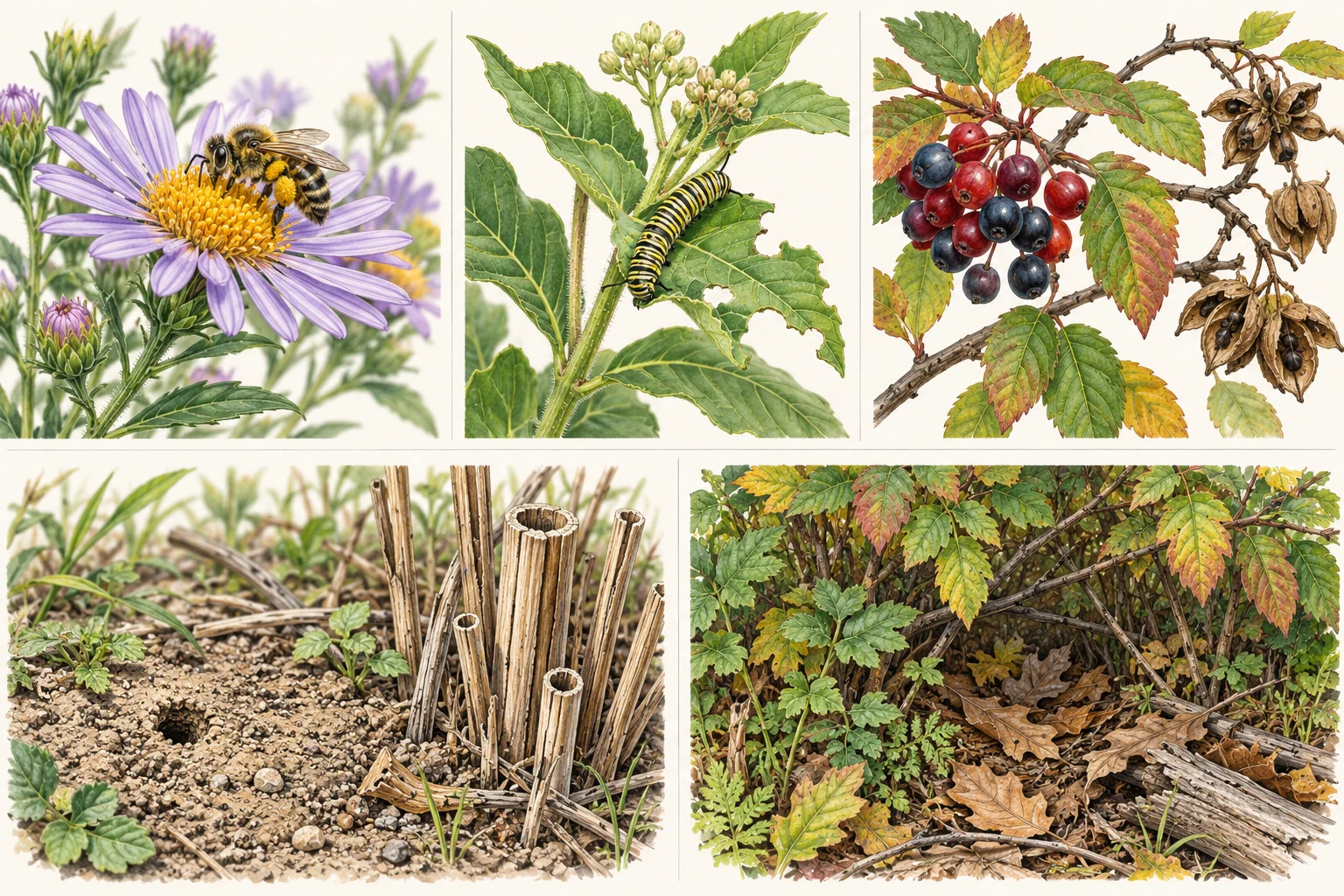
- Where shelter, nesting material, bare soil, leaf litter, or standing stems already exist.
- Which plants are spreading beyond their intended area or are being browsed.
- Which features are safe to retain near paths, buildings, utilities, or play areas.
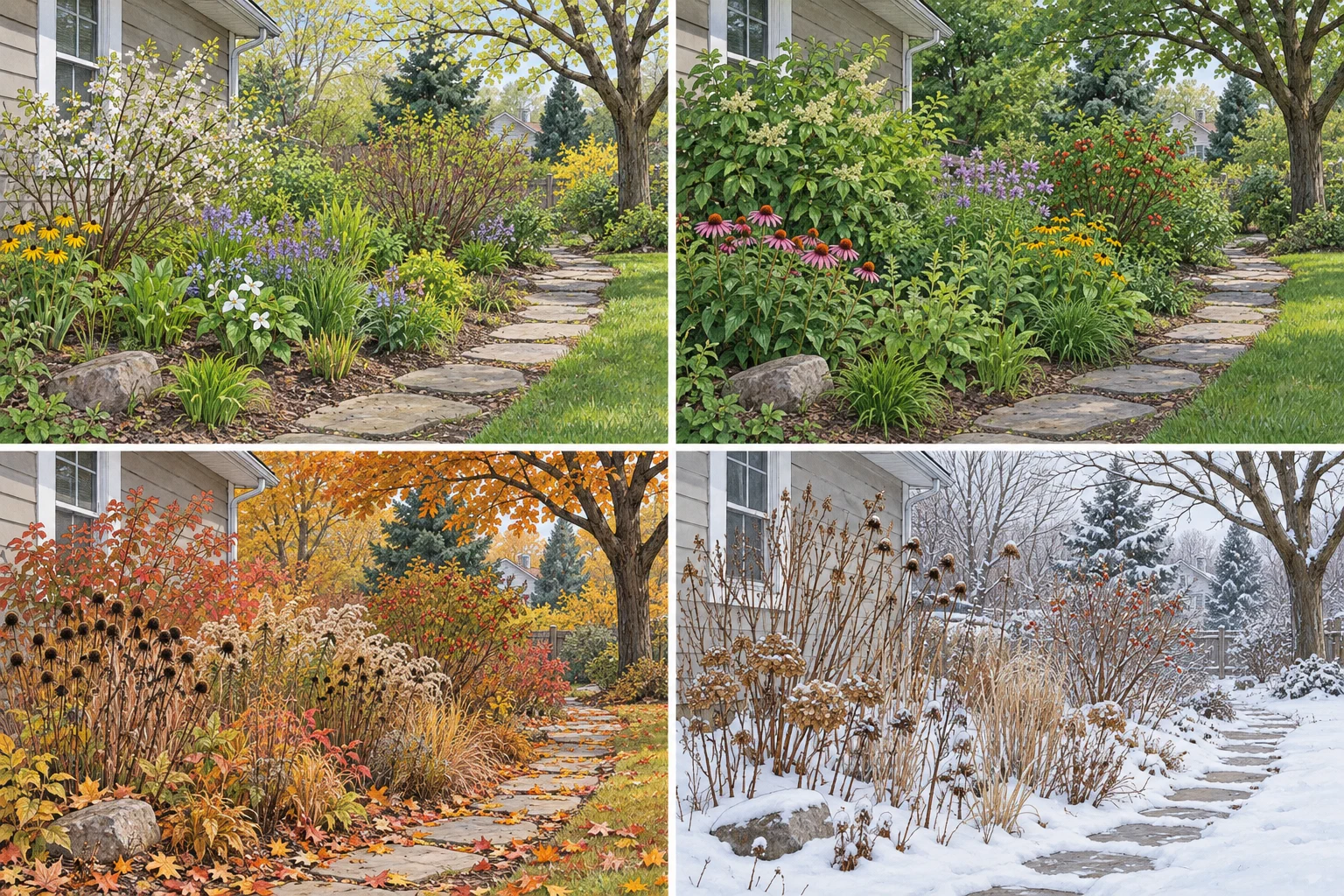
This quick inventory can show that the missing piece is not another flowering perennial. A shady bed may need a host plant or a protected ground layer; a yard with summer flowers may still lack early or late resources; and a hedge may provide shelter while requiring a separate choice for year-round screening. Penn State’s wild-bee guidance treats floral resources and nesting places as distinct needs, and Audubon Great Lakes’ winter guidance explains how winter feeding fits alongside habitat.
Time of day can change what you observe as well. In two Lansing community gardens, a study of common boneset recorded different flower-visitor communities by day and night. That result comes from one plant and two gardens; it does not establish a general nighttime planting list or lighting prescription. If you monitor visits, note the time as well as the season.
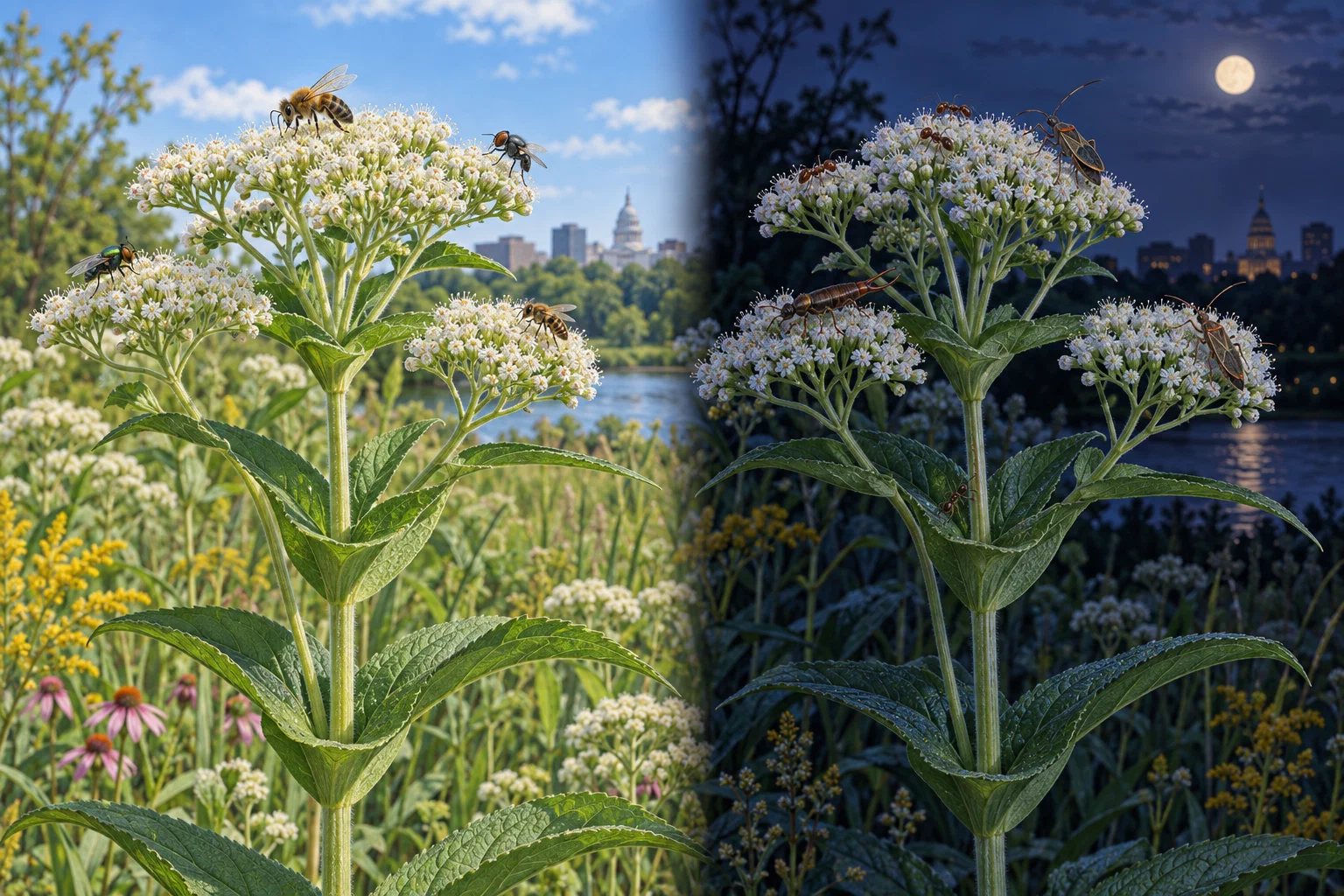
A two-garden Lansing study of common boneset found different flower-visitor communities by day and night; this is one local example, not a general visitor list.
Pollinator evidence can also extend beyond one bed. An analysis of community-science observations across 129 Florida urban greenspaces found pollinator richness associated with flowering-plant richness and the proportion of native plant species; greenspace size and tree cover were also associated. These are observational Florida results: they do not show what a planting change would cause or set a native-plant percentage for one yard. They are a reminder to consider a planting as part of a wider landscape.
Choose a missing function, not a vague wildlife score
Write a simple goal for each planting: “spring pollen in moist shade,” “winter fruit and cover,” or “a ground layer that can tolerate this slope.” Then select candidates using the scientific name, local native range, light, moisture, mature size, and the source’s stated function. Check one attribute at a time; a species being native does not prove that it fits the soil, supports every wildlife group, or avoids deer.
Habitat features can complement plants. Ontario homeowner guidance on creating wildlife habitat describes snags, logs, brush piles, and rock piles as possible habitat elements, while also warning that invasive plants can displace native vegetation. Retain deadwood or other structures only where they are safe for people and property. A checklist is a way to notice functions, not a certification threshold or a promise of wildlife visits.
Use the specific guides for Pennsylvania shade pollinators, Pennsylvania groundcover and deer browsing, Ontario wet-soil privacy, Michigan winter birds, Pennsylvania rain gardens, Michigan pollinator planting, and Pennsylvania keystone plants when one of those decisions matches your site.
Sources and further reading
- Conserving Wild Bees in Pennsylvaniaauthoritative-secondary
- Habitat Assessment Guide for Pollinators in Yards, Gardens, and Parksprimary
- Creating wildlife habitatprimary
- Winter Bird Feeding 101specialist
- How plant choices shape deer and pollinator livesprimary
- Distinct diurnal and nocturnal flower visitor communities provide pollination services in urban gardensprimary
- Proportion of native plants is a key predictor of pollinator richness in urban greenspacesprimary