Choose native pollinator plants for your Michigan region and site
Use Michigan's regional native-plant lists, site conditions, bloom timing, and habitat needs to build a pollinator planting that fits your part of the state.
On this page
Michigan covers more than one growing environment. A plant list for the southern Lower Peninsula is not a promise that the same species fits the Upper Peninsula or a particular county. Start with the regional guide, then narrow choices by your yard’s light, soil, drainage, and the kind of pollinator resource you want to add.
Begin with the right regional list
MSU Extension’s Native Plants and Ecosystem Services regional lists divide Michigan into the southern Lower Peninsula, northern Lower Peninsula, and Upper Peninsula. The lists are starting points for plants with several ecosystem services. The broad regions still contain smaller natural-community and soil differences, so the list is a first filter rather than a property-level answer.
For each candidate, keep its common and scientific name together. Check the profile for mature height, light, and moisture, then compare those fields with the actual planting site. If the plant’s native range or seed origin matters, ask for the exact species and source; a regional or Michigan genotype label does not by itself establish county-level nativity.
Match plants to the site before filling a bloom calendar
Before selecting a flowering sequence, note the site’s exposure, soil texture, drainage, compaction, and nearby land use. MSU’s native-plant guidance recommends soil testing before planting; use the local laboratory’s directions and interpretation. A regional list cannot tell you whether the soil beneath one downspout stays wet or whether roots compete strongly under an established tree.
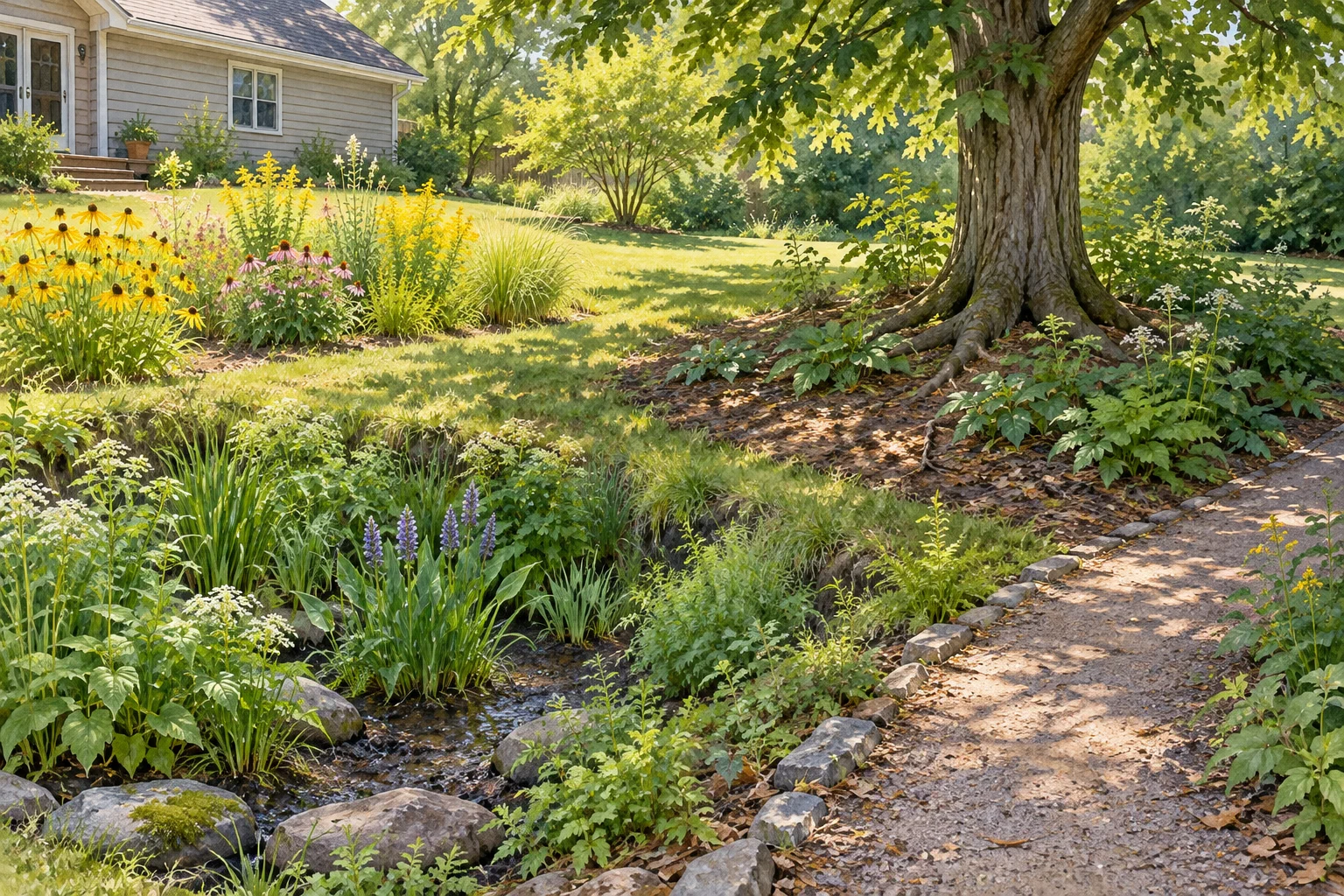
Inspect each planting bed directly; conditions can differ within one yard.
Next, review the season. Pollinator activity and flowers change across spring, summer, and fall. A group of plants that all peak at one time may leave a gap later in the year. Use regional plant information to identify more than one bloom period, and keep host foliage separate from nectar and pollen: a plant can provide one function without providing all three.
| Check | Question to answer |
|---|---|
| Region | Which of the three MSU regional lists best matches your part of Michigan? |
| Light and moisture | Does the species’ profile match this exact bed, not just the general property? |
| Wildlife role | Is the claim about pollen, nectar, a host relationship, seeds, cover, or something else? |
| Seasonal timing | When does the resource appear, and what is available before and after it? |
| Plant identity | Does the label give a scientific name and a meaningful source or provenance statement? |
Flowers are only one part of pollinator habitat
USDA NRCS’s pollinator biology and habitat guide separates forage from nesting and overwintering places, and its pollinator gardens guide offers a site-planning resource. Different bees use different nesting materials; some use soil, others use stems or dead wood. A flower bed does not need to supply every resource in the yard, but it helps to know which functions it offers and where the others might be found.
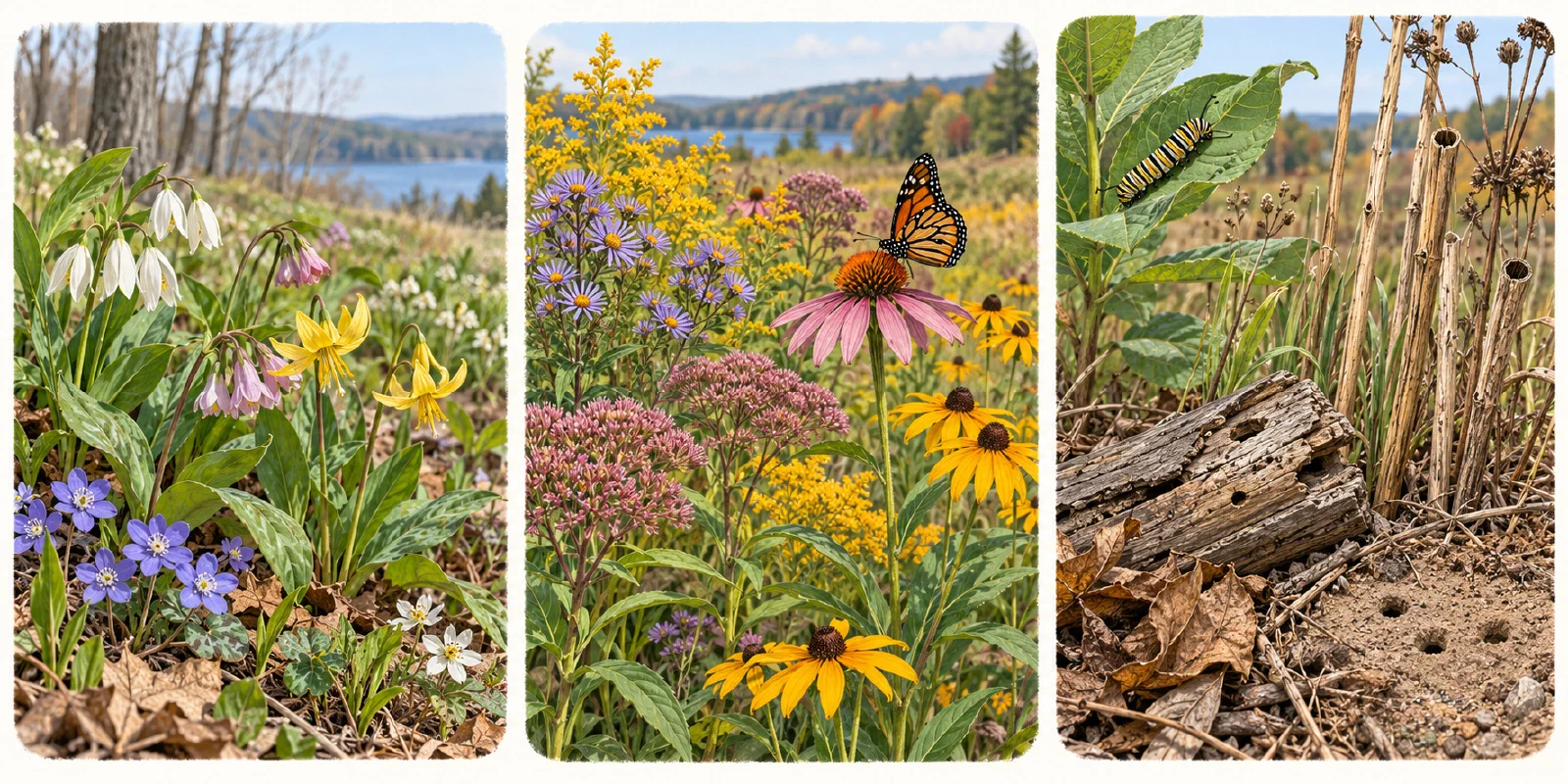
Illustrative resource types only; bloom timing and habitat needs vary by species and site.
After the planting fills in, some bare or lightly vegetated ground and selected plant material may be useful habitat. Do not turn that into a universal “never mulch” or “never cut back” rule. Erosion, weeds, disease, fire safety, and access can change what is appropriate at one site. Retain material only where it remains safe and manageable.
Use the MSU Extension regional lists as a starting point and confirm species-level recommendations with a local native plant producer or Extension office. For more on matching wildlife goals to distinct resources, see the wildlife garden function checklist.
Sources and further reading
- Regional Plant Lists — MSU Extension Native Plants and Ecosystem Servicesauthoritative-secondary
- Smart Gardening: Using Native Plants Is a Smart Choice for Michigan Landscapesauthoritative-secondary
- Pollinator Biology and Habitatprimary
- Pollinator Gardensprimary