Deer-resistant native groundcover in Pennsylvania
Compare Pennsylvania groundcover candidates by browsing evidence, spread, site fit, and maintenance. No native plant is guaranteed to be deer-proof.
On this page
“Deer-resistant” is a relative description, not a promise that a plant will be left alone. Penn State Extension’s deer browse guidance describes deer as selective feeders; a plant described as less preferred in one source or setting can still be browsed in a yard with high pressure.
For a Pennsylvania groundcover, compare three things separately: whether the plant is native where you live, whether it fits the light and soil, and what the browsing evidence actually says. Then consider how quickly it spreads and how much maintenance that spread will require.
Candidates with qualified browsing evidence
| Candidate | What the Pennsylvania guidance says | Trade-off to consider |
|---|---|---|
| Native violets (Viola species) | Penn State describes violets as spring-flowering, wildlife-supportive groundcover and uses deer-resistant language | Violets spread by rhizomes and can form colonies that crowd neighboring plants; confirm the exact species and local range |
| Golden groundsel (Packera aurea) | Penn State’s groundcover guidance describes it as deer- and rabbit-resistant | It can reseed and spread quickly, so it may be a poor fit where neighboring plants must remain separate |
| Hairy alumroot (Heuchera villosa) | Penn State’s groundcover guidance describes it as more heat- and deer-tolerant than some other coral bells | That comparison is not a guarantee for every cultivar, deer population, or site |
| Pennsylvania sedge (Carex pensylvanica) | Penn State presents it as a low-maintenance lawn-substitute groundcover | The source does not establish it as deer-resistant; treat browsing and site fit as separate questions |
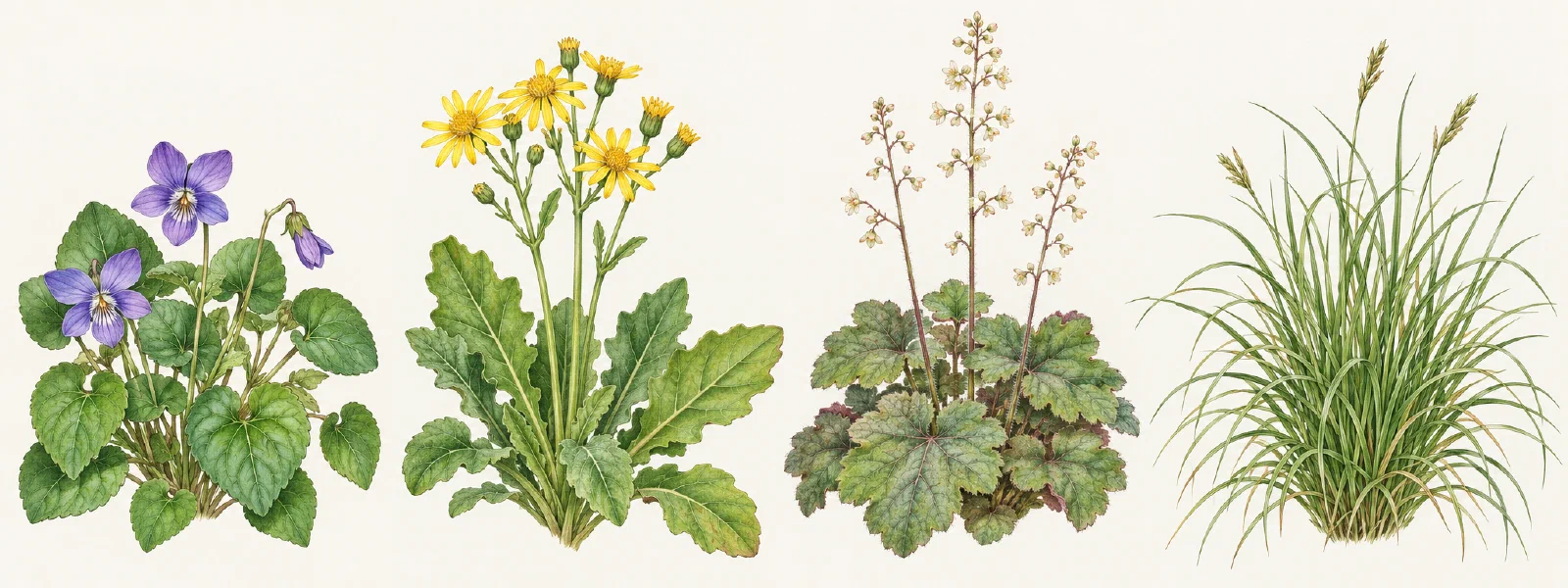
These are representative candidates, not a complete statewide shortlist. Penn State’s native violet profile applies its description to violets as a group; keep the source’s browsing language attached to the specific plant and comparison it describes. Do not extend it to every violet, every coral bell, or a combination of wet soil, clay, shade, and deer pressure that the source did not test.
Decide whether the spread is useful
Groundcover is a role, not a growth habit. Some plants knit together slowly; others spread through runners, seed, or rhizomes. A fast-spreading plant can cover soil and reduce open gaps, but it can also displace a more diverse planting. Penn State advises against covering an entire area with one species; groups or drifts let you keep a patchwork of plants and notice where one begins to dominate.
Before planting, check the bed’s light, drainage, soil texture, salt exposure, and the mature spread of each candidate. A groundcover that fits a dry slope may not fit a damp woodland bed. Native status also depends on place and species identity, so check the plant’s scientific name against a Pennsylvania regional source.
Treat deer pressure as a site condition
Look at what is already happening. Repeatedly clipped seedlings, hedged growth, or a sharp browse line in nearby vegetation can signal meaningful pressure. Penn State describes these indicators in forest-regeneration guidance; they are clues for a homeowner, not a precise deer count or a threshold for one residential lot.
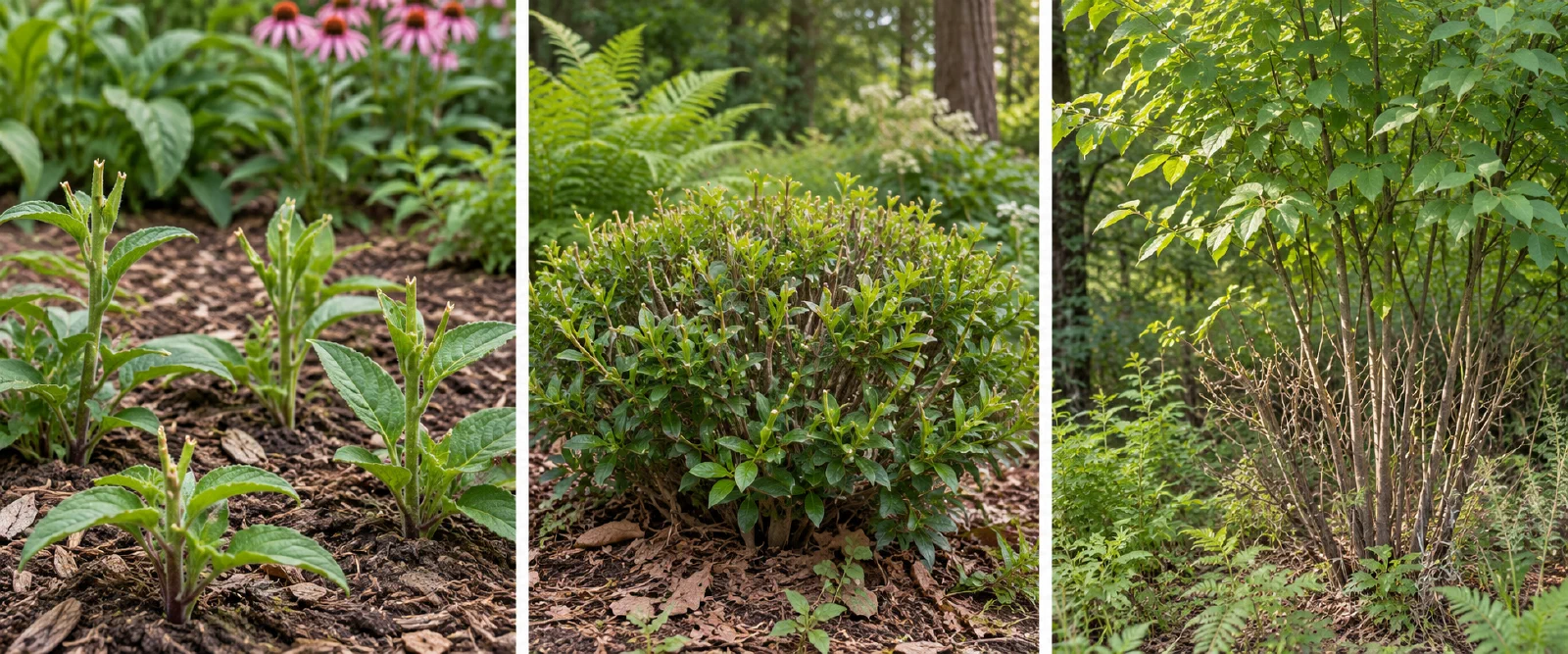
Where browsing is already changing the planting, a different plant list alone may not solve the problem. Consider whether physical protection or another site-management step is needed, and observe the result through more than one season. Do not keep an invasive plant simply because deer avoid it, and do not rely on “deer-proof” product labels.
Some groundcovers also provide flowers or other wildlife resources. Violets, for example, bloom in spring, while deer response remains variable. If wildlife value is part of your goal, compare it separately from browsing and spread in the wildlife garden function checklist. For the additional needs of pollinators in a shaded Pennsylvania garden, see pollinator plants for zone 6 full shade.
Sources and further reading
- Native Groundcovers Can Solve Tough Challenges in the Landscapeauthoritative-secondary
- Native Violetsauthoritative-secondary
- Enhancing Browse: A Better Way to Feed Deerauthoritative-secondary
- Regenerating Hardwood Forests: Managing Competing Plants, Deer, and Lightauthoritative-secondary