Pennsylvania keystone plants for pollinators: choose by ecoregion
Pennsylvania spans several ecoregions, and keystone plant relationships vary by region. Use ecoregion resources as a first screen, then verify native range and site fit.
On this page
“Native to Pennsylvania” is a useful starting point, but it does not tell the whole story about wildlife value. Penn State Extension’s keystone-plant framework describes plant and insect relationships at the ecoregion level. Pennsylvania spans the Northern Forests and Eastern Temperate Forests Level I ecoregions, with finer Level II regions inside them.
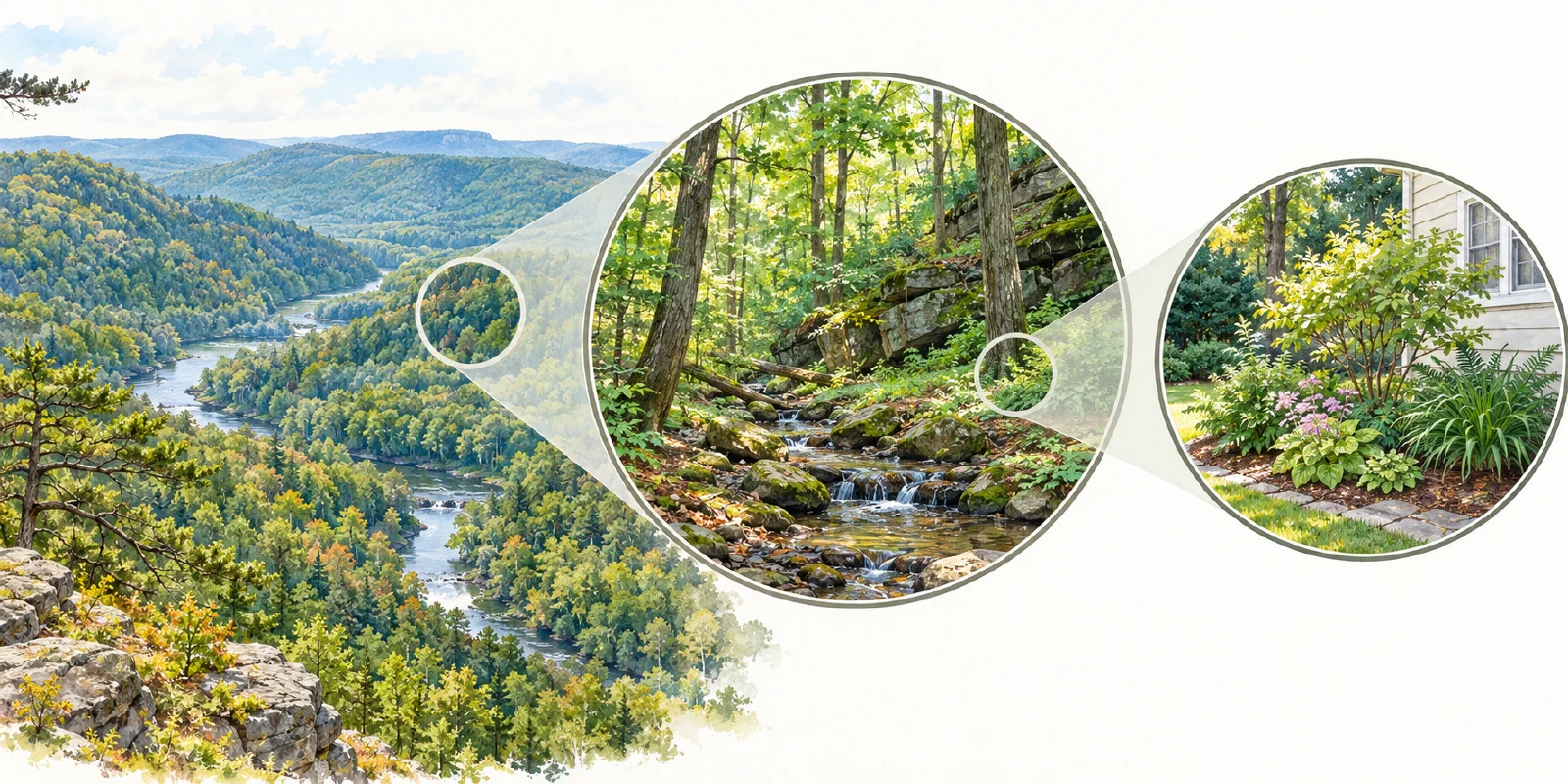
Use regional examples without turning them into a statewide recipe
Penn State’s regional framework names different representative plants across the state’s broad ecological regions. For example, white oak and black cherry appear in both broad groups; the source also names pussy willow and pale-leaf sunflower in Northern Forests examples, and river birch, sugar maple, black willow, stiff-leaf goldenrod, and blue wood aster among Eastern Temperate Forests examples.
These examples explain why the region matters. They are not a complete list for every county, nor proof that a plant fits a particular yard. A tree or shrub may be too large for a small lot; a plant may be native to a broad ecoregion but not to the nearest local community; and wildlife value does not establish tolerance of dry shade, wet soil, or deer browsing.
Perennial groups can help you compare functions
Penn State Extension identifies asters, goldenrods, perennial sunflowers, and black-eyed Susans as representative perennial groups with pollinator or host-plant relationships. It also describes their light needs: asters and perennial sunflowers generally flower best in full sun but tolerate some light shade, while black-eyed Susans are described for full sun to partial shade. Those statements do not support a full-shade recommendation.
Some broad estimates in keystone-plant literature describe how many butterfly and moth species use plant groups as hosts or how many specialist bees use their pollen. Treat such figures as source-attributed ecological estimates, not as a prediction of how many insects will visit a residential garden. A plant can contribute one part of the habitat without replacing host foliage, nesting places, or seasonal structure.
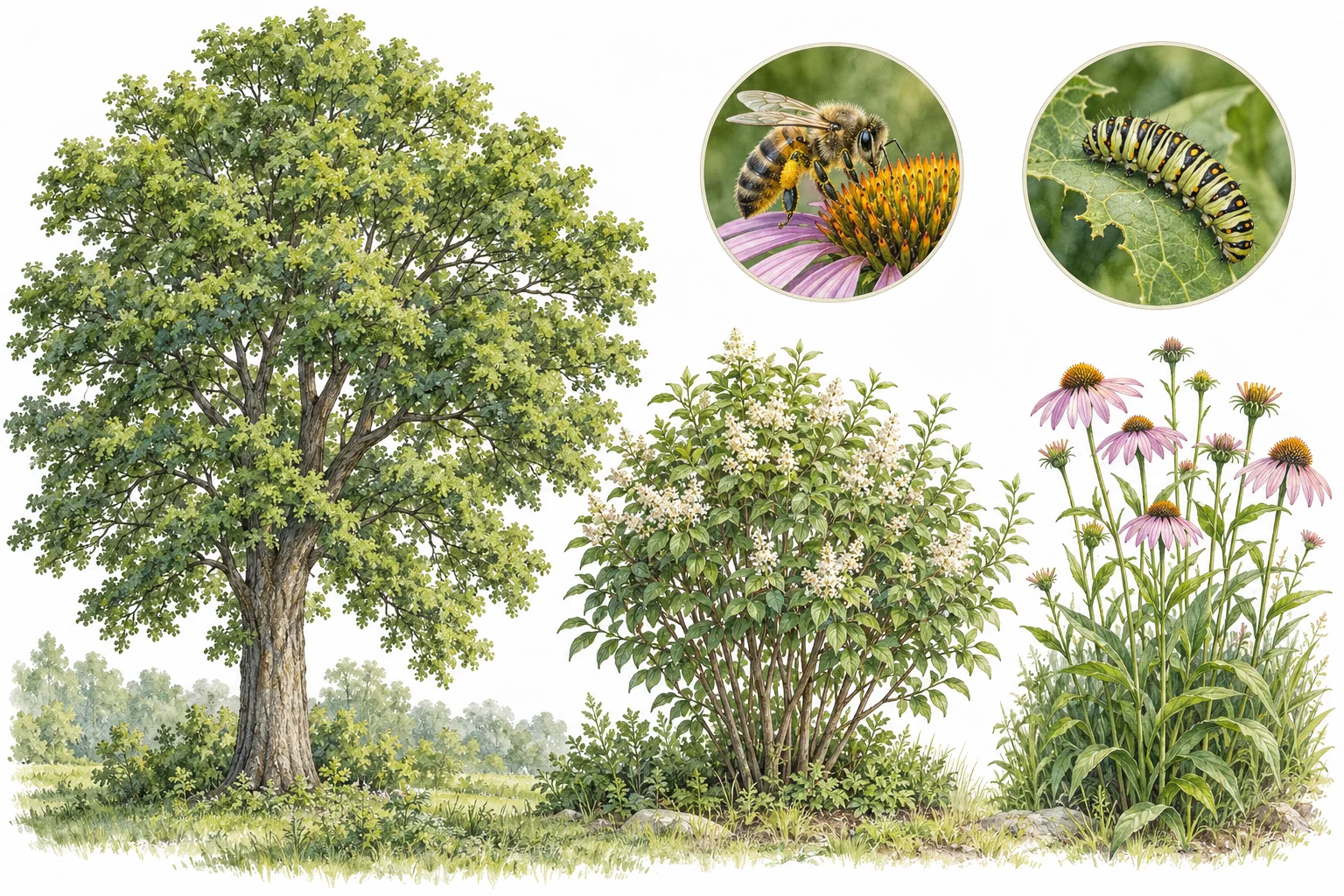
Illustrative plant forms and relationships only; verify each species and its sourced function rather than treating this as a visitation forecast.
A practical selection sequence
- Find the ecoregion or regional list for your location.
- Record the candidate’s scientific name as well as its common name.
- Check local native status and whether the species occurs in the nearby county or natural community.
- Filter again for light, soil, moisture, mature size, spread, and maintenance.
- Match the plant to the function supported by the source, such as pollen, a larval host, fruit, or structure.
- Confirm that the final choice fits the site and is available as the species you intend to plant.
Penn State points gardeners to ecoregion-based resources such as its keystone-plant framework, perennial guide, and keystone shrub guide, alongside the Pollinator Partnership planting guides. Use those resources to find candidates, then check each candidate against your site. For a more specific light-and-moisture decision, see pollinator plants for zone 6 full shade in Pennsylvania.
Sources and further reading
- Keystone Species: A Framework for Selecting Native Plantsauthoritative-secondary
- Support Native Wildlife by Planting Keystone Perennialsauthoritative-secondary
- Keystone Shrubs of Pennsylvaniaauthoritative-secondary
- Ecoregional Planting Guidesspecialist