Native plants for winter bird habitat in Michigan
Plan Michigan winter bird habitat around seasonal food, shelter, and local site fit. Plant choices support habitat functions but cannot guarantee which birds will visit.
On this page
Winter habitat is more than berries. Birds use different foods, cover, and nesting or roosting places across the year, and no one planting can guarantee that a particular species will visit. A useful plan starts with your Michigan region and site, then combines plant functions that persist through more than one season. The U.S. Fish and Wildlife Service bird-plant guide separates plants by seasonal and structural roles.
Plan for several winter functions
| Function | What to look for | Example or limit |
|---|---|---|
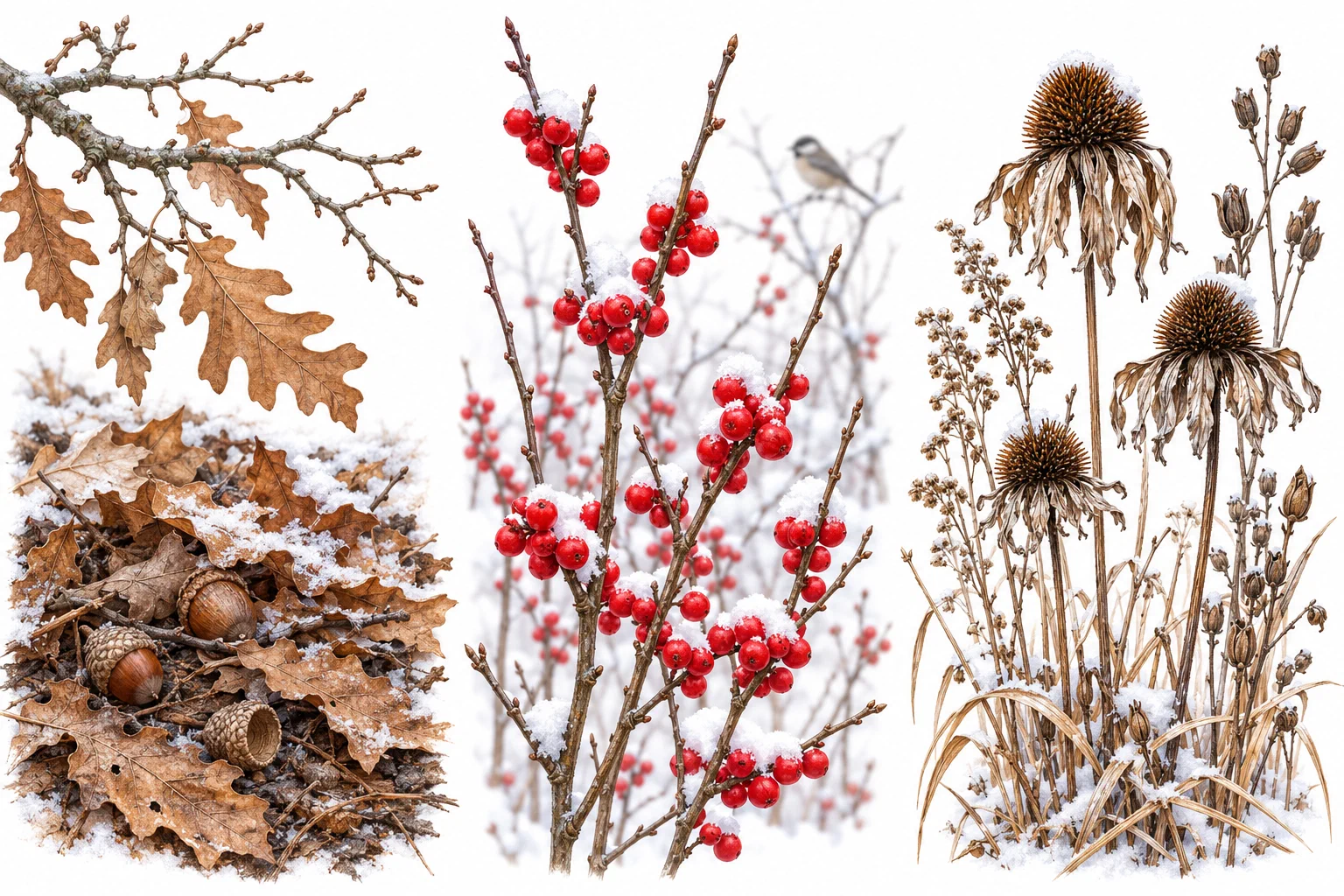
| Fruit, nuts, and seeds | Plant species whose food is available in the season you want to support | Michigan DNR’s native-tree guidance identifies oak acorns as fall and winter food. Confirm the exact oak species and mature scale before planting |
| Persistent stems and seed heads | Plants that can remain standing where they are safe and do not create a disease or access problem | MSU Extension says winter seeds and stems can provide habitat for birds and invertebrates; this is not a rule to leave every plant untouched |
| Shelter and structure | Shrubs, trees, and layered vegetation that offer cover from weather and predators | The Michigan DNR describes American elderberry as a nesting thicket and a source of summer flowers and fruit; that early-season role is different from winter food |
| Seasonal continuity | A mix that does not rely on one brief fruit or bloom period | Audubon Great Lakes recommends combining native plants with other habitat elements when natural food is scarce or covered by snow and ice |
These examples describe functions, not a statewide plant prescription. A large oak needs substantial space. A shrub that fruits in one season may not carry food into another. A plant’s native range, mature size, soil moisture, and light still need checking for your part of Michigan.
Michigan DNR’s winter-flora guide identifies winterberry as a late-season resource: many birds eat its berries from late winter through spring as emergency food. The guide also warns that the fruit is poisonous to people and that rabbits and deer browse young plants. Treat it as wildlife food, not an edible berry, and verify its local fit before planting.
Use Michigan’s regional lists as a first screen
MSU Extension’s regional native-plant lists divide Michigan into the southern Lower Peninsula, northern Lower Peninsula, and Upper Peninsula. The lists are starting points for plants with several ecosystem services; they do not resolve every county, shoreline, or natural-community difference.
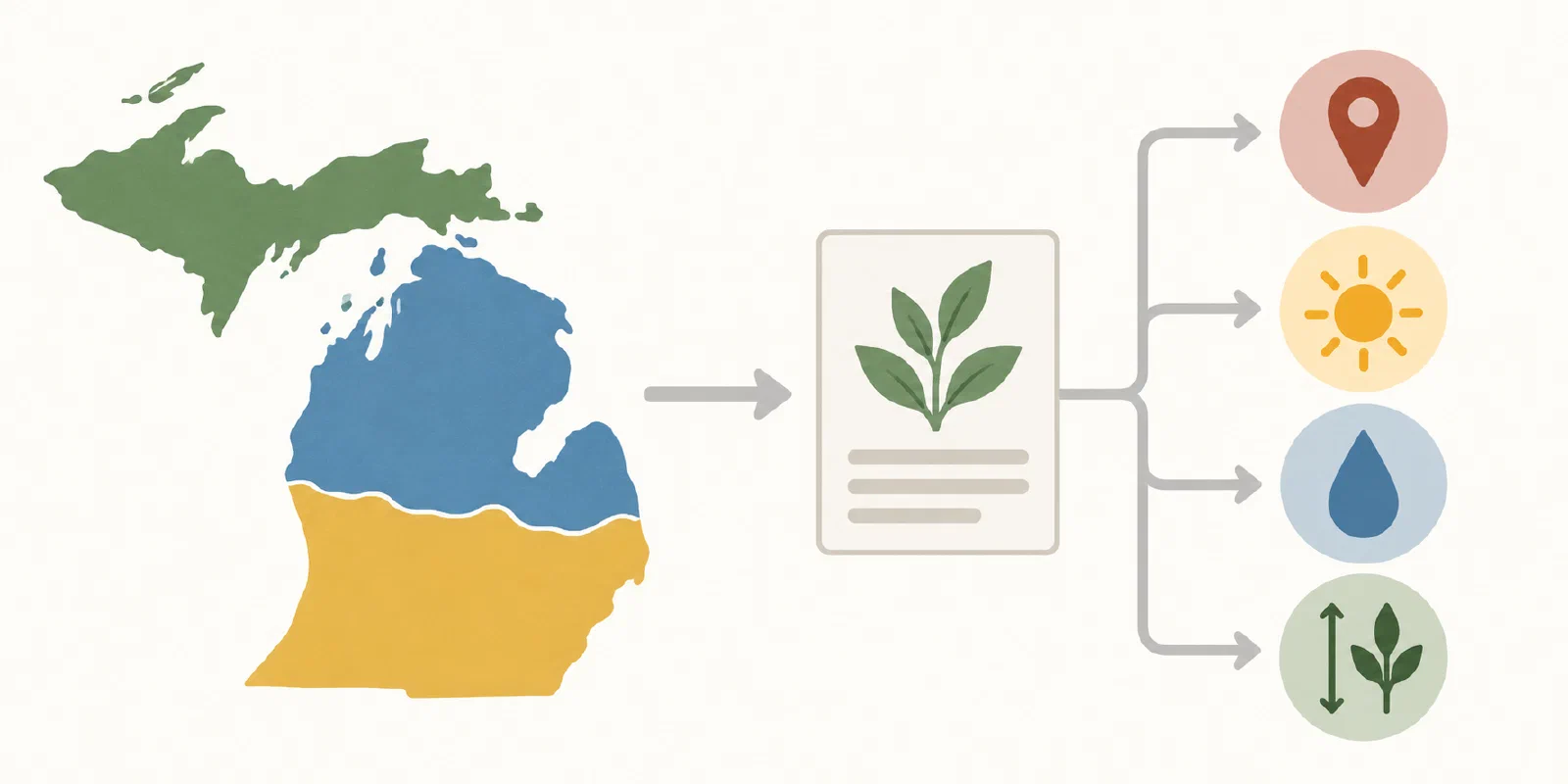
The colored regions are schematic; use regional lists as a first screen, then confirm local range and site fit.
For each candidate, write down its common and scientific name, sun and moisture needs, mature size, and the wildlife function the source actually supports. MSU Extension’s Michigan native-plant guidance also recommends testing soil before planting. If local seed origin matters, ask the grower what the source information means. A “Michigan genotype” label is not by itself proof that a plant is native to your county.
Keep the habitat usable through winter
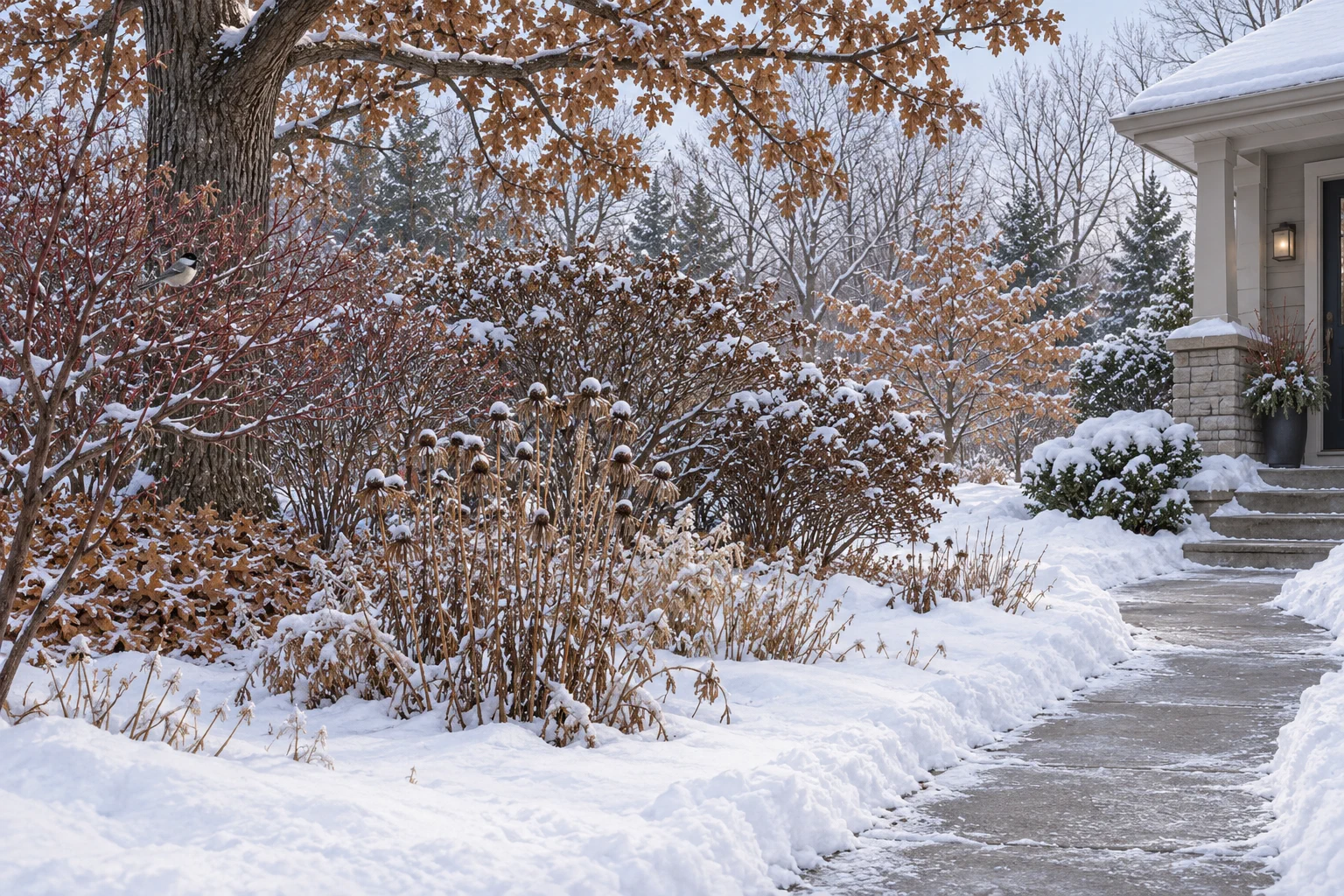
Where it is safe, leave some stems, leaves, and seed heads standing through winter rather than cutting every bed to the ground in fall. Decide where this is appropriate around paths, structures, and plants with disease concerns. Trees and shrubs add a different kind of shelter than a herbaceous bed; a range of heights and forms can make a yard more useful than a single row of one plant.
Supplemental feeders are a separate choice from planting. If you use them, follow current Michigan guidance for feeder hygiene and local bird-disease notices. Feeders do not replace native plant food and cover, and a winter bird list is not a promise that every species will come to a residential yard. Audubon Great Lakes’ winter guidance also treats feeders and native plants as separate ways to support birds.
Start with MSU Extension’s regional plant lists, then confirm site fit before buying. For a broader way to compare pollinator, bird, cover, and seasonal functions, see the wildlife garden function checklist.
Sources and further reading
- Attract backyard wildlife with native treesprimary
- Smart Gardening: Using Native Plants Is a Smart Choice for Michigan Landscapesauthoritative-secondary
- Winter Bird Feeding 101specialist
- Plants for Wild Birdsprimary
- Nature Glance: Michigan's native winter floraprimary