Native privacy shrubs for wet soil in Ontario
Match an Ontario privacy planting to the kind and duration of wetness, mature scale, light, and wildlife trade-offs. A wet-soil label alone is not a screen plan.
On this page
Wet soil can mean a garden that stays evenly moist, a low spot that floods for a few days, a site with a high water table, or land beside a wetland or watercourse. Those conditions do not support the same plants. Before choosing a privacy planting, observe where water collects and how long the soil stays saturated after rain.
Privacy also has more than one measure. Decide whether you need a year-round visual screen, a seasonal backdrop, or a wildlife-supportive edge that softens a view. The Ontario species profiles below offer candidates to investigate; they do not form a complete or guaranteed shrub list.
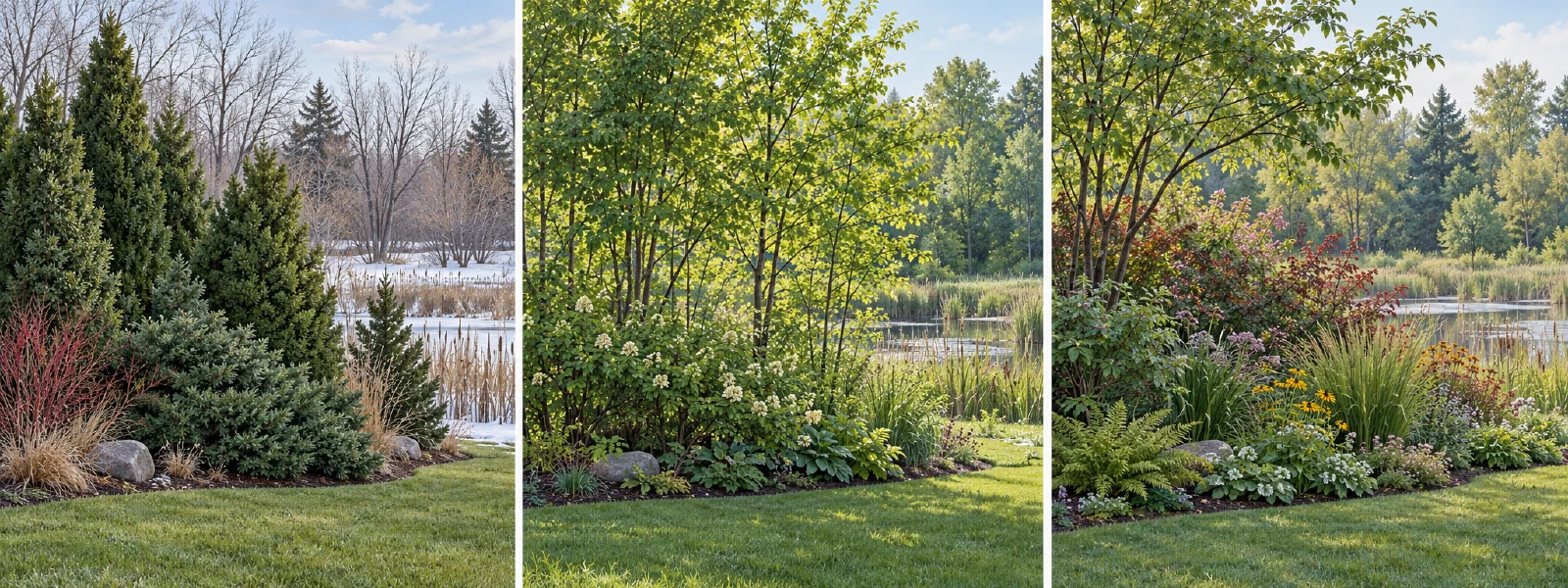
Compare candidates by the actual site
| Candidate | What the Ontario source supports | Limit that matters for a privacy planting |
|---|---|---|
| Eastern white cedar (Thuja occidentalis) | Occurs throughout Ontario, often in swampy areas over limestone; grows best in moist soil and tolerates some shade | The profile does not specify a residential screen layout or flood duration. It also flags road salt sensitivity; verify the plant’s winter habit and fit with your exact drainage |
| Alternate-leaf dogwood (Cornus alternifolia) | Common through Southern Ontario and parts of Central Ontario; prefers evenly moist soil and partial shade to full sun; berries and branches have wildlife value | It can reach 8–10 metres and is browsed by deer. Moist, well-drained preference is not proof of tolerance for prolonged flooding |
| Hawthorns (Crataegus species) | Ontario describes hawthorns as hedge or shrub-tree options; birds use the fruit and some thickets for nesting | The group generally prefers moist-to-dry, well-drained soil and full sun. On heavy, wet soil, the Ontario profile describes mounding as a planting approach; thorns and browse exposure affect placement |
| Black willow (Salix nigra) | A Southern Ontario wet-site tree that tolerates seasonal flooding; its roots can help control erosion | It can reach 12 metres, prefers full sun, and has dense roots that can threaten septic beds or sewer lines. Its branches may break in wind or rain, so Ontario advises against planting it near buildings. It is a large-site example, not a compact privacy shrub |
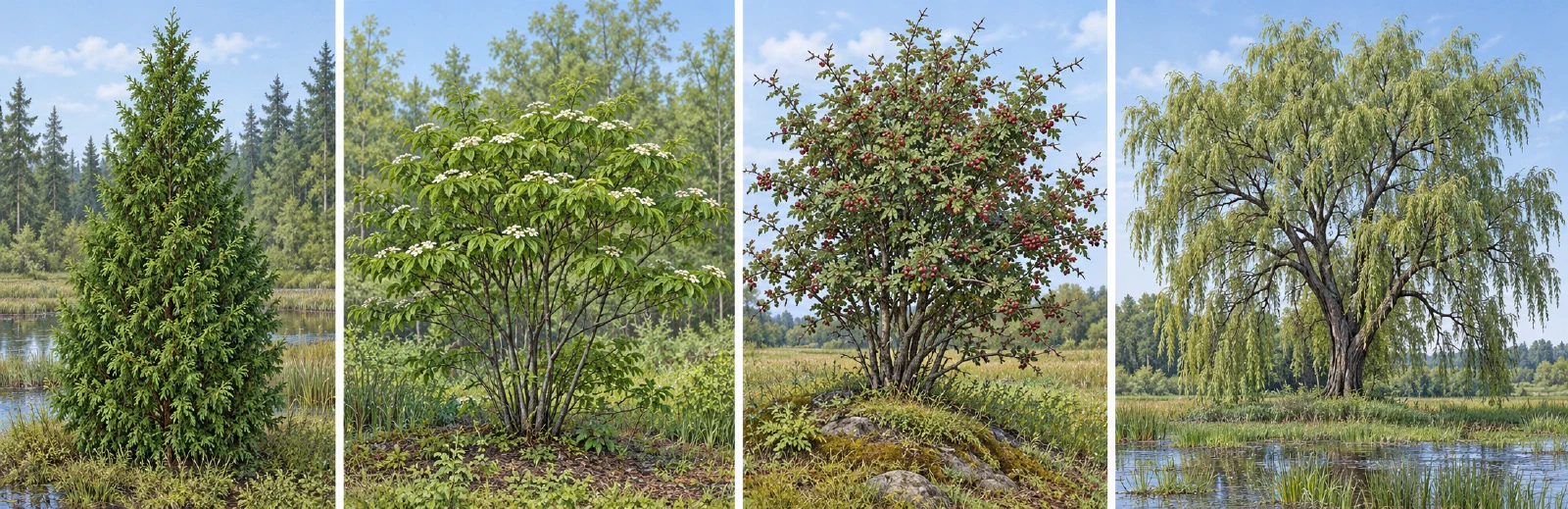
The table combines different plant forms and moisture preferences because the available evidence does not establish a complete Ontario wet-soil privacy shortlist. Check the exact species and location with the Ontario Tree Atlas or a local conservation authority before treating any candidate as native to a particular property.
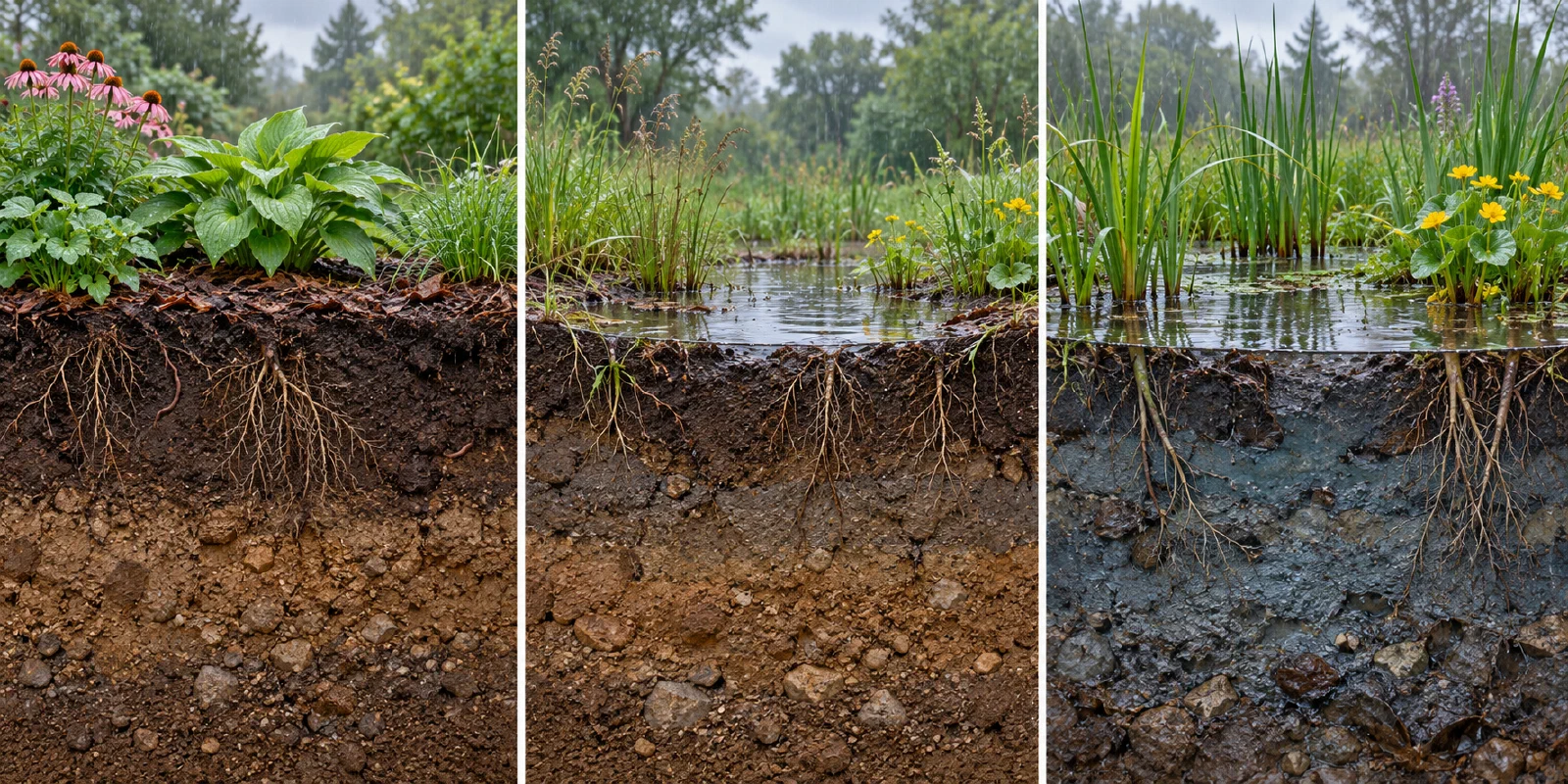
Separate wet soil from standing water
For a rain-fed low spot, note whether water is gone in hours, persists for days, or returns during a seasonal high-water period. A plant that tolerates moist soil may not tolerate prolonged inundation. Ontario’s stormwater management guidance separates water depth and flooding frequency when it describes plantings; that is a reminder to identify the hydrology before relying on a general “wet tolerant” label.
If your yard includes a stream, wetland, or agricultural drain, the planting decision may have property, infrastructure, or local-authority implications. Ontario’s farm drainage guidance warns that roots from some water-loving woody plants can enter perforated field drains. Its example distances apply to agricultural drainage guidance and are not universal residential setbacks. Locate your own drainage infrastructure and verify current local requirements before planting near it.
Plan for privacy and wildlife separately
Do not assume a plant with fruit, nesting value, or wet-soil tolerance will also provide a dense screen. Check mature height and width, light, winter foliage, browse exposure, and the amount of water the site actually receives. If year-round privacy is essential, confirm the species’ winter habit and screening performance with a current regional source or nursery that can identify the material.
A layered edge can include groundcover and retained habitat features as well as taller plants, but deadwood and brush should be retained only where safe. See the wildlife garden function checklist for ways to separate food, cover, nesting, and screening goals. A privacy planting beside a water feature also needs a different site check from a standard rain garden.
Sources and further reading
- Eastern white cedarprimary
- Alternate-leaf dogwoodprimary
- Hawthornsprimary
- Black willowprimary
- Farm drainage systems and tree rootsprimary
- Stormwater management plan and SWMP designprimary
- The Tree Atlasprimary