When Planting Is Not Enough
Recognize erosion, flooding, contamination, utility, and stormwater questions that should be resolved before selecting plants.
On this page
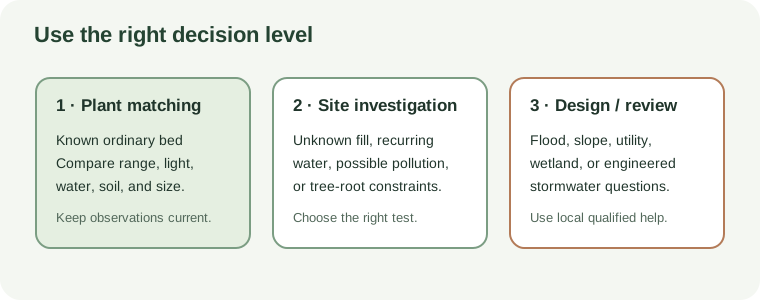
Plant selection can address light, soil, moisture, and use, but it cannot resolve every site constraint. Fast-moving water, a failing slope, suspected contaminated soil, buried utilities, a wetland question, or an engineered drainage system may need investigation or design before planting. A suitable plant does not make an unsafe or unauthorized site change safe.
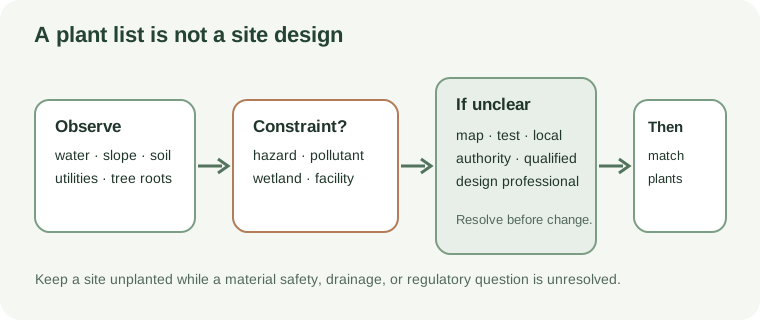
Pause when the site may need a different kind of assessment
| Observation | Why plant choice may be insufficient | Useful next question |
|---|---|---|
| Soil or mulch is washing away, a slope is cracking, or water moves rapidly across a bank | Vegetation can help protect soil, but cannot establish slope stability or make a hazard safe. | Is there an erosion, ravine, shoreline, or grading authority for this location? |
| Water repeatedly enters a basement, foundation area, or a neighbouring property | Redirecting runoff may transfer the problem or affect structures and drainage systems. | Where does the water come from, and who can assess the route and outlet? |
| Unknown fill, a former industrial use, or a suspected pollutant is present | Plant appearance does not show what is in soil. Infiltrating water through a pollutant hot spot can create groundwater concerns. | Which laboratory and qualified professional can identify the right tests and controls? |
| A wet area may be a wetland, flood-prone land, or part of a regulated water resource | A plant list cannot determine a boundary, flood hazard, or applicable permissions. | Which municipality, conservation authority, or qualified evaluator should confirm status? |
| Digging may affect buried utilities, septic infrastructure, or a drinking-water well | Planting holes and drainage work can conflict with services or affect health and property. | What must be located, protected, or reviewed before ground is disturbed? |
| A rain garden or bioretention system has a drain, underdrain, overflow, or concentrated inlet | Its wet and dry cycles and plant roots must fit the designed facility and maintenance plan. | What does the approved facility plan require, and who maintains it? |
Distinguish screening from design
Ontario homeowner guidance recommends maintaining vegetative cover on vulnerable slopes, but it does not say that a specific plant will stabilize every slope. If erosion is active or rapid runoff is involved, keep people away from obvious hazards and contact the local authority or a qualified erosion, geotechnical, or landscape professional before altering the site.
For stormwater projects, the U.S. EPA lists steep sites, buried utilities, nearby drinking-water aquifers or wells, known pollutant hot spots, and soils with insufficient infiltration as possible impediments to managing runoff onsite. This is project-scale stormwater context, not a Toronto or homeowner threshold. EPA also explains that where pollutant concentrations are a concern, green-infrastructure design may emphasize filtration or evapotranspiration rather than infiltration. Those choices require site-specific assessment.
Septic systems and private wells add another boundary. Setback requirements are local, and a wet surface or plant label does not show where groundwater moves. Do not dig or add infiltration work around a septic system or well until local requirements and the site conditions are understood.
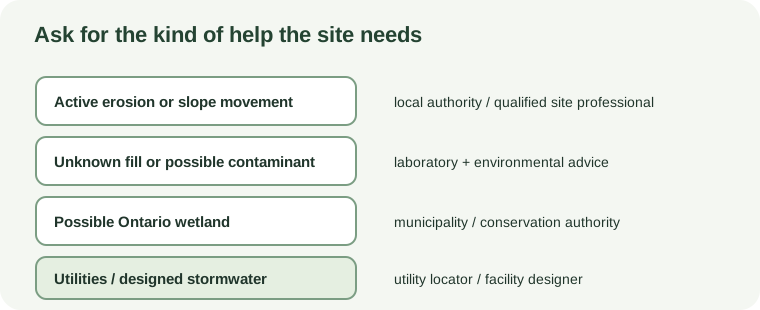
Keep engineered systems on their own plan
A bioretention cell can be wet after runoff and dry between storms. Its plants must suit that cycle, and roots may conflict with drainage pipes in some designs. A residential rain garden also has siting, overflow, infiltration, utility, foundation, and maintenance questions; published examples have regional limits. Do not convert a test value, setback, or plant list from another jurisdiction into a design rule for your property.
Use the Toronto compacted-soil guide for urban runoff and fill questions, and the Ontario wet-area check for possible wetland status. The site assessment worksheet helps organize facts and unanswered questions for local review.
Return to plant matching when the boundary is clear
Once the site has been assessed and any required work is defined, select plants that match local native range, light, soil, moisture, mature size, and the approved function. Keep an area undisturbed or unplanted when that is the responsible choice. Planting can be part of a solution, but it should not be used to conceal a hazard, replace testing, or stand in for a drainage or engineering plan.
Sources and further reading
- Erosionprimary
- Green Infrastructure and Groundwater Protectionprimary
- Alternative Site Stormwater Managementprimary
- How to Make a Rain Gardenauthoritative-secondary
- Rain Gardens (Bioretention Cells) — a Stormwater BMPspecialist
- Septic Systems and Drinking Waterprimary