Native Plants for Compacted Urban Soil in Toronto
Separate compaction, limited soil volume, salt, runoff, and tree-root constraints before screening plants for a Toronto site.
On this page
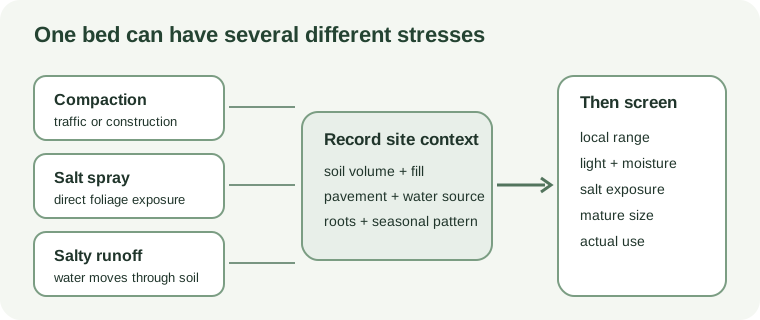
An urban planting bed may face compaction, limited rooting space, construction fill, pavement runoff, road salt, and nearby tree roots at the same time. These stresses can overlap, but they are not interchangeable. Start by identifying what happens at this bed through wet and dry periods; then screen plants for the particular combination rather than relying on a broad label such as “urban tolerant.”
Map the stress before choosing a plant
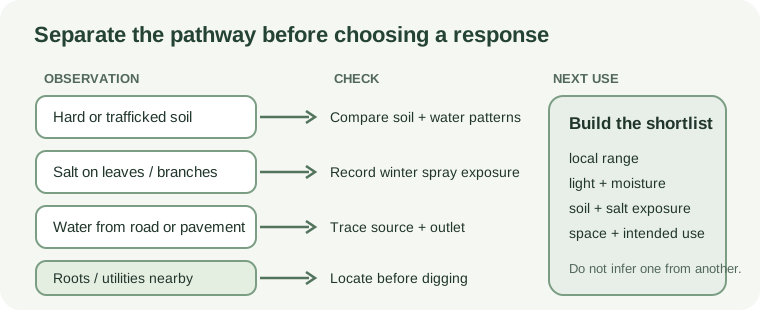
Record the bed’s width and depth, surrounding pavement, traffic, construction history, and how water reaches or leaves it. Note where puddles form after rain and whether runoff comes from a roof, path, street, or neighbouring property. Compaction can restrict pore space and roots, while a small soil volume can limit available water and space. Neither one tells you whether the bed also has elevated salts, contaminated fill, or a drainage outlet.
Road salt has different routes: spray may contact foliage, while salt carried in water can affect roots through the soil. Toronto describes these pathways and other urban tree stresses in its mechanical-injury guidance. Symptoms such as dry-looking leaves do not identify which stress is responsible. Note when the symptoms appear and which parts of the bed are exposed.
If the site contains unknown fill, lies beside a former industrial use, or is intended for food growing, ask a local laboratory or environmental professional what soil testing is appropriate before digging or disturbing the soil. A routine garden fertility test may not include the contaminant or salt test you need. The soil-report and field-check guide explains the limits of maps, lab reports, and field observations.
Use public-space lists carefully
Toronto’s 2025 Dog Off-Leash Strategy identifies compaction, insufficient soil volume, salt, and pollutants among stresses in urban planting areas. It lists little bluestem and sweet fern among plants for use near municipal off-leash areas. That is useful public-space context, not proof that either plant tolerates every compacted private bed, road-salt exposure, or dog urine.
The same strategy says its review found no research-based comparison of dog-urine tolerance among trees, shrubs, and perennials in Ontario or nearby regions. Do not rank species for that purpose from anecdotes or from a municipal planting list. Identify the actual exposure and choose from locally appropriate plant records only after checking range, light, moisture, soil, and mature size. The City’s Native Plants, Trees & Shrubs tool is one local screening route; its results do not diagnose a bed or guarantee its fit.
Separate planting decisions from project requirements
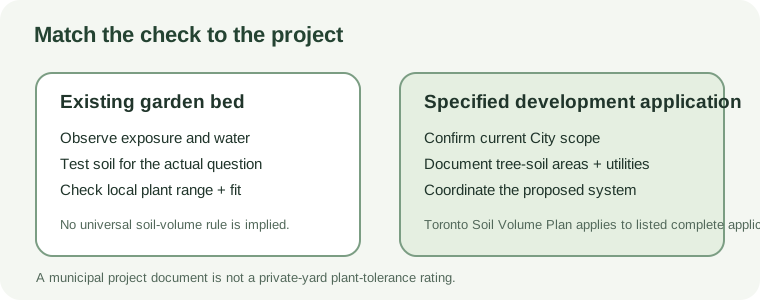
Toronto’s Soil Volume Plan documents tree-soil areas, their dimensions, utilities, and other physical encumbrances for complete applications of specified types, including Zoning By-law Amendment, Draft Plan of Subdivision, Consent to Sever, and Site Plan Control Approval. The City’s current terms of reference states the plan’s effective date and application scope. It does not set a minimum soil volume for every existing home garden or provide a plant-tolerance rating.
If a planting idea requires moving soil, changing runoff, or installing an infiltration feature, find out what lies below and how the water is meant to move before proceeding. EPA notes that where high pollutant concentrations are present or suspected, stormwater designs may emphasize filtration or evapotranspiration rather than infiltration. That is a design consideration, not a Toronto homeowner threshold; use the site-escalation guide when the question exceeds ordinary plant selection.
Make a site-specific shortlist
Compare candidates on local range, light, moisture, salt exposure, available soil, mature size, and intended function. Keep those fields separate and write down what is known, what was measured, and what remains uncertain. If the bed has no defensible plant match, reconsider its size or use, or leave it unplanted until the soil, drainage, or utility question is resolved. The site assessment worksheet can help organize that record.