Pennsylvania Keystone Shrubs by Ecoregion
Use Pennsylvania’s Level II ecoregion keystone-shrub table to build a wildlife-priority shortlist, then verify local range and garden fit.
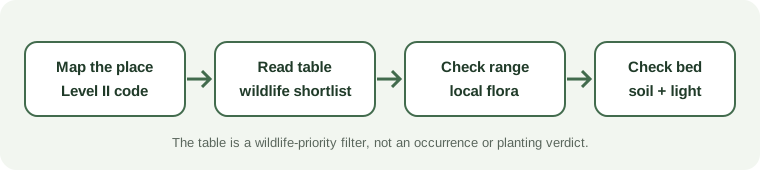
Penn State Extension’s keystone-shrub table groups selected shrubs by Pennsylvania’s five EPA Level II ecoregions: 5.3, 8.1, 8.3, 8.4, and 8.5. Use the current EPA ecoregion map to identify the unit for your place, then compare that code with the Penn State table.
These are wildlife-priority selections, not a complete list of native shrubs, a county occurrence map, or a guarantee that a plant fits a particular yard. Examples from the table include:
| Shrub | Level II codes shown in the table |
|---|---|
| Alnus serrulata | 5.3, 8.1, 8.3, 8.4, 8.5 |
| Baccharis halimifolia | 8.5 |
| Dasiphora fruticosa | 8.1 |
| Quercus prinoides | 5.3, 8.1, 8.4 |
| Salix nigra | 5.3, 8.1, 8.3, 8.4 |
| Vaccinium corymbosum | 5.3, 8.1, 8.5 |
A blank table cell means that the source does not list that shrub for that code; it does not demonstrate absence or prove the plant is nonnative there. Confirm the scientific name and current table before using a selection. A Level II assignment also does not establish that the species occurs throughout the unit.
After making a shortlist, check a Pennsylvania flora or other suitable local source for county evidence and nativity. Then compare mature size, light, moisture, soil, and intended use with the actual garden site. The ecoregion table helps narrow a wildlife-focused search; local records and site assessment answer different questions.
Sources and further reading
- Keystone Species: A Framework for Selecting Native Plantsauthoritative-secondary
- Keystone Shrubs of Pennsylvaniaauthoritative-secondary
- Ecoregions of North Americaprimary