Troubleshooting & Site Diagnostics
Why native plants bloom poorly in dry shade in Virginia
Check a Virginia plant's expected bloom, light, moisture, age, and pruning history before deciding why flowers are sparse.
On this page
Sparse flowers may be normal for the identified plant or reflect conditions worth checking. “Dry shade” describes a place, not a cause. Compare expected bloom and past performance, then check light, moisture, age, and care.
Establish expected bloom
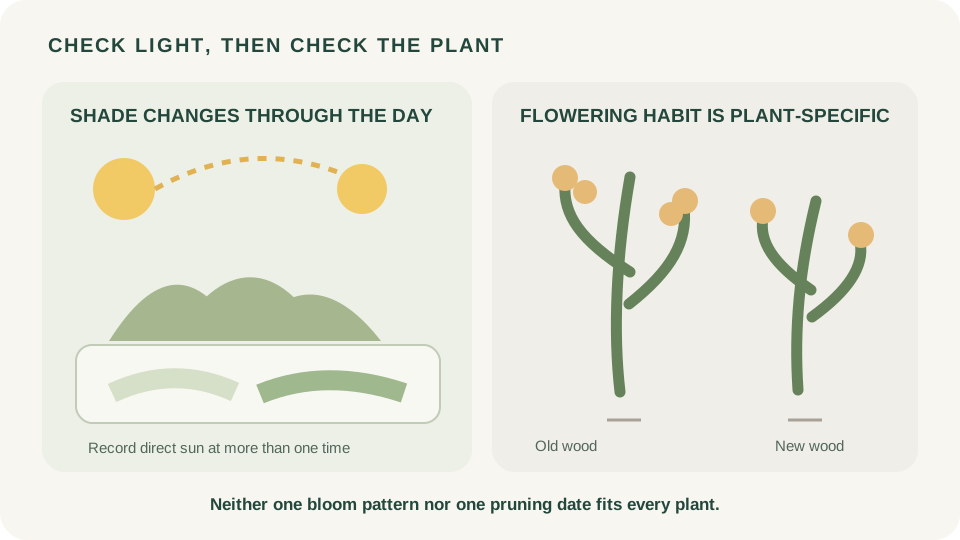
Record the plant’s name and age, past flowering, usual bloom period, and display length. Some shrubs flower briefly. Virginia Cooperative Extension explains that spring-flowering shrubs generally form buds on old wood, while summer-flowering shrubs generally flower on new wood. Confirm the exact plant before pruning; this is not a universal pruning calendar or a rule for every native perennial.
Map direct sun through the day and another season if possible. Buildings and tree canopies change shade; tree roots may compete for water. Note whether soil dries after rain, stays wet, or varies across the bed. Surface dryness does not establish root-zone moisture.
Use the pattern to guide checks
Compare similar plants and note differences by exposure. Record drought, heavy rain, frost near bud development, transplanting, pruning, leaf damage, and browsing. Low flowering can relate to maturity, light, water, weather, or health. Wilting and yellowing are nonspecific; causes can overlap.
If pruning may matter, confirm the species or cultivar and its flowering habit before cutting. A soil test can answer selected chemistry questions, but it cannot determine whether shade, roots, weather, or disease caused poor bloom.
Pick a proportionate next step
For a healthy plant with inconsistent bloom, keep notes through another season. Check a Virginia profile; contact local extension or a diagnostic service if decline persists and follow its sample instructions. Prepare a history and photos or compare post-winter injury clues. Do not water more, fertilize, prune, or replace the plant from flower count alone.
Sources and further reading
- Selecting Plants for Virginia Landscapes: Showy Flowering Shrubsauthoritative-secondary
- Diagnosing a Plant Problem 101authoritative-secondary
- Soil Testsauthoritative-secondary