Troubleshooting & Site Diagnostics
Why does my native plant look damaged after winter?
Compare timing, exposure, and affected plant tissue to understand what post-winter damage can suggest.
On this page
Post-winter damage can reflect several events; timing alone does not identify a cause. Cold, wind, sun, dry or frozen soil, salt, frost heaving, animals, and disease affect different tissues. Plant identity and pattern matter.
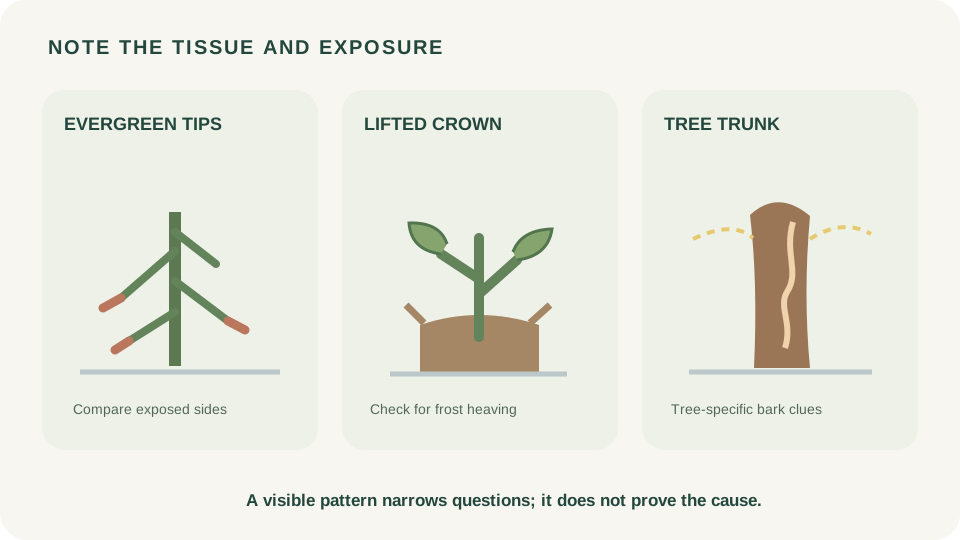
Note what was damaged and where
Photograph the whole plant and affected tissue. Record when damage appeared, exposure to sun or wind, snow cover, and whether nearby plants are affected. Exposed-side injury is a clue, not proof of cause.
Penn State notes that winter injury may resemble disease. Iowa State describes frost heaving that can expose crowns or roots. UConn’s sunscald and frost-crack guidance is tree-specific. Do not pry bark, cut, or rebury a plant from appearance alone.
Compare exposure and history
Record temperature swings, soil moisture, wind, nearby plowed roads or snow storage, and site changes. Winter injury can resemble drought, root problems, pests, disease, or mechanical damage. Browning alone does not establish salt injury.
For a new woody plant, include planting date and site history. Confirm species before applying a host-specific explanation; follow a diagnostic service’s instructions before sending material.
Decide whether to observe or ask for help
If damage is limited and the plant is stable, take dated photos and watch for new growth during its normal season. Seek local advice if injury spreads, decline continues, or the answer would change what you do. Prepare the history and photos; do not treat or remove the plant from a winter symptom alone.
Sources and further reading
- Winter Injury Observed in Ornamental Plantingsauthoritative-secondary
- What is frost heaving, and how do I prevent it?authoritative-secondary
- Frost Cracks and Sunscald on Treesauthoritative-secondary
- Deicing Salt Damageauthoritative-secondary