Troubleshooting & Site Diagnostics
Is it deer, rabbit, or vole damage? Compare plant signs
Compare common deer, rabbit, and vole clues while accounting for plant, season, snow cover, and regional limits.
On this page
Old or weathered damage can be hard to identify. Height, cut shape, bark injury, snow, and plant type may narrow possibilities, but no sign confirms an animal. These Illinois examples are clues, not a universal key.
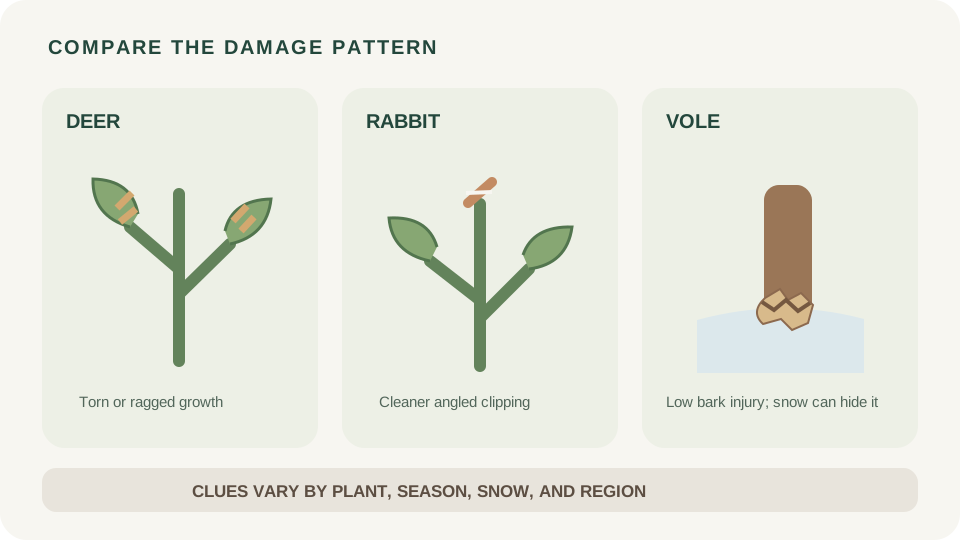
| Possible animal | Clues | Limits |
|---|---|---|
| Deer | Torn or ragged browsed growth; damage across reachable foliage or a repeated browse line. | Reach and pattern vary with plant form, season, and site. |
| Rabbit | Cleanly clipped stems or twigs, often low; snow can change apparent reach. | An old cut edge alone is not proof. |
| Vole | Gnawing or missing bark near woody plant bases, sometimes hidden by snow or dense cover. | This clue depends on plant tissue and conditions. |
Illinois Extension describes deer tearing foliage, rabbits clipping some stems, and vole injury near plant bases under snow or cover. These regional examples frame an observation; they do not confirm cause elsewhere.
Record the pattern
Photograph the whole plant and fresh damage. Note height, date, snow, affected plant kinds, and recurrence. Tracks or droppings add context but may not identify the animal that fed. Compare several clues and unaffected plants.
Disease, insects, weather, and mechanical injury can overlap with feeding. For broader decline, also record light, water, planting history, and weather. See the focused Pennsylvania guide to possible deer browsing on groundcover and prepare notes for local help.
Keep the next step proportionate
Repeat photos to check for new damage. Consult current local wildlife guidance before control; rules and methods vary. Do not handle wildlife or use pesticides from a guessed identification.
Sources and further reading
- Keeping deer out of the yard and gardenauthoritative-secondary
- Vole | Plant Problemsauthoritative-secondary
- Rabbits and Richardauthoritative-secondary