Troubleshooting & Site Diagnostics
Deer browsing on a Pennsylvania native groundcover
Assess whether deer may contribute to a Pennsylvania groundcover's decline while checking plant identity and site conditions.
On this page
Missing leaves or shortened stems can prompt a question about deer, but damage alone does not identify the animal. New establishment, poor site fit, drought, waterlogging, shade, disease, or winter injury may also contribute.
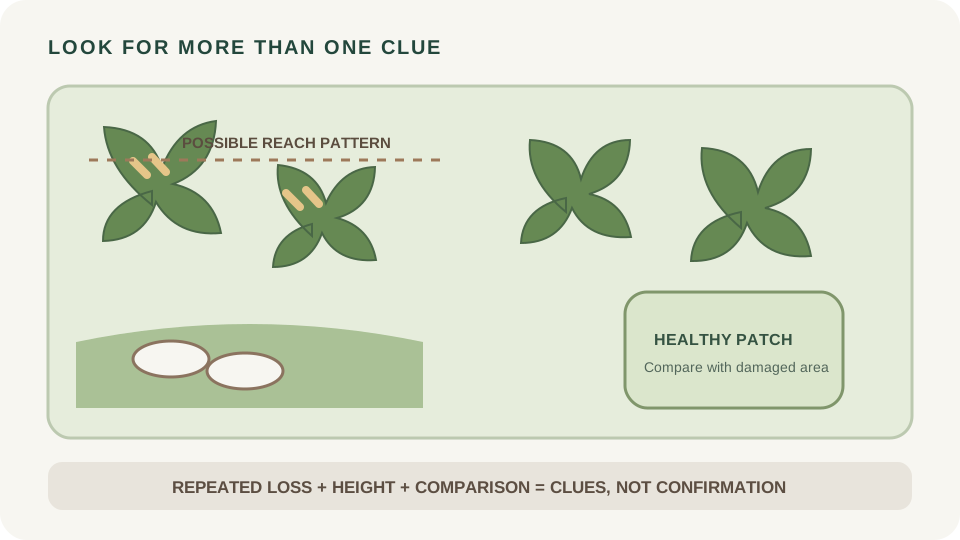
Look for a pattern
Record damaged parts, height, affected plants, and whether loss repeats on new growth. Photograph the bed and fresh stems. Penn State describes browse lines and severely browsed or hedged seedlings as indicators of high deer impact in forest regeneration. These signs are clues, not proof of deer use or home-garden preference. Tracks or sightings add context, not certainty.
Confirm the plant’s identity. Penn State’s groundcover guidance relates selection to the site; native status does not guarantee fit. Note planting date, prior growth, moisture, traffic, and shade changes.
Separate animal clues from plant-health questions
Compare damaged spots with healthy patches of the same plant and nearby species. If decline follows a wet hollow or dry edge rather than a repeated browse pattern, site conditions may be involved. Yellowing, wilting, and sparse growth have multiple causes, and animal damage can coexist with stress. Do not infer species preference from one yard or season.
For a wider comparison of deer, rabbit, and vole signs, use the separate clue guide. To contact local diagnostic help, prepare the plant history and photos.
Choose a cautious next step
Keep dated photos. Check current Pennsylvania guidance and local rules before wildlife-control measures. Methods vary; avoid pesticide use or animal handling from a guessed identification.
Sources and further reading
- Regenerating Hardwood Forests: Managing Competing Plants, Deer, and Lightauthoritative-secondary
- Native Groundcovers Can Solve Tough Landscaping Problemsauthoritative-secondary