Native Shrubs for Wet Shade in Ontario
Match Ontario wet-shade shrubs to the site's seasonal water, light, drainage, and local native range.
On this page
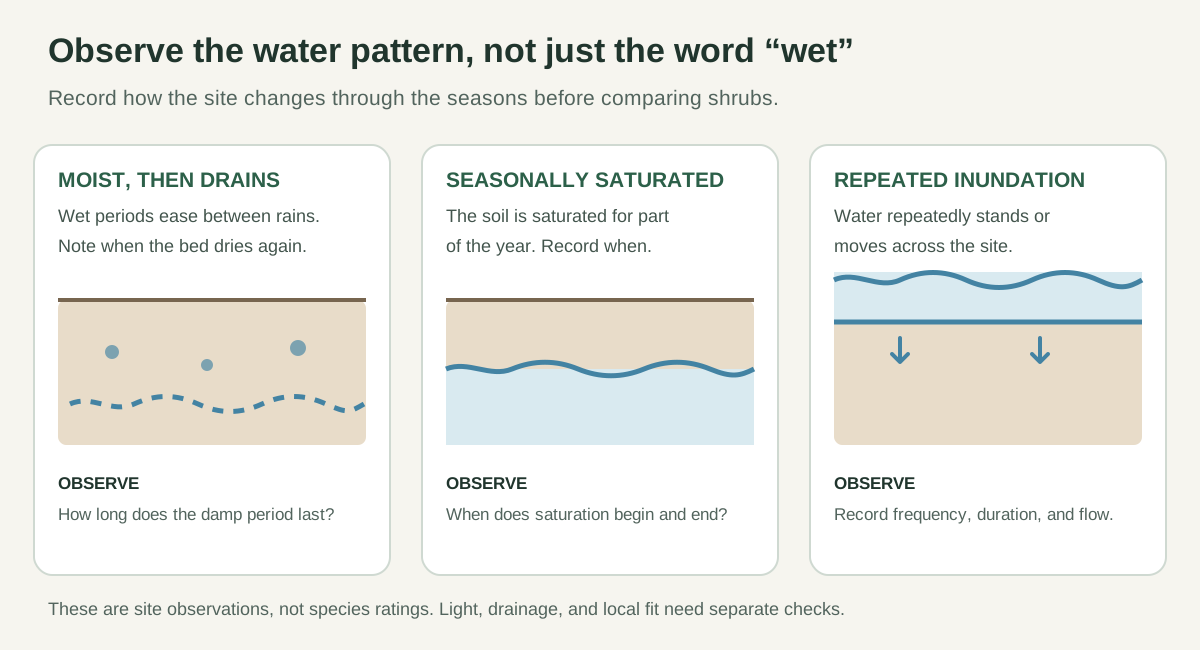
“Wet shade” can mean damp soil beneath a canopy, a low area that is wet for part of the year, or ground that stays saturated or floods. Those are different planting conditions. Before choosing a shrub, note how long the soil stays wet, whether water stands or flows through, how much light reaches the bed, and whether roots from large trees compete for that moisture.
Match the shrub to the moisture pattern
Ontario’s stormwater guidance distinguishes planting zones by how often they are inundated, while the province’s wetland evaluation system considers hydrology along with soils, vegetation, and boundaries. A wetland species list is therefore not a general list for a shaded residential bed. Likewise, shade tolerance alone does not show that a shrub can tolerate prolonged saturation.
A Niagara Peninsula Conservation Authority native-plant guide gives two useful regional screening examples with different limits. It describes spicebush (Lindera benzoin) in moist, shaded woodland settings, while also noting its preference for good drainage. That makes it a lead for a moist site that drains between wet periods, not a promise for standing water. The guide describes silky dogwood as shade-tolerant and very flood-tolerant; check its current botanical name and local availability, and make sure a spreading shrub fits the space. Both examples come from a Niagara regional guide, so verify local range and site fit elsewhere in Ontario.
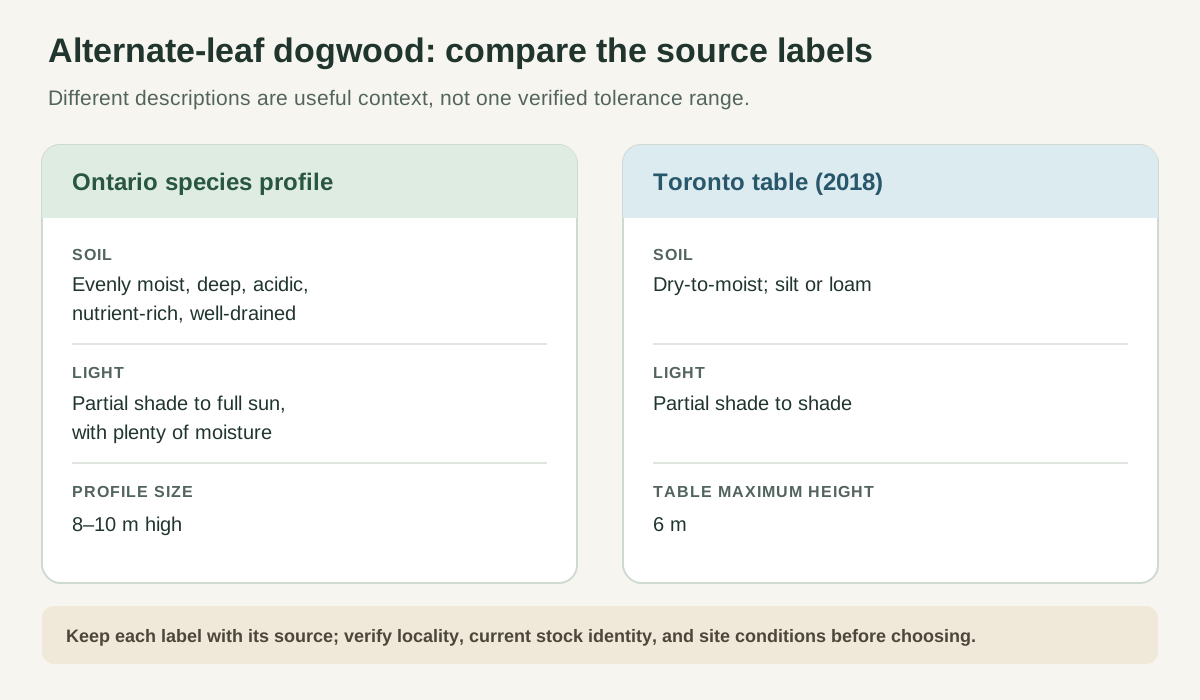
Plant tables can also describe the same species differently. Ontario’s alternate-leaf dogwood profile describes evenly moist, well-drained soil and partial shade to full sun, while a 2018 Toronto table lists dry-to-moist soil and partial shade to shade. These source-specific categories do not define one verified tolerance range or establish prolonged flooding tolerance. Check the plant’s local range, current guidance, water pattern, light, and mature size before treating it as a fit.
For a current Toronto-area search, the City’s Native Plants, Trees & Shrubs tool lets readers explore species suited to their site and create a customized plant list. Treat its results as another local screening aid, not as a province-wide recommendation or a guarantee for one bed.
Use the following checks before expanding a shortlist:
- Light: distinguish deep shade from filtered or partial shade, and notice whether the canopy changes seasonally.
- Water: record whether the soil is moist, saturated for a short period, or repeatedly inundated. Note the season and likely source of water.
- Drainage and flow: distinguish water moving over the surface from water that drains slowly through the soil.
- Space: compare mature height and spread with paths, windows, fences, foundations, and existing vegetation.
- Local range: confirm that the plant is native to your part of Ontario and buy from a source that can identify its origin.
Check whether this is a wet garden or a wetland
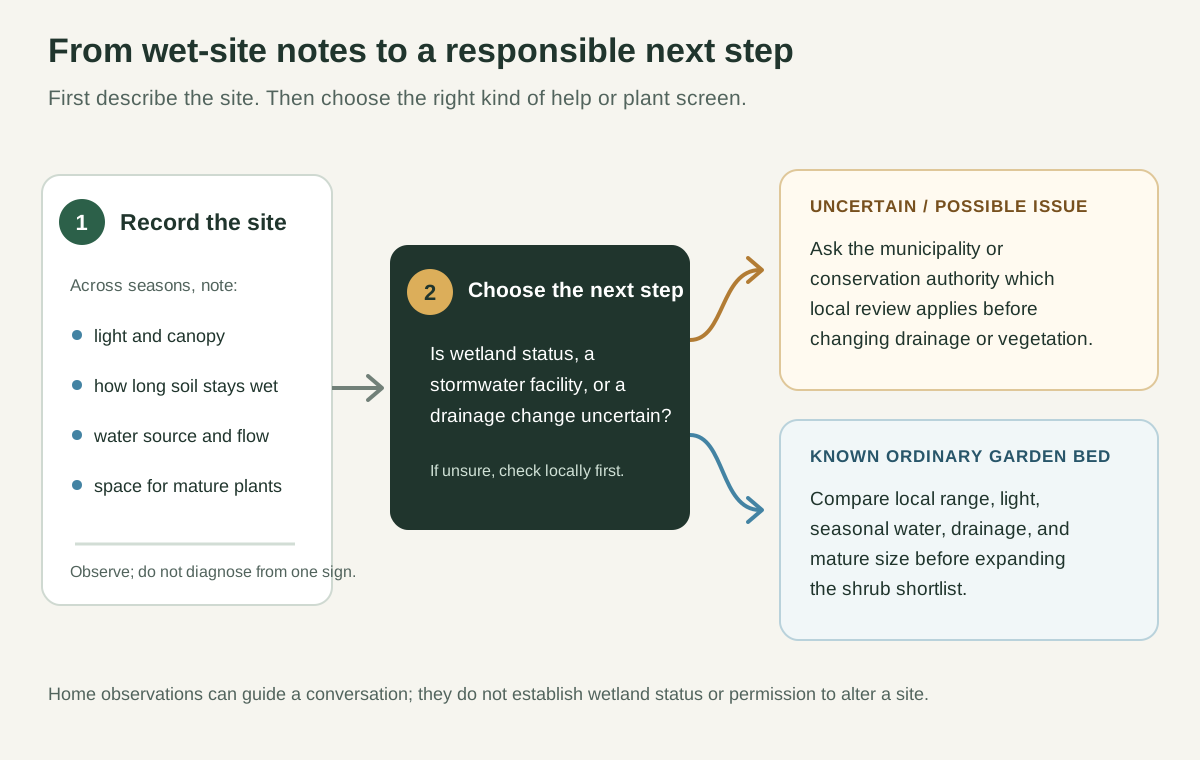
Puddles or wetland plants do not let a homeowner determine a wetland boundary. Ontario says wetland evaluation is a trained process used in land-use planning; different manuals apply to different regions. If the area may be a wetland or part of a wetland system, check with the municipality or conservation authority before filling, draining, excavating, or changing water flow. A wet spot can also be caused by a downspout, compacted fill, or a drainage outlet, and changing that flow may affect other parts of the property.
If the site is an ordinary garden bed that simply stays moist, compare the candidates’ moisture and shade needs with observations from more than one season. If the site is repeatedly inundated, do not infer fit from a “wet tolerant” label alone: frequency, duration, flow, soil, and light still matter. If you suspect a wetland or plan to change drainage, start with the focused Ontario wet garden and wetland site check. The site assessment worksheet can help you record conditions before asking a local native-plant nursery or qualified site professional to review the shortlist.
Sources and further reading
- A Guide to Celebrate Niagara Peninsula’s Native Plantsspecialist
- Ontario Wetland Evaluation System — Southern Manual, Fourth Edition (2022)primary
- Wetlands Evaluationprimary
- Stormwater Management Planning and Design Manualprimary
- Alternate-leaf dogwoodprimary
- List of Native Ferns, Grasses, Wildflowers, Shrubs and Treesprimary
- Native Plants, Trees & Shrubsprimary