Native Spring Groundcovers for Pennsylvania Gardens
Compare Pennsylvania Extension examples of spring ground-layer plants and plan for the months after their flowering period.
On this page
Spring ephemerals can bring an early flowering layer to a Pennsylvania garden, but their brief season should not be mistaken for year-round groundcover. Choose them for the light and moisture they need, then decide what will occupy the ground after their spring growth fades.
Compare the seasonal profiles
| Plant | Pennsylvania Extension example | What remains to verify |
|---|---|---|
| Virginia spring beauty (Claytonia virginica) | About 4–6 inches tall; described for sun or shade and rich, moist to drier soil. Its bloom can last up to three weeks, and the source identifies nectar and pollen value for native bees. | The source does not establish dense-clay performance, deer response, or county-level native range for every planting location. |
| Bloodroot (Sanguinaria canadensis) | Presented as a groundcover for average-to-moist soils. | This source does not establish its response to compacted clay, browsing, or a particular county’s conditions. |
| Virginia bluebells (Mertensia virginica) | Described for moist, well-drained soil in part to full shade, with reseeding when conditions suit it. | Reseeding is not a promise of continuous cover. Verify local range and allow for the site’s actual drainage. |
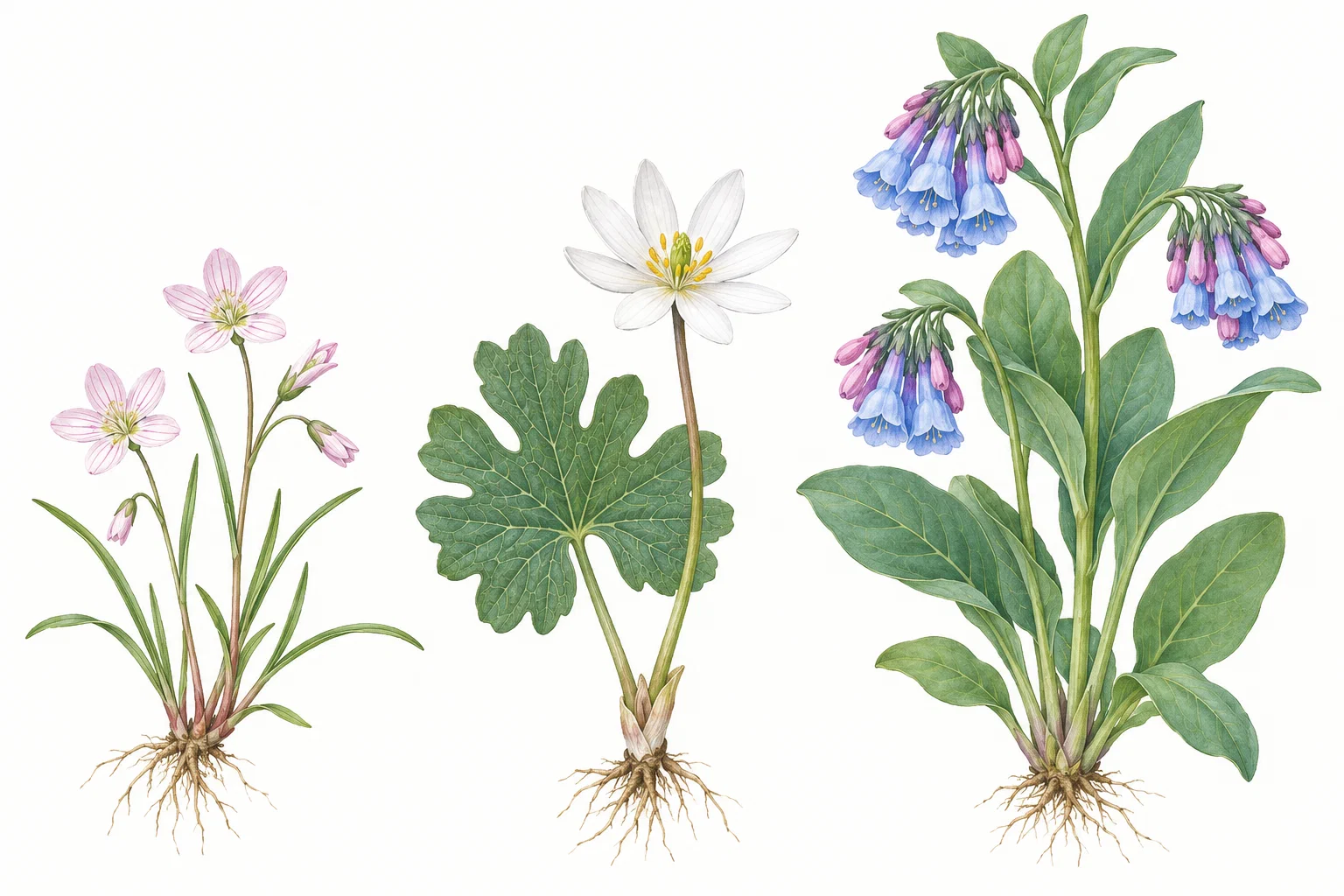
The plate supports visual comparison; confirm species identity from a reliable botanical source.
These are examples from Penn State Extension’s spring-ephemeral guide, not a complete Pennsylvania plant list. The word “Virginia” in a common name does not identify the range of a plant at your address. Confirm the botanical name and local native status before purchase.
Plan for the months after spring
Decide whether the planting should remain open after flowering or share the space with another locally appropriate ground layer. A spring ephemeral may be a poor choice if you expect a dense, uniform carpet throughout the growing season. Compare mature spread, light, moisture, and timing rather than using flower color as the only selection field.
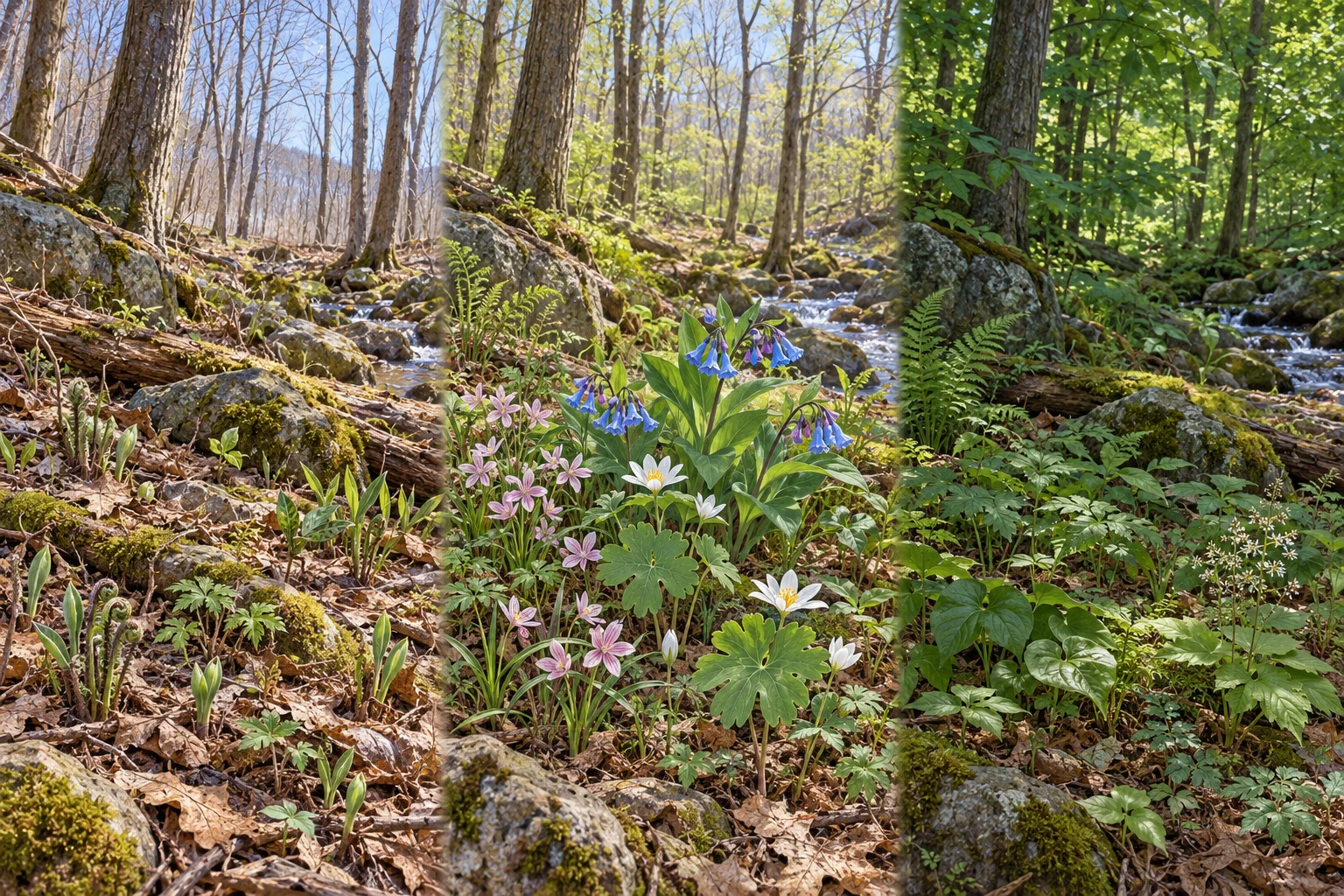
Spring flowering does not guarantee that the same plants provide dense cover later in the growing season.
If deer browsing or heavy clay is a primary constraint, the evidence here is not enough to promise a reliable match. See Native groundcovers for clay soil and deer pressure in Pennsylvania for candidates with more relevant soil or browsing information. Keep each unknown visible: a plant can be a useful seasonal layer without solving every difficult-site problem.
Sources and further reading
- Spring Ephemerals for Residential Gardensauthoritative-secondary
- Native Violetsauthoritative-secondary
- Native Groundcovers Can Solve Tough Challenges in the Landscapeauthoritative-secondary