Native Shrub Comparison for Dry Shade in Virginia
Compare Virginia shrub candidates for dry shade while keeping shade, moisture, mature size, browsing, and local native range distinct.
On this page
Dry shade is a combination to verify at the planting spot, not a promise attached to a tree canopy. A site may be shaded but still receive little water once established trees and shrubs compete for it. Virginia sources offer several useful comparisons, but their tables are selected examples—not proof that every plant is native to every Virginia county or will thrive beneath every tree.
Start with shade intensity and seasonal moisture
Record whether the site gets open sky, dappled light, or deep shade. Check the soil during dry weather as well as after rain. Note nearby roots, slope, and whether the planting can be watered while it establishes. “Shade tolerant” and “drought tolerant” are separate fields; neither alone establishes a fit for the exact site.
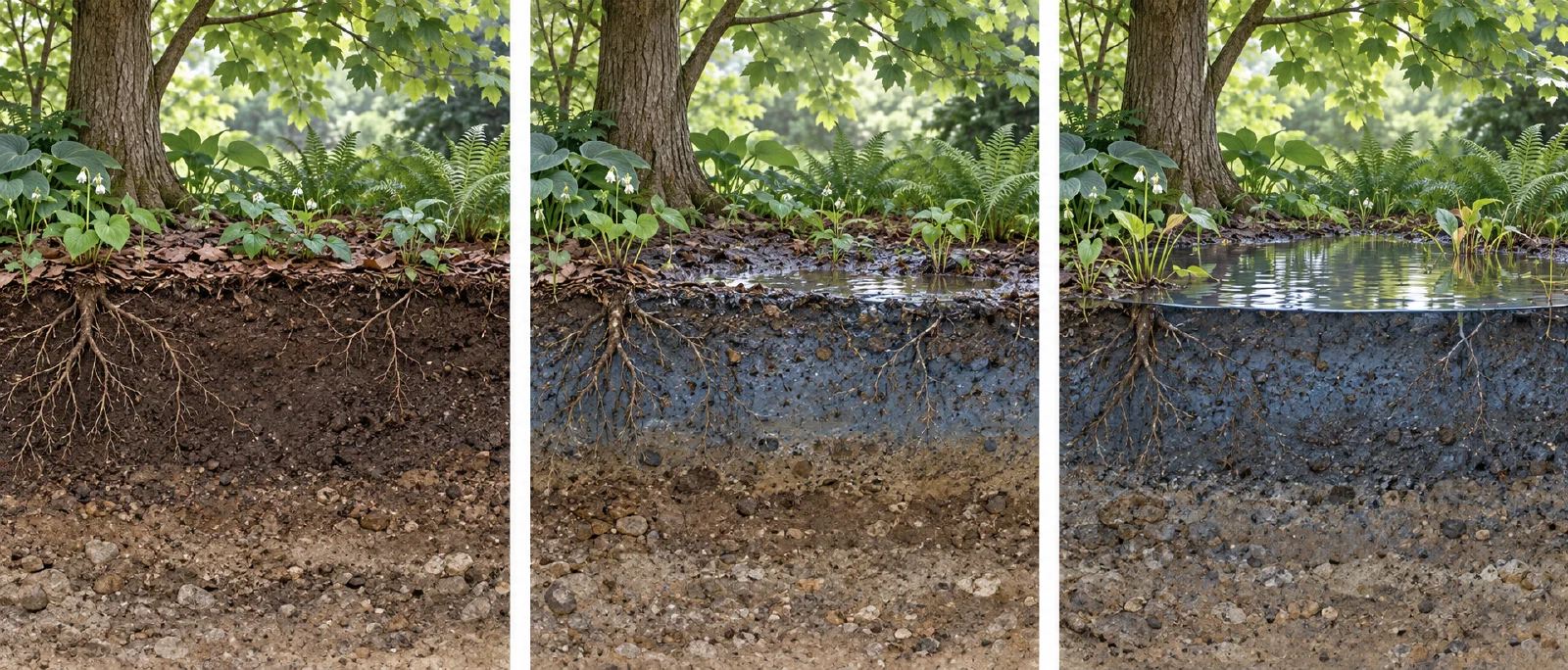
The soil profiles illustrate different site conditions; they do not establish any candidate’s tolerance for them.
Compare the trade-offs
| Candidate | Evidence-backed profile | What to check before choosing |
|---|---|---|
| Blackhaw viburnum (Viburnum prunifolium) | Virginia Cooperative Extension says it grows in dry soil and can be grown in sun or shade. It may develop as a multistem shrub or a small tree. | Confirm local native range, mature space, and the form of the plant material. The cited profile does not establish deer response beneath a specific canopy. |
| Black chokeberry (Aronia melanocarpa; listed as Photinia melanocarpa in the Virginia DWR table) | The selected-shrub table reports shade tolerance, medium drought tolerance, and about 15 feet at 20 years, and marks the species as not preferred by deer. Virginia Tech uses the name Aronia melanocarpa and classifies the shrub as medium-sized. | Treat the browsing mark as a tendency, not protection. Source size descriptions use different measures, so check the exact plant and mature space. Verify county-level range before choosing. |
| Eastern redcedar (Juniperus virginiana) | The DWR table reports high drought tolerance, intermediate shade tolerance, low tolerance of anaerobic soil, and about 20 feet at 20 years. It marks the species as not preferred by deer. | It is a better candidate for an open, dry edge than for deep shade or waterlogged ground. Its tree-sized form may not fit a small shrub bed. |
Virginia Tech’s blackhaw viburnum profile gives the clearest dry-soil and shade combination here. Its current shrub guide uses Aronia melanocarpa for black chokeberry; the DWR table retains Photinia melanocarpa. The DWR table helps compare size, browsing, shade, and drought separately. Neither source supplies a county-level answer for every planting location.
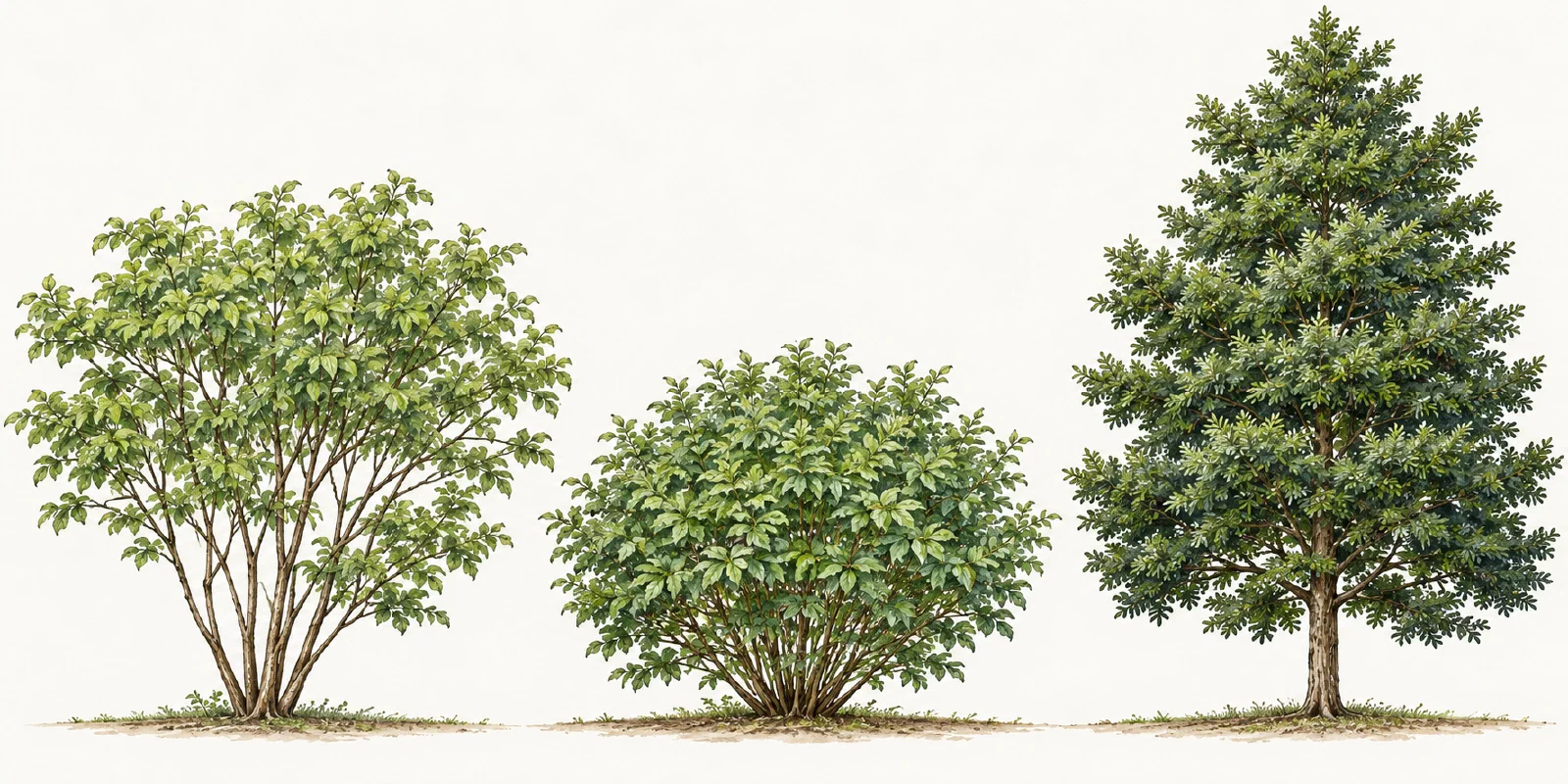
The forms are illustrative; confirm species identity and mature dimensions for the plant material you select.
Narrow the shortlist to your part of Virginia
Before purchasing, check the plant’s native range at the local scale and ask whether nursery stock is the straight species or a named cultivar. A species can be native to the eastern United States without occurring naturally in the county or ecological region where you plan to plant it.
If your site is deeply shaded, very dry, and crowded with established roots, current profile evidence may not identify a dependable shrub. Keep that uncertainty visible. You can compare a smaller set of candidates, improve establishment care where appropriate, or ask a Virginia native-plant specialist to check the site. Do not infer deer resistance or local nativity from a profile field that is missing.
For a repeatable way to read range, climate, moisture, and browsing data together, see How to compare native plant profiles for your site.
Sources and further reading
- Habitat Gardening for Wildlifeauthoritative-secondary
- Problem-free Shrubs for Virginia Landscapesauthoritative-secondary