Native Plants for Wet Shade in Southern Michigan
Compare Southeast Michigan grasses and sedges for shady, moist sites, and separate seasonal saturation from persistent standing water.
On this page
“Wet shade” can describe several different sites: a woodland floor that stays damp, a low spot that floods in spring, or a shaded area where water stands after rain. Those are not interchangeable conditions. A short comparison from Southeast Michigan offers useful starting points, but no plant label guarantees performance in prolonged ponding or every county.
Describe the site before choosing plants
Watch the area during more than one season. Note how many hours of direct sun reach it, whether a nearby tree canopy changes that light, and how long water remains visible after rain or snowmelt. Check whether the soil is simply moist, seasonally saturated, or repeatedly underwater. Clay texture, compaction, drainage, and water duration can all change the result.
The Michigan Natural Features Inventory describes southern wet meadows as groundwater-influenced communities that can flood seasonally. That is valuable context for understanding wetland plants, not a recipe for a residential planting bed. A yard with altered drainage may behave differently. Avoid assuming that a plant from a wetland list will tolerate every kind of standing water.
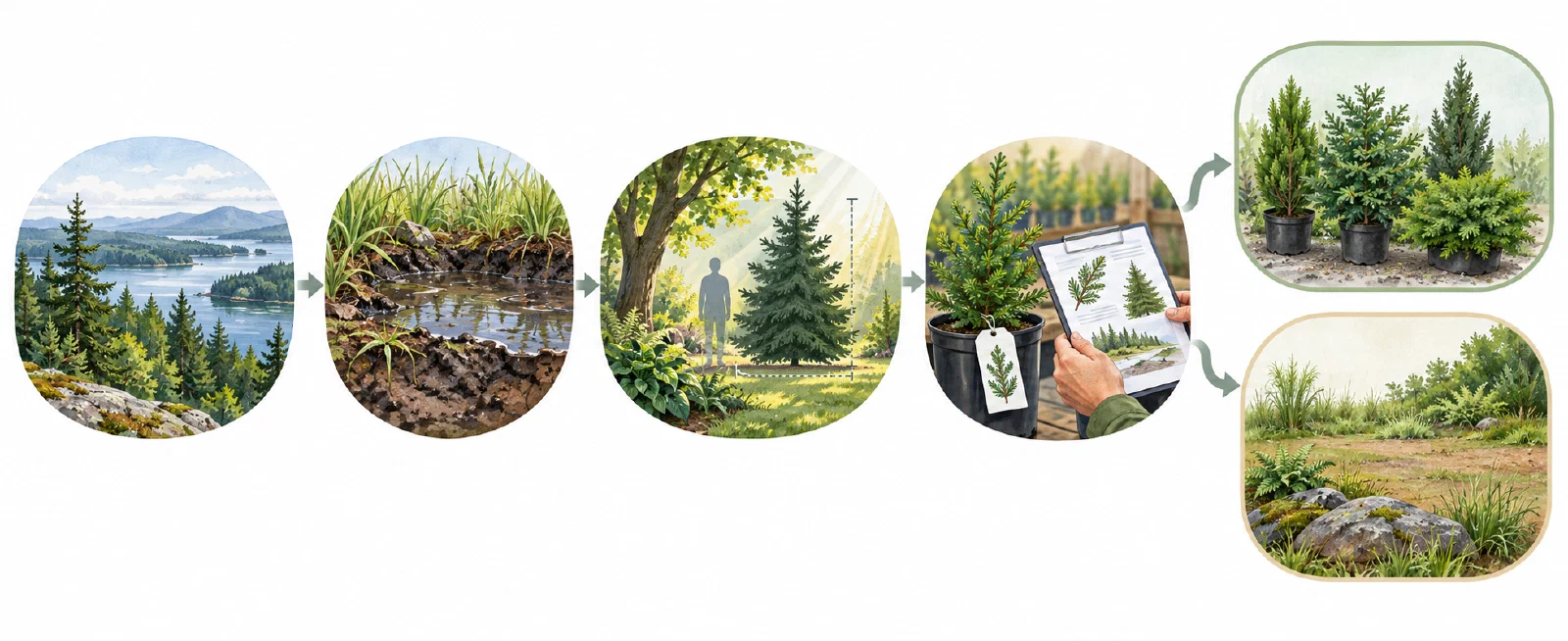
The screening sequence is conceptual; pictured plants are examples, not the species list below.
Compare a few Southeast Michigan candidates
| Plant | What the regional reference says | Useful fit and limit |
|---|---|---|
| Fowl-manna grass (Glyceria striata) | Common in wet woodland hollows; about 1–3 feet tall; described as suitable for moist or wet shade. | The clearest match in this list for a shady, moist-to-wet garden area. The source does not give a standing-water duration. |
| Palm sedge (Carex muskingumensis) | Grows along riverbanks and in floodplain forests; tolerates shade and moisture; about 2–3 feet tall and fills in readily. | Consider where moisture and shade overlap. Allow room for its spread instead of treating it as a small, static clump. |
| Fringed sedge (Carex crinita) | Found in open marshes and wet woodland depressions; grows in sun or shade when moisture is adequate; about 2–3 feet tall. | A possible choice for a reliably moist edge. It is not a match for a site that becomes dry for long periods. |
| Tussock sedge (Carex stricta) | A wetland sedge that can form raised mounds in standing water and tolerates periodic drying. | Consider only where the very wet hydrology fits. The regional description does not establish its performance in dense residential shade. |
| Gray’s sedge (Carex grayi) | Usually found in deciduous woods, grows best in partial or full shade, and reaches about 1–2 feet. | A shade option to investigate where soil moisture fits. The reference does not establish its tolerance of ponding. |
The City of Ann Arbor’s native grass, rush, and sedge guide describes these as examples rather than a complete list. Use each entry as a shortlist prompt, then confirm its range, mature spread, and plant source for your locality.
Match the plant to the wet part of the yard
If the site is damp but drains between storms, compare it with plants described for moist shade. If it floods briefly, look for a species-level account that describes that pattern. If water stays on the surface, do not substitute a generic “wet tolerant” label for evidence about standing water. A no-match result is useful: it may mean the light, water, and space requirements do not overlap in the same part of the yard.
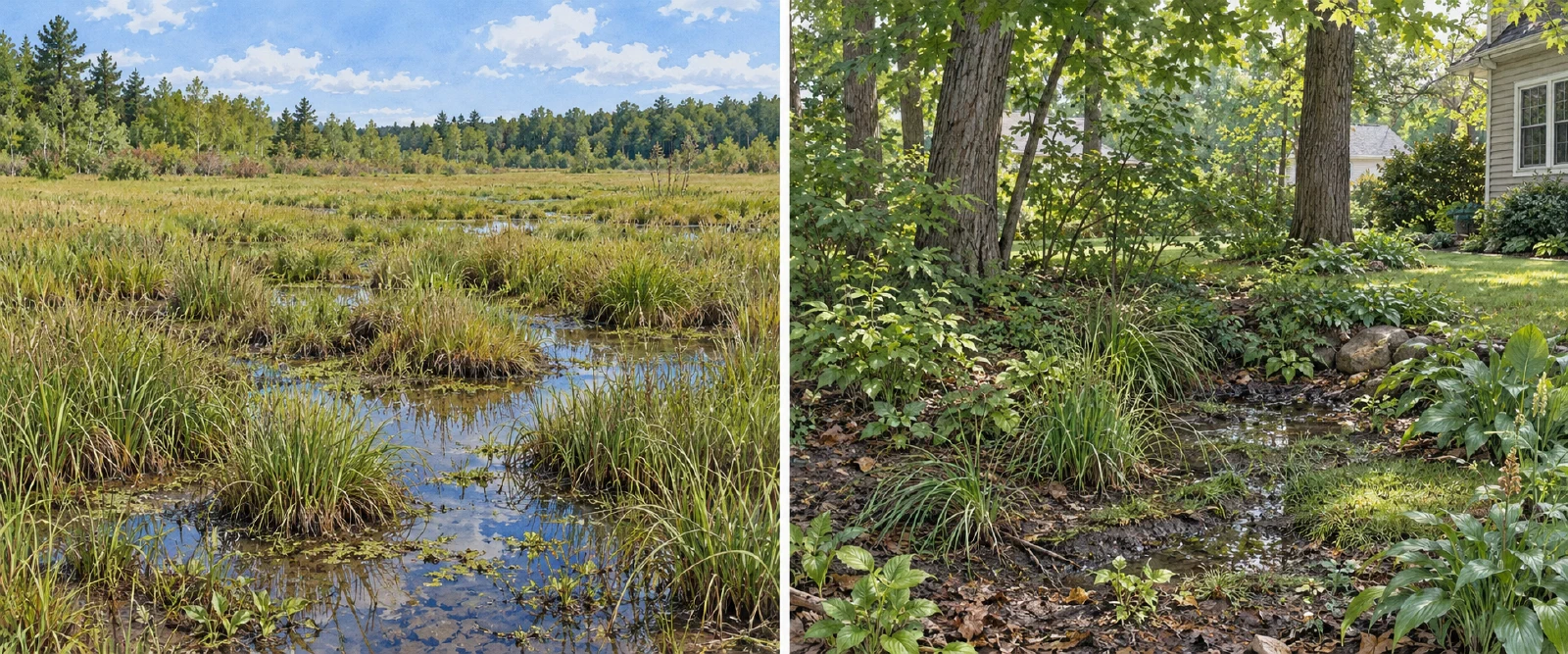
The wet meadow and shaded yard edge illustrate different site patterns; observe water duration before choosing plants.
Before buying, compare the botanical name, mature height and spread, moisture description, and exact cultivar or seed source. For a broader explanation of how to read these fields, see How to compare native plant profiles for your site.
Sources and further reading
- Native Grasses, Rushes, & Sedgesauthoritative-secondary
- Smart Gardening: Using Native Plants Is a Smart Choice for Michigan Landscapesauthoritative-secondary
- Southern Wet Meadowspecialist