Common Blue Violet Profile for Pennsylvania
Common blue violet tolerates clay and full sun in Penn State guidance, but rhizomes can form colonies that need room and monitoring.
Common blue violet (Viola sororia) is one of the violet species discussed in Penn State Extension’s guide to native violets. The guide presents violets as a possible groundcover for difficult Pennsylvania landscapes and identifies common blue violet as a species that can tolerate clay soils and full sun.
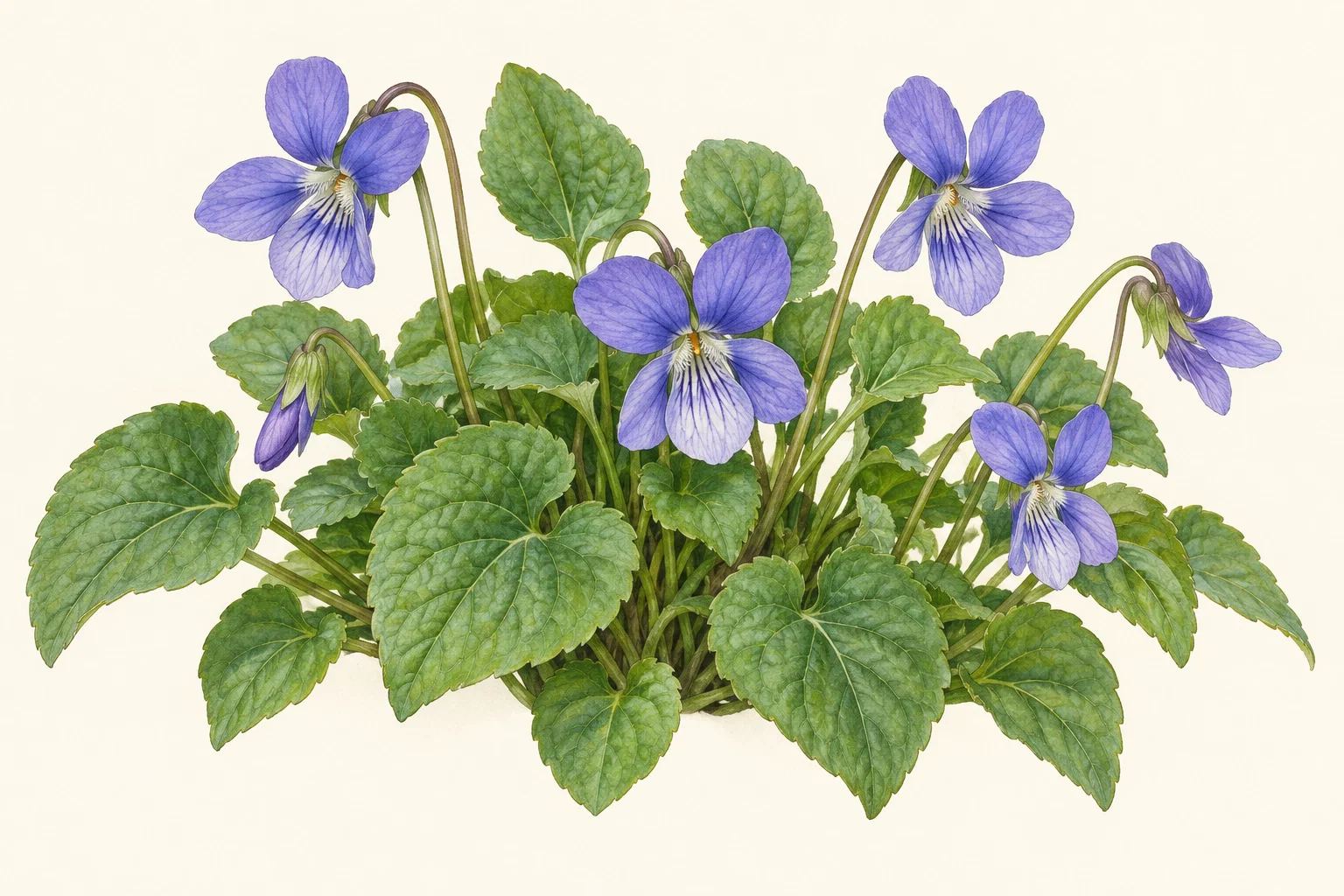
Illustrative plant form, not an identification key or prediction of spread; verify local range and nursery stock.
Site profile
Most violets in the guide prefer moist conditions and partial shade, so do not transfer one species’ traits to every violet. Penn State notes that violet rhizomes can form colonies and may choke other plants. Leave room for that spread and monitor the edge of a planting; the source does not give a universal spread rate or a mature width for every population or cultivar. It also does not establish common blue violet’s response to compacted or persistently waterlogged clay.
Penn State uses deer-resistant language for violets. Treat it as a relative tendency rather than protection from browsing. The source does not identify a specific wildlife relationship for this species. Confirm local native range and the identity of nursery stock before planting. For other Pennsylvania ground-layer options and soil limits, see the clay-and-deer comparison.
Sources and further reading
- Native Violetsauthoritative-secondary