Black Chokeberry Profile for Virginia
Virginia sources use both Aronia melanocarpa and the older name Photinia melanocarpa and report different size measures.
Virginia’s wildlife and landscape references identify black chokeberry under two scientific names. The Virginia Department of Wildlife Resources table uses Photinia melanocarpa; Virginia Cooperative Extension’s current shrub guide uses Aronia melanocarpa. Check the name on the plant label and use the current name when looking up range information.
Site profile
Virginia Tech describes black chokeberry as a medium-sized shrub with showy white spring flowers and black fruit in fall or early winter. It tolerates wet and dry soils and can sucker to form a colony. The DWR table reports shade tolerance and medium drought tolerance; it lists about 15 feet at 20 years. Virginia Tech uses a medium size class, defined in that guide as 5 feet to less than 9 feet. These descriptions use different measures, so check cultivar, spacing, and expected mature form before planting.
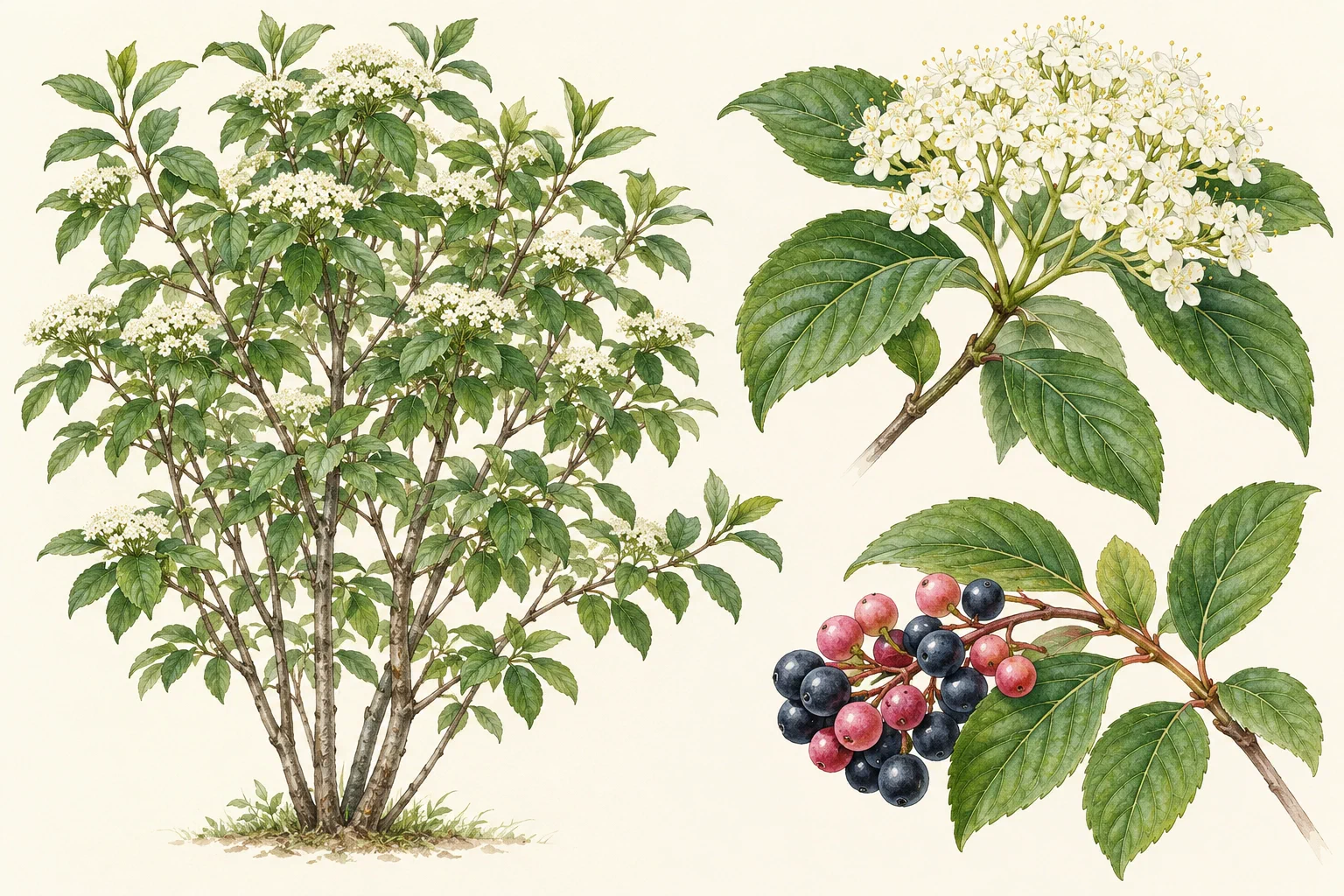
Blackhaw viburnum is a different species from black chokeberry (Aronia melanocarpa); compare the scientific names on plant records.
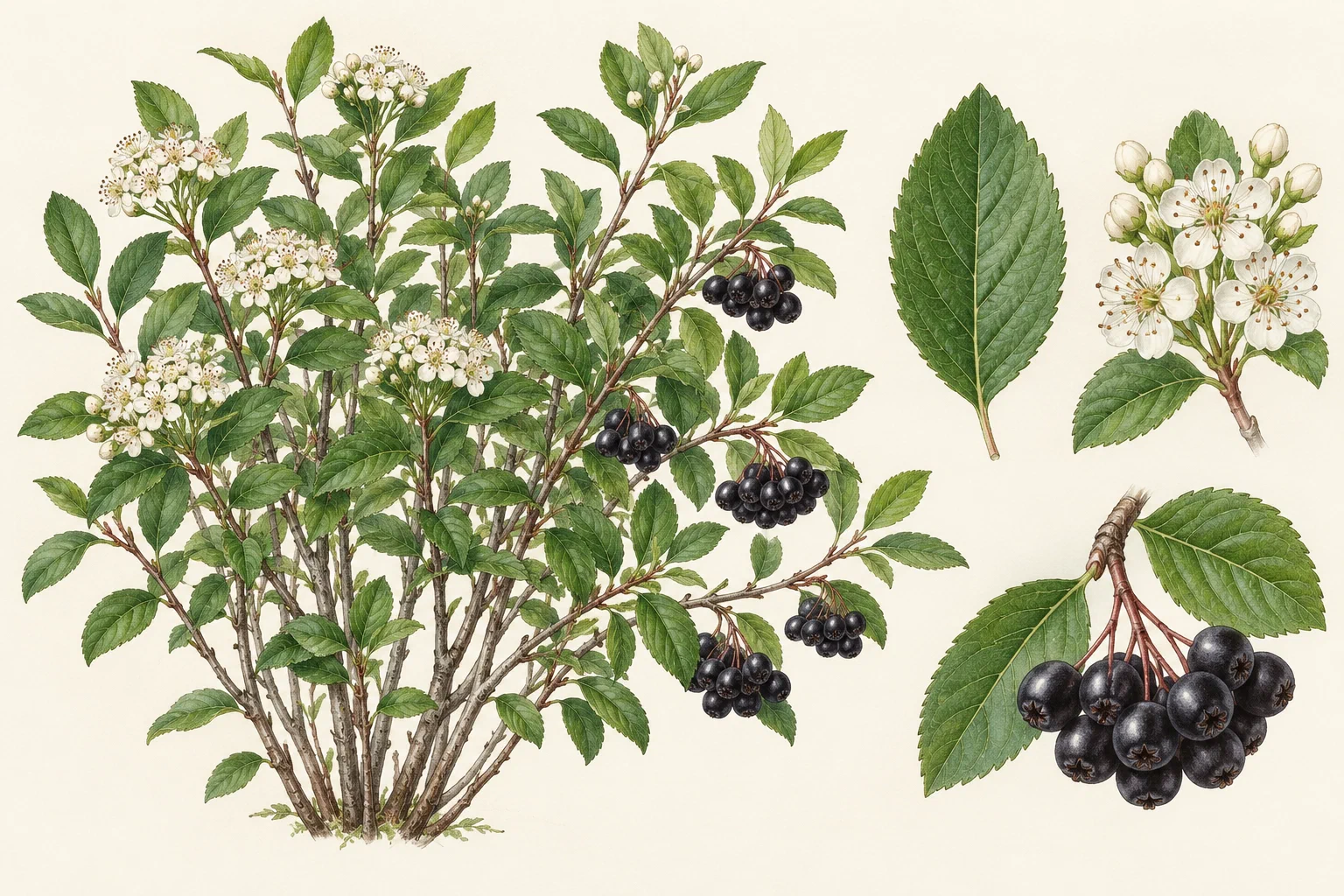
Illustrative growth form and seasonal traits only; it is not to scale or an identification key. Verify local range and cultivar size.
The DWR table marks the species as not preferred by deer. That is a relative tendency, not protection. Neither source resolves county-level native range or performance in deep shade beneath competing roots. Verify local occurrence and nursery provenance. For a three-shrub comparison, see Virginia shrubs for dry shade.
Sources and further reading
- Habitat Gardening for Wildlifeauthoritative-secondary
- Problem-free Shrubs for Virginia Landscapesauthoritative-secondary