Plant Communities & Habitat Design
Planting a public right-of-way strip
Plan a small sidewalk planting around site stress, pedestrian access, utilities, and the rules of the municipality responsible for the strip.
On this page
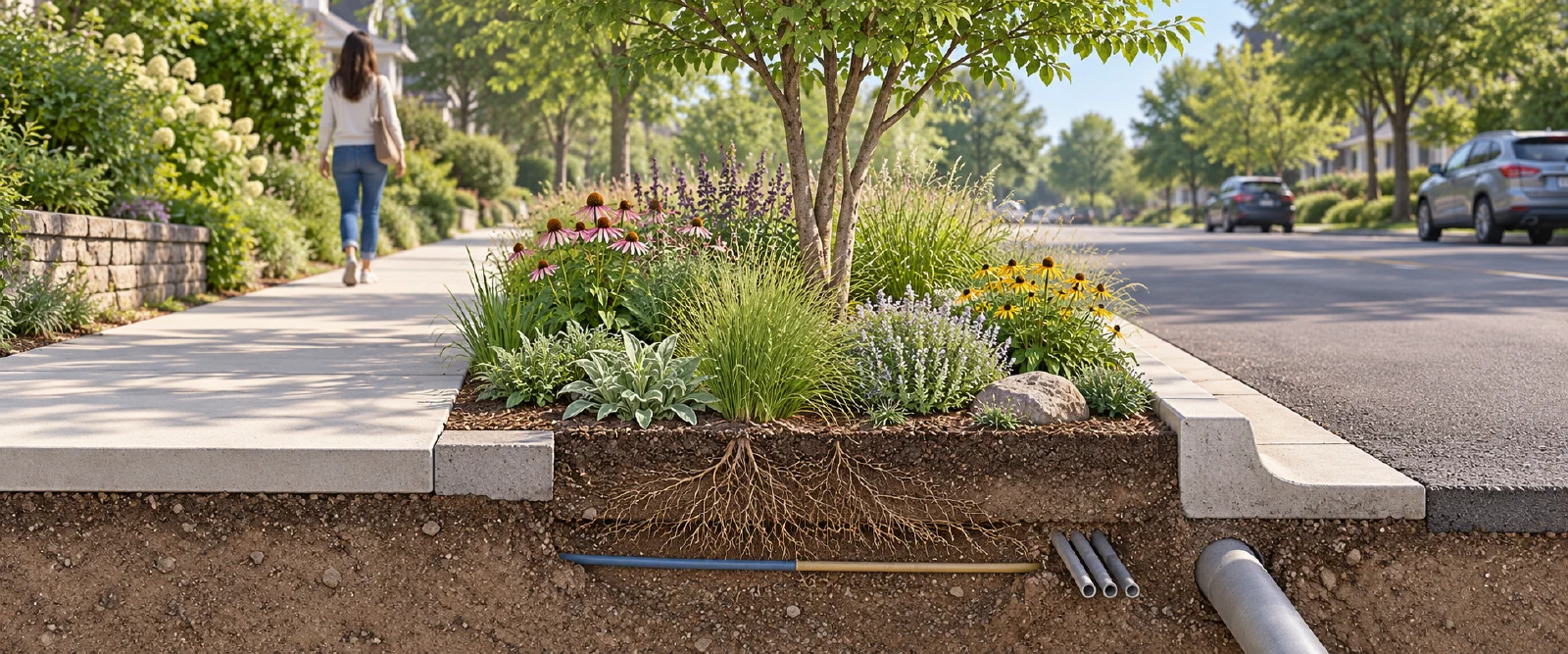
A sidewalk strip can look like a small garden bed, but it also carries public access and infrastructure responsibilities. Before choosing plants, confirm who controls the strip, what local rules apply, and which site stresses the planting must handle. Municipal requirements differ; examples from one city are not a rule for another.
Map the constraints first
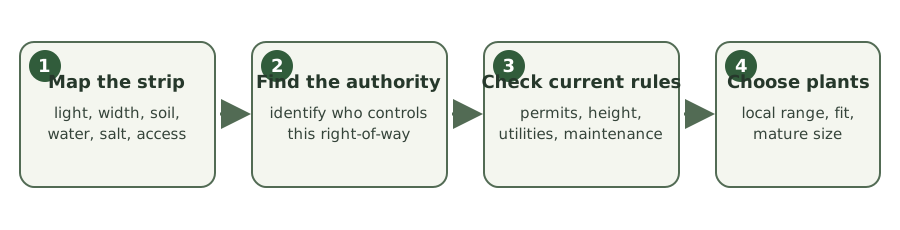
Observe the strip through the day and across seasons. Note sun, pavement heat, compacted soil, wet and dry periods, winter salt exposure, snow storage, and the width available for roots and mature growth. These conditions vary from block to block. A plant listed for a hardiness zone is not automatically native to the area or suited to a narrow, exposed strip.
Mark the walking route, corners, driveways, street trees, signs, and places where visibility matters. Locate underground utilities before any digging. Leave room for people to pass and for public or utility work; a municipality or utility may need access to the right-of-way later.
Check the local rules before designing
Contact the city or town responsible for the strip. Ask whether a permit or registration is needed, which height or clearance limits apply, whether trees or structures are allowed, and what maintenance or removal responsibilities fall to the resident. Check current requirements for the exact address before buying plants.
The details are local. Seattle requires a Street Use permit for planting-strip gardens and sets height and clearance limits. Toronto specifies a mature-height limit for boulevard planting and warns that city or utility work may remove it. Ottawa’s residential guide sets its own height and digging conditions. These examples illustrate the kinds of questions to ask; none governs another municipality.
Build a low, resilient community
Choose regionally native plants only after checking local range, mature size, spread, and fit with observed light and moisture. Keep plants low near sidewalks and sightlines, repeat a manageable set of roles where the strip allows, and choose salt or drought tolerance only when a local source supports it. Minneapolis advises gardeners to account for snowplow salt and seasonal conditions; Pennsylvania Extension describes compaction, heat, salt, and snow load as possible stresses. Neither source establishes a universal plant list or comparative tolerance ranking.
Avoid a dense design that blocks walking space or creates a visual wall at a corner or driveway. If the strip is too narrow, heavily salted, or difficult to maintain, a smaller planting or an unplanted access area may be the more workable choice. Recheck local requirements and utility locations before changing the design.
For broader site-to-role methods, see how to adapt a native plant community to your yard and the Virginia dry-shade community guide.
Sources and further reading
- Creating a Hellstrip Gardenauthoritative-secondary
- Within your Boulevardprimary
- Gardening in the Planting Stripprimary
- Boulevard garden design and careprimary
- Residential Boulevard Gardening Guideprimary