How to create a soft landing beneath a Pennsylvania tree
Replace turf beneath a suitable tree with native shade plants, leaf litter, and branches to add ground-level habitat while protecting the tree's roots.
On this page
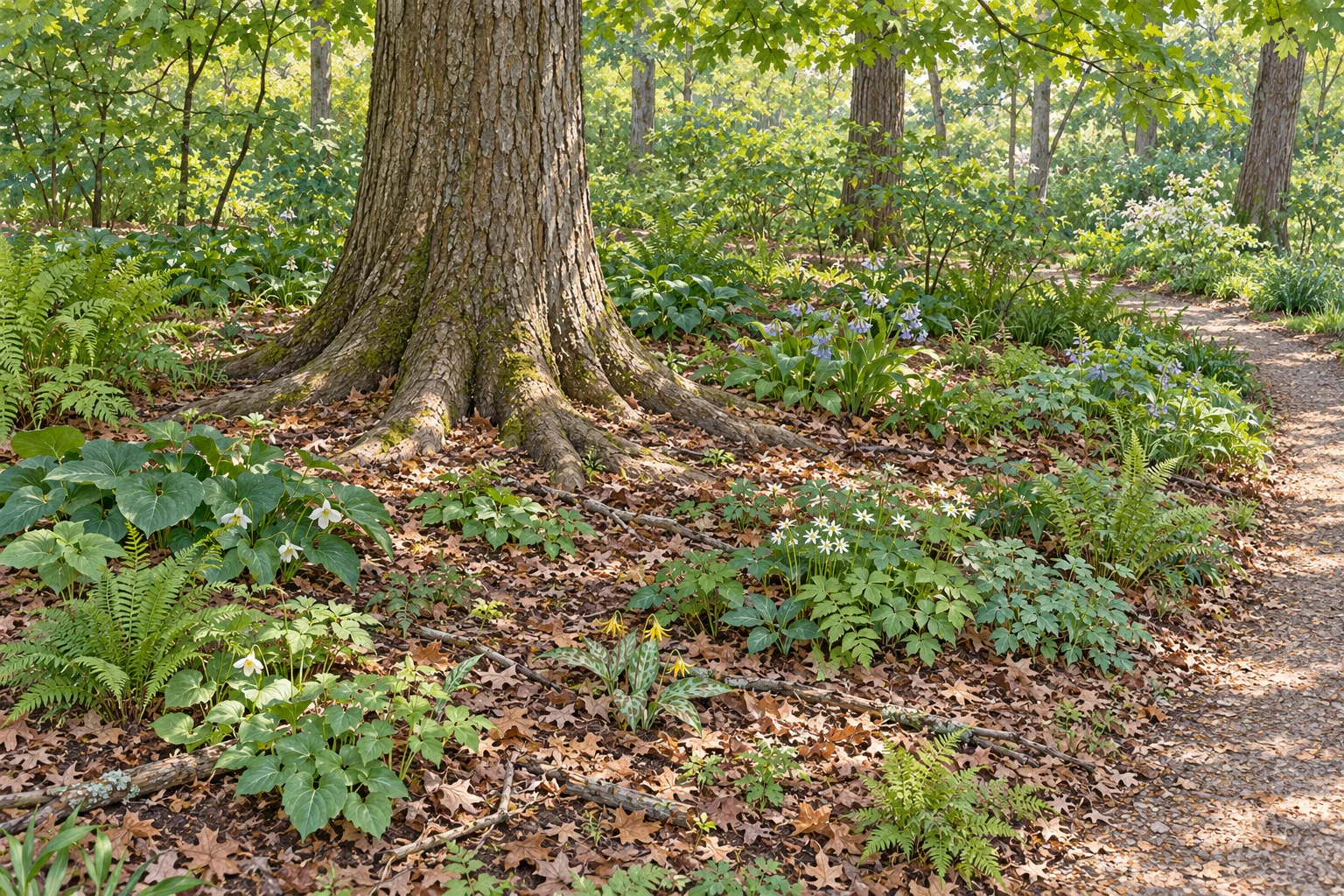
A soft landing is a ground layer beneath a tree made from native shade plants, leaf litter, and some branches. Penn State Extension presents it as a way to give insects and other small wildlife sheltered ground habitat while replacing closely mown turf or heavily mulched soil. It can also make the area easier to maintain by reducing mowing close to the trunk. It is one habitat feature, not a promise that a particular insect or bird will visit.
Start with the tree and the site
Choose an existing healthy native tree where the surrounding area can safely hold plants and leaf litter. Keep useful native plants that are already growing there, and identify invasive plants before removing them. Check how much light reaches the ground, how the soil drains, and whether the area is compacted or dry from tree-root competition. A plant suited to partial shade may not flower or persist in the deeper shade beneath another canopy.
Use local sources to confirm each plant’s scientific name, Pennsylvania range, light and moisture needs, and mature spread. A soft landing does not require a uniform plant carpet. The Pennsylvania full-shade pollinator guide offers examples and explains the limits of broad shade labels.
Convert turf without burying the tree
Penn State’s method uses cardboard, leaf debris, and branches over existing turf, followed by low-growing native perennials installed as plugs or cell packs with a small hand spade. Work gently around roots and keep the planting within the canopy’s dripline where site conditions allow. The source specifically advises avoiding digging within three feet of the trunk, where sensitive roots and the root flare are located. It also advises against adding extra soil or compost near the tree, which can suffocate its root system.
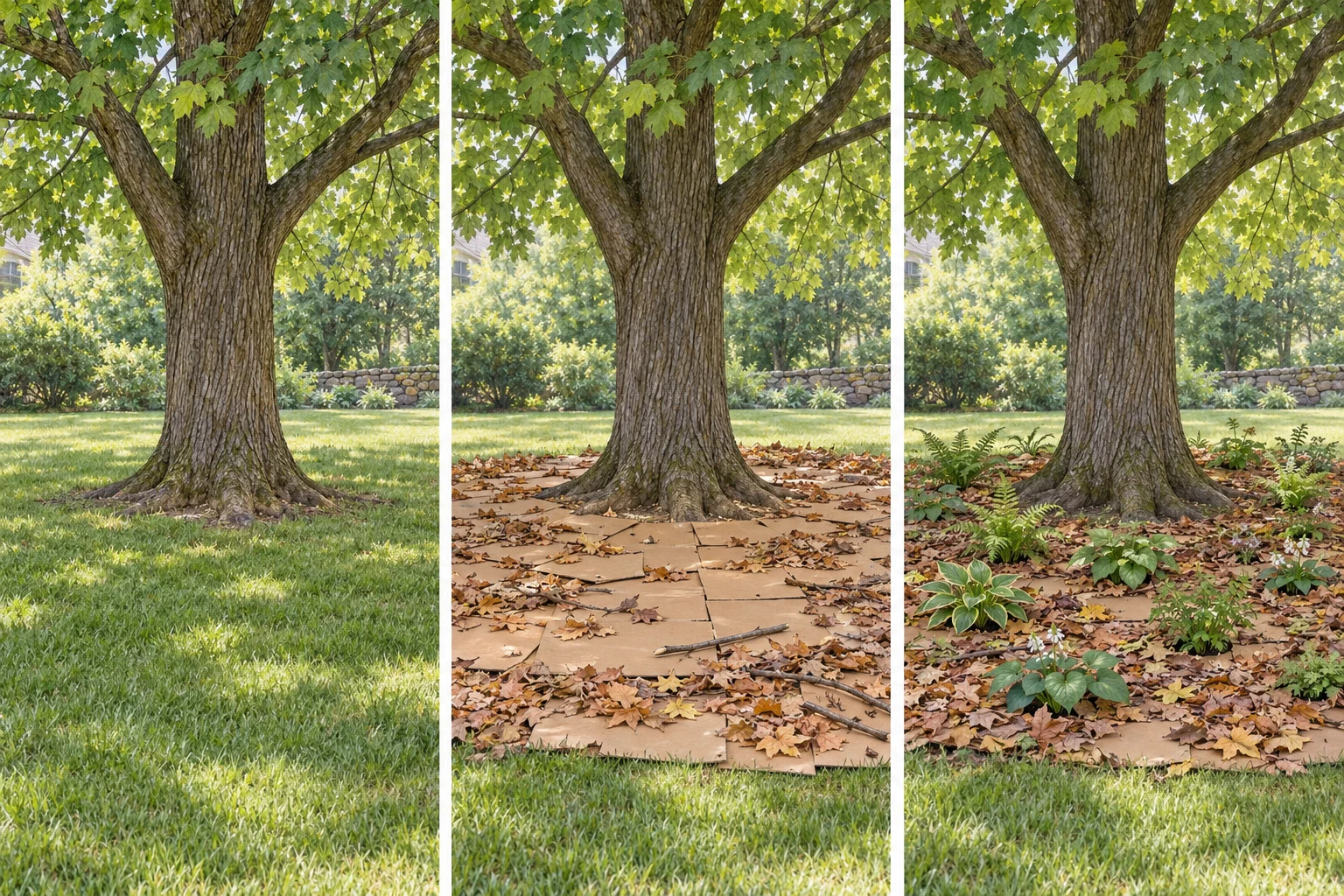
This illustration shows Penn State Extension’s described sequence; the pictured plant forms are illustrative, not species recommendations. Site conditions and tree-care guidance determine whether the method is appropriate.
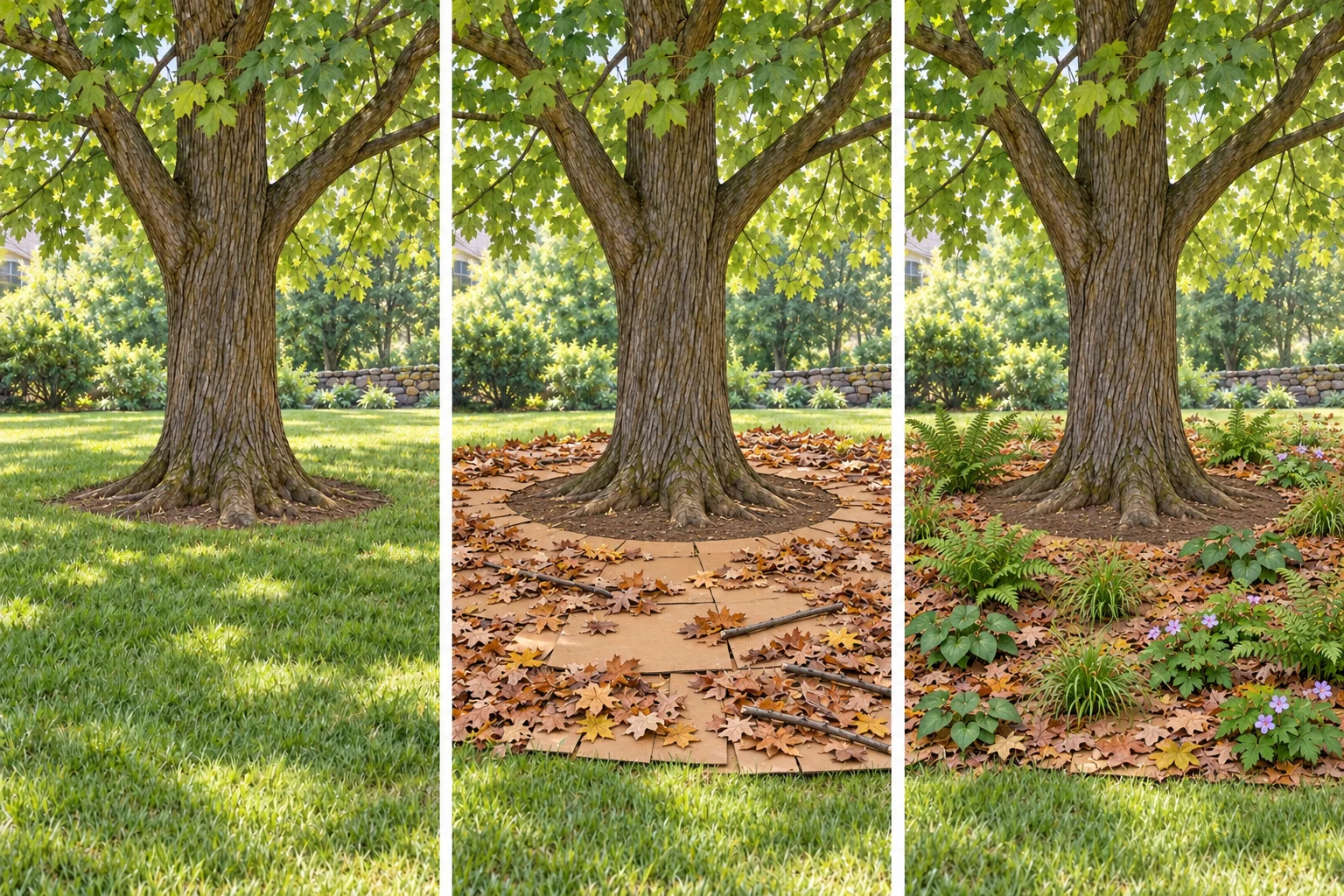
The clear zone illustrates Penn State Extension’s source-specific three-foot no-dig advice; the safe planting boundary depends on the tree and site.
Those are source-specific directions, not a guarantee that every tree or yard can be converted in the same way. If the tree’s health, roots, or existing vegetation make the plan uncertain, get local tree-care guidance before changing the area. Keep branches and leaf litter where they do not obstruct paths, create a property hazard, or interfere with access.
Maintain habitat while keeping the area manageable
In fall, Penn State recommends raking leaves and twigs back into the planting to build the natural duff layer. Retain only the amount of woody material that is safe for your property, and keep paths, doors, drains, and play areas clear. Monitor new plants for establishment, spread, and competition with the tree; adjust the mix to the measured light and moisture rather than adding more soil.
A soft landing can complement flowers by providing cover and a place for some insects to complete parts of their life cycle. For other pollinator needs, such as bloom timing, host plants, or nesting areas, use the broader wildlife garden function checklist and verify that each resource fits your site.
Sources and further reading
- Soft Landings Benefits Insects and Gardenersauthoritative-secondary