How to read native seed mix labels and lot information
Check seed-mix species, lot records, test results, and certification scope without treating a label as proof of local fit.
On this page
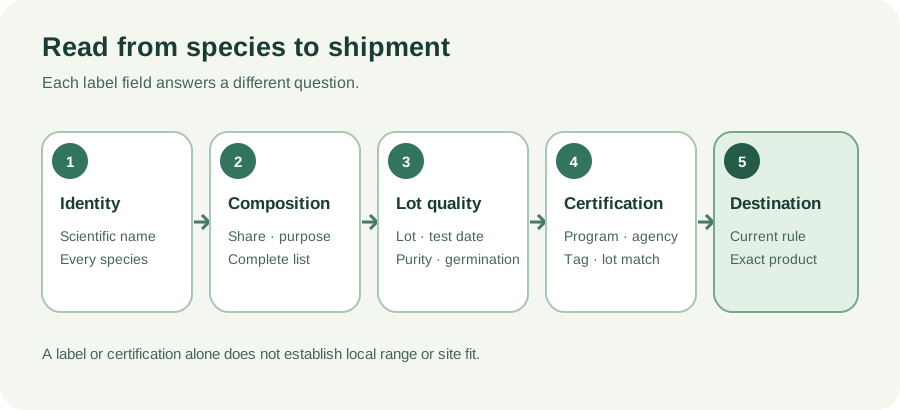
A “native seed mix” name says little about the species or lot inside the package. Check the component list and records for the exact bag or packet, then compare them with the planting purpose and destination.
Start with the components
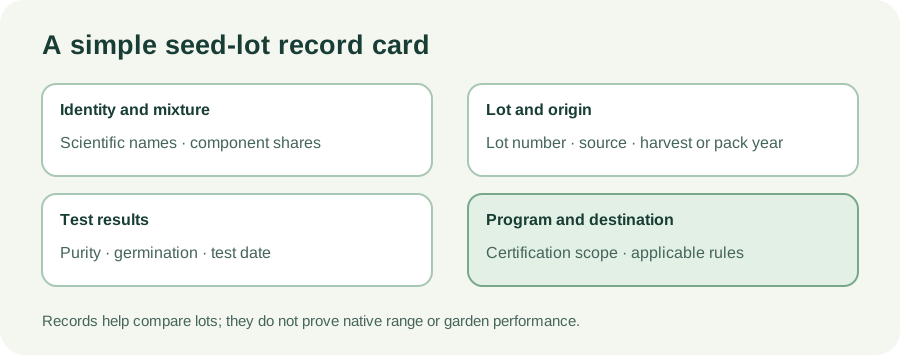
Look for the scientific name of every species and, when shown, each component’s share. If a label gives only a general mix name, ask for the species list before buying. Without the list, you cannot check each component’s native range, invasive status, or fit for the site. A mix sold for a large habitat project may also be designed and labeled differently from one for a small garden area.
Read the lot fields
Useful details may include a lot number, source or country statement, packing or harvest year, purity, germination, and test date. Ask whether a result is from the current lot and whether the seller can explain the calculation used for bulk quantities, such as pure live seed (PLS). A test result helps describe seed quality; it does not verify native status, collection location, or expected performance in your yard.
If a certification is claimed, identify the program, class, agency, and lot tag. AOSCA’s Pre-Variety Germplasm program is used for native plant materials, including restoration and revegetation; its documentation describes program checks, not a guarantee that the seed is local or suitable for a home garden. A color or “certified” phrase without the matching lot record does not answer every source or quality question.
Keep rules tied to the product
Seed-label requirements vary with jurisdiction, seed kind, mixture category, intended use, and destination. CFIA publishes current Canadian seed-mixture standards. In the United States, AMS’s state list concerns covered Federal Seed Act categories; it is not a general invasive-plant or native-range list. Use the applicable current rule for the actual product rather than transferring a label requirement from another mix.
For source terminology, see the Ontario seed-origin guide; for an online listing with an unclear component list, use the online seed checks.