Seasonal cleanup for a zone 6 pollinator garden
Decide what to leave, move, or remove by weighing habitat, plant health, access, safety, and how the space is used.
On this page
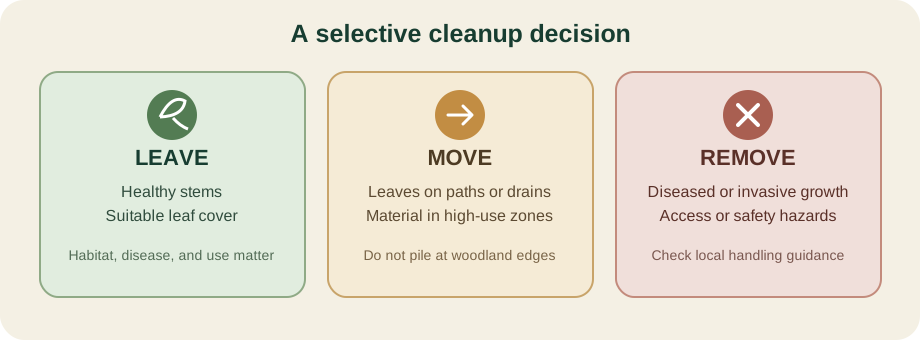
Hardiness zone 6 does not set a cleanup date or identify the insects using a garden. Instead, decide what to leave, move, or remove by looking at plant health, habitat structure, access, and how people use nearby spaces. Different pollinators use different materials, and leaving some habitat does not require leaving everything untouched.
Make fall observations before broad cleanup
Note healthy seed heads and standing stems, leaf cover, patches of exposed soil, diseased growth, invasive plants, and places where leaves block a path or drain. Photograph a few fixed areas and record bloom gaps or maintenance issues. These notes can guide next season without turning one year’s weather or flowering pattern into a permanent calendar.
Healthy stems and some leaves can provide structure or shelter, while bare soil may be useful to ground-nesting insects. Penn State Extension recommends delaying general cleanup until spring in its pollinator-garden guidance. That is a habitat practice, not a promise that a particular species will use the garden. Zone, local species, disease, and site conditions still matter.
Separate habitat retention from exposure zones
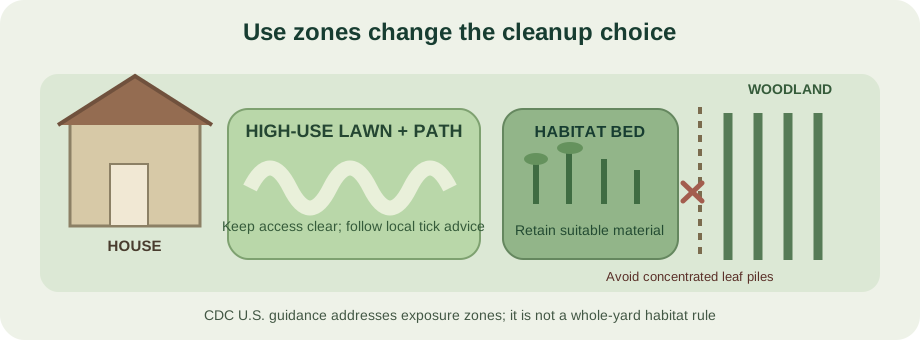
Where leaves are healthy and do not create a problem, retain them in suitable planting areas. Move leaves that block a walk, cover a drain, or collect in a place where people spend time. Avoid blowing concentrated leaf piles to a woodland edge. In the United States, CDC guidance for reducing blacklegged-tick exposure recommends removing leaf litter and clearing tall grass or brush near homes and lawn edges; it also describes a wood-chip or gravel barrier between lawns and woods. These are exposure-zone measures, not a rule to strip every habitat bed. Local public-health advice and tick species differ in Canada and across regions.
A New Jersey residential field study found at least three times as many blacklegged tick nymphs in plots receiving blown leaves at woodland edges as in natural-edge and forest plots across two sampled springs. That result concerns concentrated leaf piles in those locations, not all leaf retention. A separate New York lawn study, available here only as an abstract, reported that mowing practices explained less than one percent of observed variation in tick numbers. It concerns leaves mulched into lawns, not deep piles at woodland edges, and does not establish the same result for other sites or tick species.
Remove selectively and return in stages
Remove diseased material when local plant-health guidance recommends it, and keep invasive plants from spreading according to current local identification, control, and disposal advice. Clear access and drainage hazards. Leave sound stems standing where practical through winter, then begin spring cleanup in stages as local weather and habitat conditions permit. If material is cut, avoid assuming that every hollow stem or leaf layer should be discarded immediately.
Review your notes after the growing season: Did the planting have a long bloom gap? Did leaves obstruct a path? Did disease recur? Adjust only the parts that need it. For a suspected invasive plant, see removal and native replacement; for a garden plant spreading beyond its bed, see managing a vigorous native perennial.
Sources and further reading
- Fall Garden Care for Pollinatorsauthoritative-secondary
- Leave the Leaves for Natural Pest Controlauthoritative-secondary
- Preventing Tick Bitesprimary
- Artificial Accumulation of Leaf Litter in Forest Edges on Residential Properties via Leaf Blowing Is Associated with Increased Numbers of Host-Seeking Ixodes scapularis Nymphsprimary
- Improving Turf and Soil Health, Reducing Energy Use and Assessing Tick Populations by Mulching Leaves in Placeprimary