Removing invasive plants and restoring native cover
Plan identification, local rules, control, replacement cover, and follow-up before disturbing a suspected invasive plant.
On this page
A suspected invasive plant is a reason to pause and identify it, not to start pulling or treating immediately. Species, legal status, spread method, nearby habitat, and disposal rules change the right response. Plan what will replace the cover before disturbing a large patch.
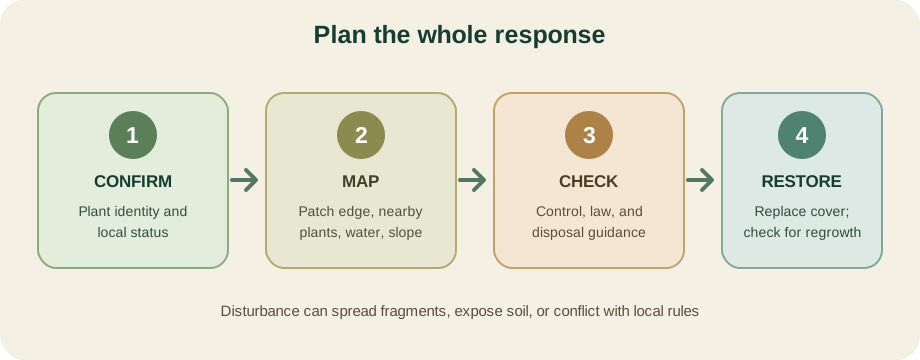
Confirm identity and map the patch
Photograph leaves, stems, flowers or fruit, and the whole growing area. Record where the patch ends and whether it reaches a stream, wetland, drainage swale, neighboring property, or area that could erode if plants are removed. Mark nearby plants you want to keep. Compare the identification with a current state, provincial, or municipal source; a common name or a neighbor’s description may refer to more than one plant.
Check local rules before disturbance
Before cutting, digging, mowing, composting, transporting, or applying a treatment, find current species-specific control and disposal directions for your location. Some plants can regrow from fragments; others spread by seed. Ontario’s gardener guidance, for example, points residents toward identification and local disposal information, but it is not a complete legal list for every place. Do not move material into natural areas or waterways. If the plant may be regulated, defer to the responsible authority.
Prepare replacement cover and follow up
Choose locally appropriate replacement plants for the light, moisture, soil, and intended use. On a slope or beside water, plan erosion protection before removal; large patches or sensitive sites may need a qualified restoration professional. The Illinois preserve example describes monitoring and adaptive management at preserve scale, not a homeowner treatment recipe.
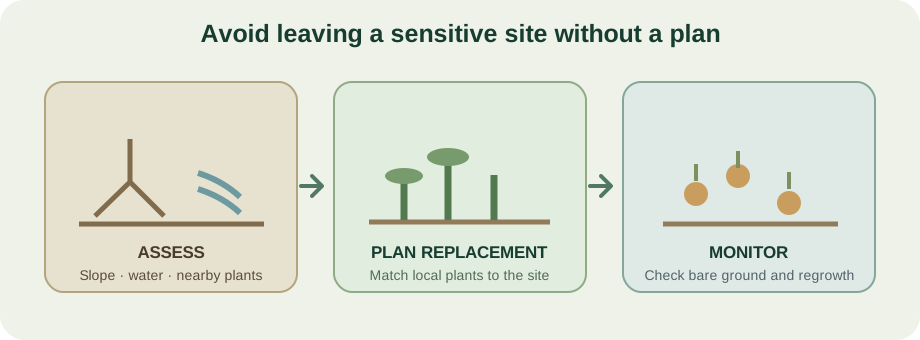
After approved work, take a dated photo from the same viewpoint and check for regrowth or new seedlings at intervals suited to the species and local guidance. Update the plan if the patch expands or the replacement planting fails. A vigorous plant that is simply spreading inside a garden raises a different question; see managing a native perennial that spreads beyond its space. For ordinary mulch and weed choices in a planted bed, see the Michigan clay guide.
Sources and further reading
- Invasive Species Gardeners Action Planprimary
- Backyard Stream Repair FAQsauthoritative-secondary
- Stories from the field: Managing invasive species at Emiquon Preserveauthoritative-secondary