Managing a native perennial that spreads beyond its space
Match garden containment to whether a desired perennial spreads by seed, underground stems, or an expanding clump.
On this page
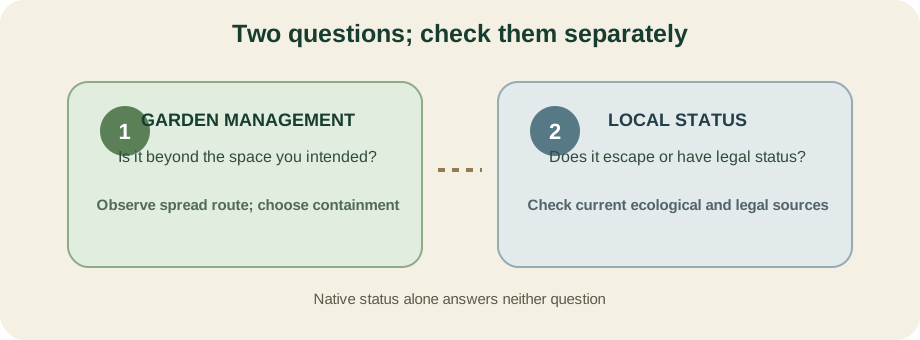
A plant can be native and still spread farther than you want in a garden. “Aggressive” describes a management problem in a bed; it does not by itself mean the plant is ecologically invasive or legally regulated. Identify the plant and its spread route before choosing how to contain it.
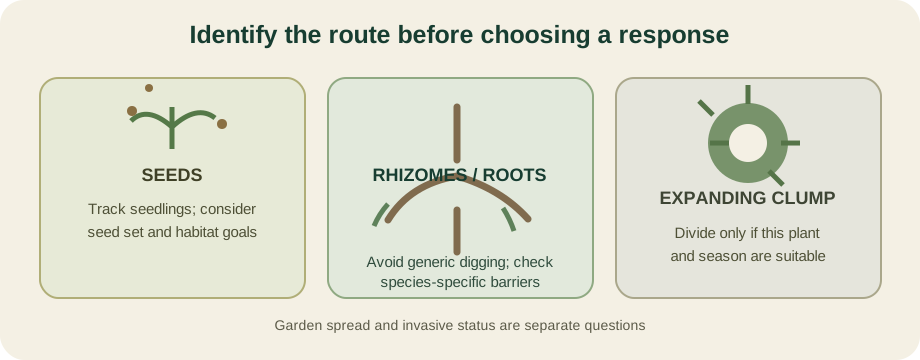
Find how the plant is spreading
Look for seedlings beyond the planting, shoots emerging some distance from the original clump, or a single clump that is getting larger. Seed, rhizomes, roots, and above-ground stems behave differently. Mark the boundary you want to maintain and note where new growth appears over a season. If the plant identity is uncertain, get a local identification before removal.
Match the response to the growth form
For a known, desirable self-seeder, removing unwanted seedlings or cutting flower heads before seed matures may reduce spread when that fits your habitat goals. For a plant spreading by rhizomes or roots, mowing the top or cultivating around it may not contain the underground growth; cultivation can worsen some species. A physical barrier or a more contained planting location may help for some plants, but effectiveness depends on the species and soil.
If a clump is crowded or expanding, division can be an option for some perennials, not a universal treatment. Illinois Extension gives a repeated-division example, while Minnesota Extension ties timing and method to flowering season and plant identity and notes that some deep-rooted plants do not respond well. Check regional guidance before digging or dividing, especially where nesting, erosion, or other habitat goals matter.
Check status separately
A difficult-to-contain garden plant may still be desired in the right place. Separately check whether it escapes into nearby natural areas or has a current legal status where you live. Local ecological and regulatory guidance takes priority over general containment advice. If it may be invasive, see identification, removal, and native replacement before disturbing it.
Sources and further reading
- Aggressive Plants in the Landscapeauthoritative-secondary
- Garden gone awry? How to Control Aggressive Garden Plantsauthoritative-secondary
- Use Caution With Spreading Plantsauthoritative-secondary
- How and when to divide perennialsauthoritative-secondary