Reducing winter salt exposure around native plantings
Trace how deicer reaches a garden by runoff or spray, then document exposure clues and adjust snow placement without guessing at a diagnosis or treatment.
On this page
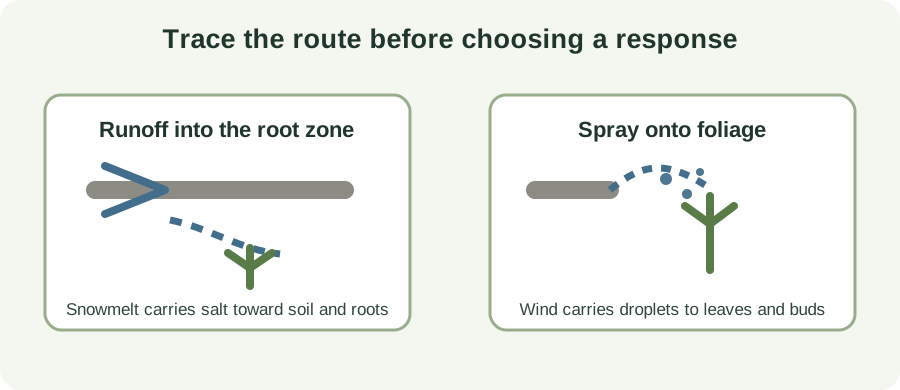
Deicer can reach a planting when salty snowmelt flows into the root zone or when spray from a road lands on leaves and buds. These are different exposure routes, so start by tracing where snow, meltwater, and traffic spray move through the site. A plant that tolerates one route may not tolerate the other.
Map how salt reaches the bed
Look at roads, sidewalks, driveways, parking areas, and places where plowed or shoveled snow is piled. Note the slope and where meltwater drains. For a bed beside a road, also note which side faces traffic and whether wind carries spray toward the planting.
This map can help you distinguish a site exposure from a general winter-care issue. Browning or dieback alone does not identify salt injury: drought, winter exposure, compacted soil, disease, and other problems can look similar. Ontario’s nursery and landscape guide describes some patterns in woody plants that can be useful clues: conifers may show tip-first browning and more damage on the road-facing side, while low branches under continuous snow cover may show less damage. The guide says this browning may appear in late winter and become more obvious through spring and summer in the settings it covers; local timing varies. Some deciduous trees may have delayed bud break on the road-facing side. These signs are not a diagnosis and do not rule out other causes.
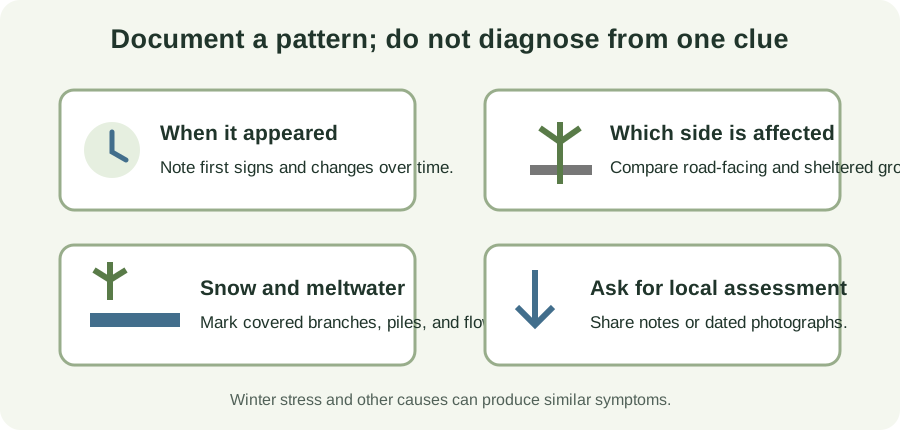
If plants keep declining, note when you first saw the damage, which sides face traffic, whether lower branches were under continuous snow, where snow was stored, and how meltwater drains through the bed. A dated photograph from the same viewpoint can help show whether the pattern is changing. Share those observations with a local extension office or qualified plant professional; do not treat one symptom or distance from a road as proof of salt injury.
Reduce salt-bearing snow and runoff
When conditions allow, clear as much snow as practical before applying deicer, and follow the product label and local safety guidance. Use only the amount needed for the surface and weather. Avoid piling salt-bearing snow over planted areas, and consider where its meltwater will go before choosing a storage spot.
If traffic spray regularly reaches a planting, a screen may help in some settings. Choose its position and material with local guidance so it does not block visibility, access, or drainage. A screen addresses spray; it does not keep salty runoff from entering the soil.
Choose plants and soil actions for the actual exposure
If you replace plants in a salt-exposed area, check local native range and suitability for the kind of exposure present. Salt tolerance in soil and tolerance to spray are separate traits. Wisconsin Extension’s plant examples are regional, not a native-plant list for Ontario or every U.S. state.
Do not assume that gypsum, extra mulch, or a change in grade will correct salt exposure. The usefulness of a soil treatment or runoff change depends on soil drainage and the design of the site. For a rain garden or other engineered feature, follow its plans and ask the responsible designer or municipality before changing how water moves.
For an Ontario rain garden, see monitoring an Ontario rain garden. For a recent transplant facing dry-fall and freeze-thaw conditions, see winter care for newly planted trees and shrubs. Local plant identity, salt exposure, drainage, and winter practices determine the right next step.
Sources and further reading
- Winter Salt Injury and Salt-tolerant Landscape Plantsauthoritative-secondary
- Publication 841, Guide to Nursery and Landscape Plant Production and IPMauthoritative-secondary
- Reducing Deicing Salt Damage This Winterauthoritative-secondary