Monitoring an Ontario rain garden
Keep a simple storm log for ponding, inlets, outlets, erosion, and plant condition, then compare observations with the feature's design.
On this page
A first-year storm log helps show whether a planted runoff feature is changing over time. First identify the feature and who maintains it: a simple home rain garden, a designed bioretention cell, and a municipal stormwater facility may have different plans, owners, and performance expectations.
Find the design and maintenance contact
Look for an installation plan, homeowner or condominium agreement, municipal inspection sheet, or contact for the designer or maintenance provider. Ontario’s Stormwater Management Planning and Design Manual addresses defined stormwater practices; it does not set one inspection rule for every residential rain garden. Use the plan for your feature before deciding whether an observation is unusual.
Keep a brief record after storms
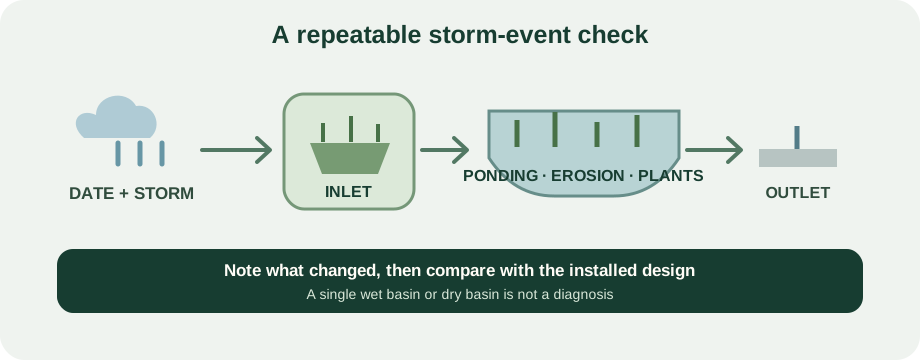
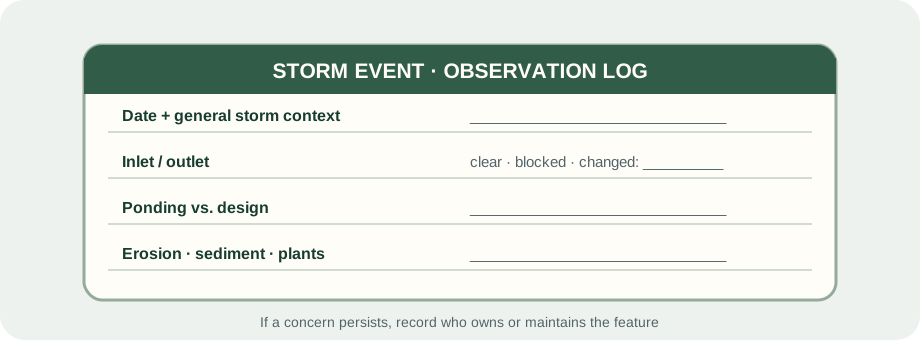
Choose a safe vantage point and take notes or a photograph from the same place. Record the date and general storm context, whether water reached the inlet, where it ponded, whether the outlet was clear, and any fresh sediment, erosion, or plant damage. Compare the basin’s water level and duration with its design expectations. Standing water right after rain does not by itself show failure, and a dry basin does not prove that water entered and drained as intended.
Repeat the same observations after later storms. A short record is more useful than a single impression: it can show whether ponding is changing, whether water bypasses the inlet, or whether a bare or eroding patch is expanding. Plant stress also has several possible causes, so a wilted plant alone does not establish a stormwater problem.
Take proportionate next steps
If accessible debris blocks a surface inlet and the feature’s instructions allow routine clearing, remove only what you can reach safely. Do not dig, regrade, alter an outlet, or add soil to change water flow. Photograph a persistent blockage, new erosion, unusual sediment, or ponding that conflicts with the design, then contact the responsible owner, municipality, designer, or qualified stormwater professional. If no one knows who maintains the feature, resolve responsibility before changing it.
For a separate planted-bed moisture question, see watering native shrubs in Virginia dry shade. The Virginia example does not define Ontario rain-garden performance or plant care.
Sources and further reading
- Stormwater Management Planning and Design Manual: Operation, Maintenance and Monitoringprimary
- Soak Up the Rain: Rain Gardensprimary
- Rain Garden Maintenanceauthoritative-secondary