Mulch and weed management on Michigan clay
Separate seedling weeds from wanted plants, use mulch selectively, and read drainage and compaction signs after rain.
On this page
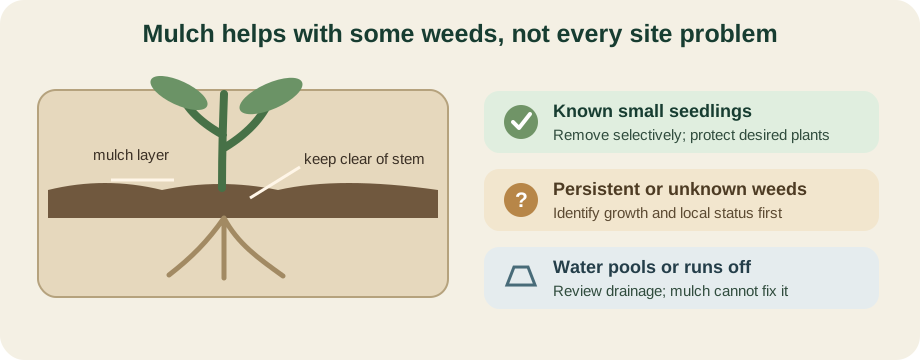
Organic mulch can reduce some seedling weeds and slow moisture loss, but it cannot correct compacted soil, poor drainage, or every established weed. In a planted bed, identify what is growing and observe how water moves before adding material or disturbing the soil.
Identify plants before removing them
Mark the plants you intended to keep, including small seedlings that may resemble weeds. If you cannot identify a plant confidently, photograph it and check a Michigan-specific source before pulling or treating it. A suspected regulated invasive needs current species and local-rule guidance; ordinary garden-weed advice may not apply.
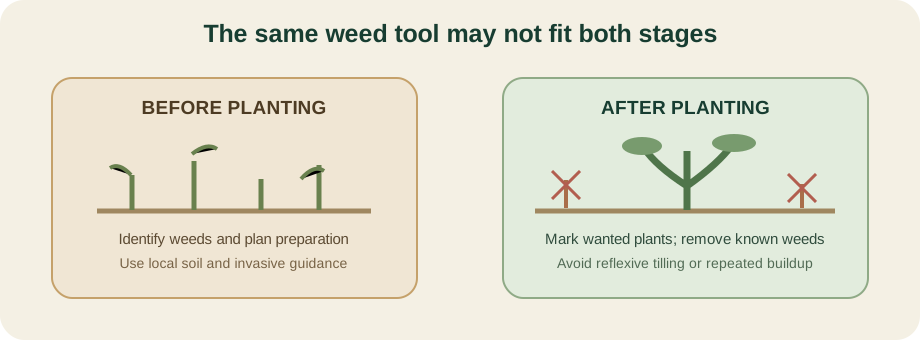
For small, known weeds, remove them selectively while they are easy to reach, taking care not to loosen the new planting. Annual seedlings and perennial weeds behave differently. A perennial with spreading roots or rhizomes may return after its top growth is removed, and cultivating some rhizomes can spread fragments. See removing invasive plants and restoring native cover if identity or status is uncertain.
Use mulch for the job it can do
Before planting, weed suppression and soil preparation can be part of a planned process. Once plants are installed, use a modest, even layer around them and leave the stems and root crowns clear. Repeatedly adding mulch can bury small plants, keep crowns too wet, and conceal weeds rather than solve them. Michigan State University Extension describes mulch as one tool for weed and moisture management, not a fix for compaction or slow drainage.
After rain or irrigation, note whether water enters the bed, runs across it, or remains pooled. A displaced mulch layer is a surface-maintenance issue; persistent ponding, runoff, or erosion may point to grade, compaction, or drainage questions. Do not till an established bed or add soil amendments based only on the fact that it is clay. Site changes can redirect water toward a building, neighboring property, or stormwater feature, so ask a qualified local professional when the pattern persists.
Keep notes on the weed type, where it returns, and what happens after rain. That record helps distinguish a mulch adjustment from a plant-identification or site problem. For watering decisions around new shrubs, see first-year watering in Virginia dry shade; its regional examples do not set a Michigan schedule.
Sources and further reading
- Smart gardeners improve their soil and weed control with organic mulchauthoritative-secondary
- Controlling Weeds in Nursery and Landscape Plantingsauthoritative-secondary
- Prepare the Soilauthoritative-secondary