Watering native shrubs in Virginia dry shade
Check root-ball moisture, nearby soil, stock, rainfall, drainage, and tree-root competition before adjusting water for a newly planted shrub.
On this page
A shaded bed can still dry out. A recently planted shrub has a limited root system, and nearby mature trees may draw on the same soil. Check the root zone before watering instead of relying on shade, a rain total, or the shrub’s eventual drought tolerance.
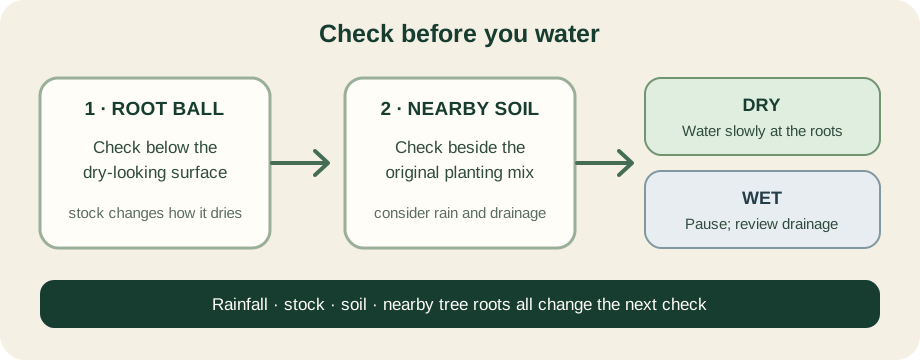
Check the root ball and the soil around it
Feel the planting mix and adjacent native soil a short distance below the surface. The surface can look dry while the root ball remains moist, or recent rain can wet the surrounding bed without reaching a container-grown root ball. Check both places, then consider how long it has been since meaningful rain and whether water drains away.
Stock affects what you find. A container root ball may dry at a different rate from the surrounding soil. A balled-and-burlapped shrub may have a mineral-soil root ball that behaves differently again. Virginia Cooperative Extension describes stock-specific watering examples, but those examples are not a schedule for every species, soil, or shaded Virginia yard.
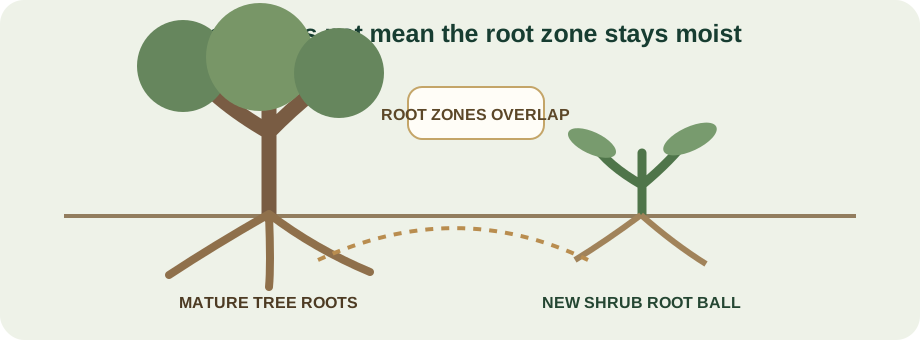
Water only when the root zone needs it
When the root ball and nearby soil are dry, apply water slowly at the base so it can soak into the planting zone. If water runs off or pools, pause and let it absorb before adding more. Keep mulch spread over the soil without piling it against stems. Avoid digging or trenching through major roots of an established tree; repeated competition or difficult access may call for a local planting-site assessment.
If the root zone is already wet, adding more water can worsen a drainage problem. Note whether water remains after rain, whether the soil smells sour, or whether the same area stays saturated; these are reasons to review drainage rather than assume drought. Leaf curl or browning alone cannot identify the cause.
As the shrub grows, lengthen the time between checks when root-zone moisture and growth remain steady. There is no single date when supplemental watering should stop. Species, root-ball size, soil, rainfall, drainage, and tree-root competition all matter. For persistent decline, ask a Virginia Cooperative Extension office or qualified local professional to assess plant identity and site fit. See also winter care for newly planted trees and shrubs and mulch and weed management on Michigan clay.
Sources and further reading
- Native Plants in the Landscape: Maintaining Native Plantsauthoritative-secondary
- Shrubs: Functions, Planting, and Maintenanceauthoritative-secondary
- Underplanting Trees—Respect the Rootsauthoritative-secondary