Caring for a seeded native prairie through its first seasons in Illinois
Set realistic expectations for a seed-started prairie, protect young plants while managing weeds, and monitor change over several seasons.
On this page
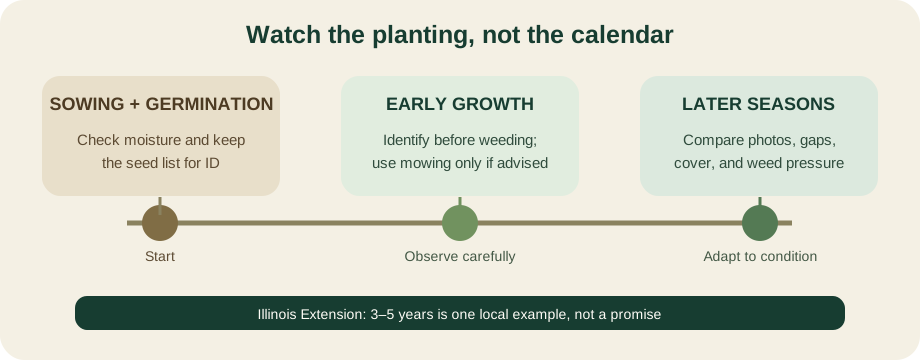
A seed-started prairie or meadow can look sparse before it looks like a meadow. Many plants invest in roots before producing much visible growth, so limited first-season bloom does not by itself show that the planting failed. Illinois Extension describes three to five years as a possible establishment period for a backyard prairie; treat that as a regional example, not a guarantee or deadline.
Watch moisture and identify young growth
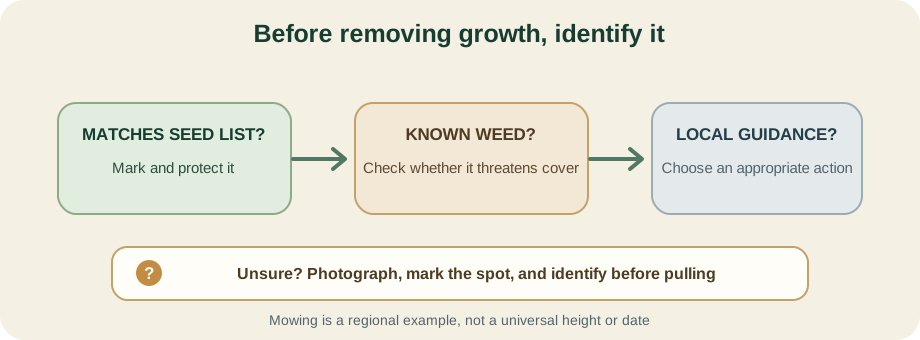
During germination and early establishment, check soil moisture and rainfall across the seeded area. Water only as the site and local guidance call for it; a fixed interval cannot account for soil, weather, seed mix, or drainage. Keep a copy of the seed list and mark any seedlings you can identify. Young native plants may resemble weeds, so avoid pulling unfamiliar growth until you know what was sown.
Manage weeds without damaging seedlings
Record which weeds threaten to shade desired seedlings or set seed. In its Illinois backyard-prairie guidance, Extension describes mowing as one possible early management tool, with the cut adjusted to the competing weeds and desired plants. That is a local method example, not a universal height, date, or requirement. Follow current local guidance for equipment, visibility, property rules, and plant identification. Digging or pulling can disturb young prairie seedlings, while cultivation may spread some perennial weeds.
Monitor change over several seasons
Take dated photographs from the same points and note desired cover, gaps, new weeds, and weather. Compare areas rather than expecting every species to appear at once. Later decisions might include selective weed control, overseeding, or a seasonal cutback, but the seed mix and site condition should guide each choice. Ask a local prairie or extension specialist before using methods that could affect neighboring habitat.
Prescribed fire is not a routine homeowner instruction. Where a land manager considers it, authorization, trained practitioners, smoke, and site planning are local matters. See invasive-plant response for identity-first follow-up, and seasonal pollinator-garden cleanup for selective habitat decisions in a different planting context.
Sources and further reading
- Backyard Prairiesauthoritative-secondary
- Pollinator Prairieauthoritative-secondary
- Prairie Restoration: Habitat Headquartersauthoritative-secondary