Troubleshooting & Site Diagnostics
How to report a suspected plant pest in Canada or the United States
Find Canadian or U.S. plant-pest reporting routes and follow organism-specific instructions for documenting and reporting a suspected pest.
On this page
Unusual damage or an unfamiliar insect does not confirm a regulated pest. Routes and handling instructions depend on the organism and location.
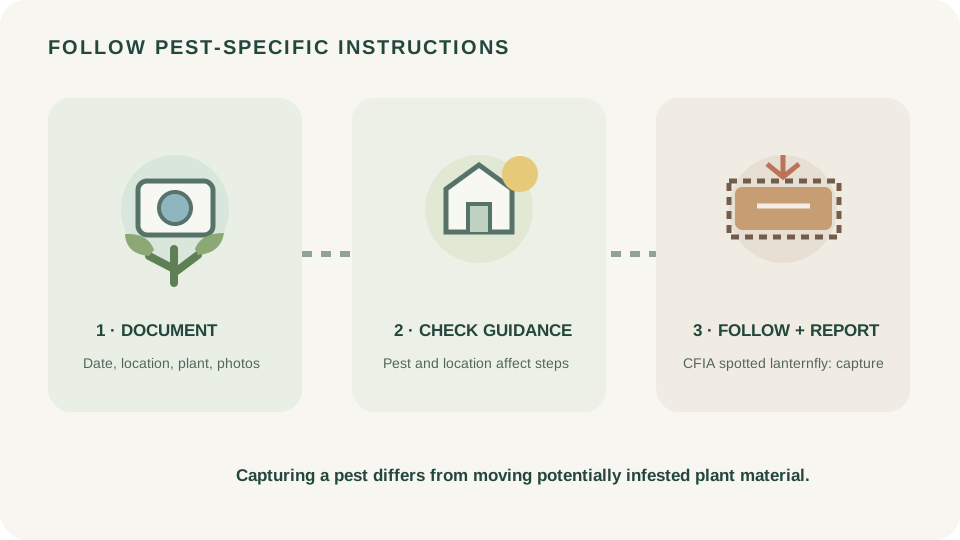
Record the sighting and follow pest-specific instructions
Record the date, location, host plant, and observed signs; photograph the pest or symptoms. Instructions vary by pest and place. In Canada, CFIA’s spotted-lanternfly guidance asks suspected observers to photograph or video it, catch the insect or scrape egg masses into a sealable container, and report immediately. CFIA may contact you to collect a specimen or advise disposal. For other pests, follow the authority’s current collection and transport instructions. Capturing a pest does not authorize moving potentially infested plants or bulk material; check local movement rules.
Use the route for your country
In Canada, the Canadian Food Inspection Agency (CFIA) lists public options on its plant-pest reporting page. A similar-looking insect is not a confirmed identification.
In the United States, USDA APHIS directs the public to the appropriate State Plant Health Director. Its specimen-confirmation process is for agency, state, and university cooperators.
Keep routine diagnosis separate
Yellow leaves, dieback, holes, and poor growth have many causes. For general plant health, contact a local extension or diagnostic service and follow its sample instructions. Record the history and photos before you ask.
Do not apply pesticide or move plant material based on an online guess. Ask the current official authority which route and handling steps fit.