Plant Spacing for a Wet-Shade Native Garden in Ontario
Map moisture and light differences in an Ontario wet-shade garden, then plan spacing from verified mature dimensions and the access the bed needs.
On this page
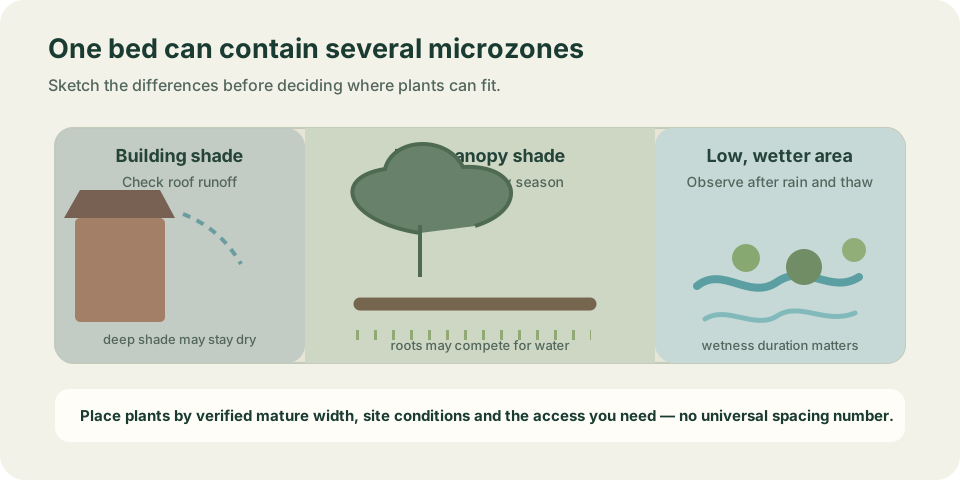
“Wet shade” is not one condition. A bed under a tree can be dry because roots compete for water, while a nearby low spot stays wet after rain. Spacing works best after you map those differences and choose plants whose Ontario range, light needs, moisture fit, and mature spread have been checked for your locality.
Map light and moisture separately
Note where the shade comes from: a building, a tree canopy, or both. Watch the bed at different times and seasons, and record where water collects after rain, snowmelt, or a dry spell. Landscape Ontario distinguishes temporary spring wetness from sites that remain wet through the year; that distinction is a planning prompt, not a drainage diagnosis. If water stays for long periods or buried drainage infrastructure may be present, seek local advice before changing grades or digging.
Build a candidate list for the actual place
Start with a current local native-plant resource, then compare each plant’s mature width, height, light range, moisture conditions, and spreading habit. A conservation authority or municipality may use its own categories or codes. For example, Conservation Halton records shade and moisture fields in its regional list; treat those as that list’s screening system, not a province-wide scale or proof that a plant fits your property.
Ontario does not have one verified wet-shade palette that suits every watershed. Regional lists can help narrow a search, but confirm local native range, mature spread, and the site’s water pattern before buying. Do not convert a general “shade tolerant” label into a claim that a plant tolerates saturated soil.
Space for mature spread, paths, and change
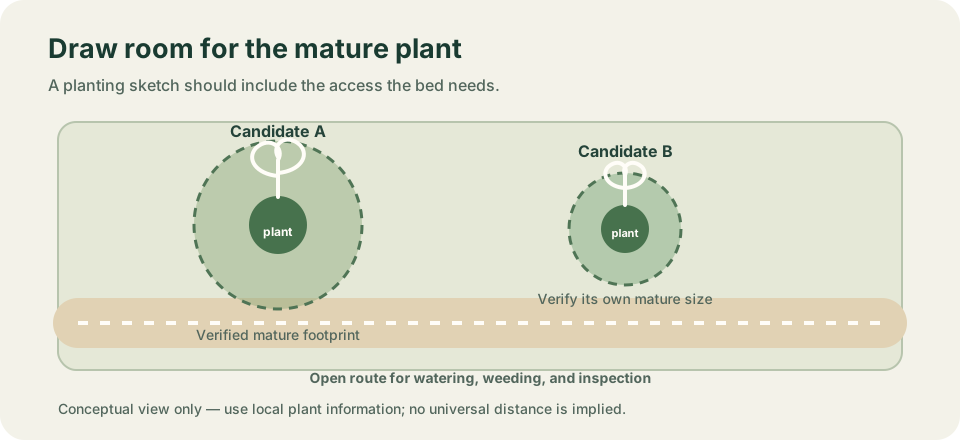
Draw each candidate at its expected mature width. Plants that need room to reach their natural form will require more space than a close, fast-filling layout; tighter planting also leaves less room for maintenance and later adjustment. Use the spacing directions for the selected species and stock, and decide whether you want a more open layout or eventual canopy contact. There is no single spacing number for every Ontario garden.
Keep a path or work area where you need to weed, water, and inspect the bed. If a spot is too wet for the candidates you can verify, change the planting area or ask for local site guidance; closer spacing cannot correct unsuitable hydrology. Use the site-plan guide to map the whole property and the under-tree guide for established-root constraints.
Sources and further reading
- Native Plants for Shadeauthoritative-secondary
- Gardening for Moist Areasspecialist
- Conservation Halton Native Species Listauthoritative-secondary