Design a Full-Shade Zone 6 Native Pollinator Garden
Plan a full-shade pollinator garden by separating winter hardiness, local native range, shade, moisture, bloom, and host-plant needs.
On this page
Zone 6 and “full shade” describe only part of a planting site. The USDA hardiness zone is based on average annual extreme minimum winter temperature; it does not identify a plant’s native range or describe the moisture under a tree. Begin with the location, then test the light and water conditions in the exact bed.
Check the site and the zone system
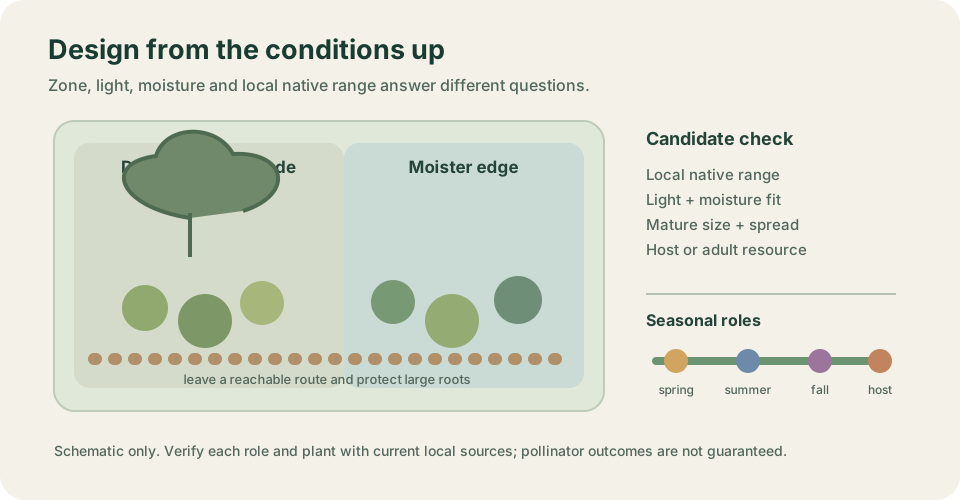
Record the state or province, local area, and the map or hardiness system behind the “zone 6” label. Shade beside a building differs from filtered canopy shade, and a tree-root bed can be drier than a shaded low area. Observe light and moisture across more than one part of the season instead of treating the whole bed as uniform.
Choose functions before filling the bed
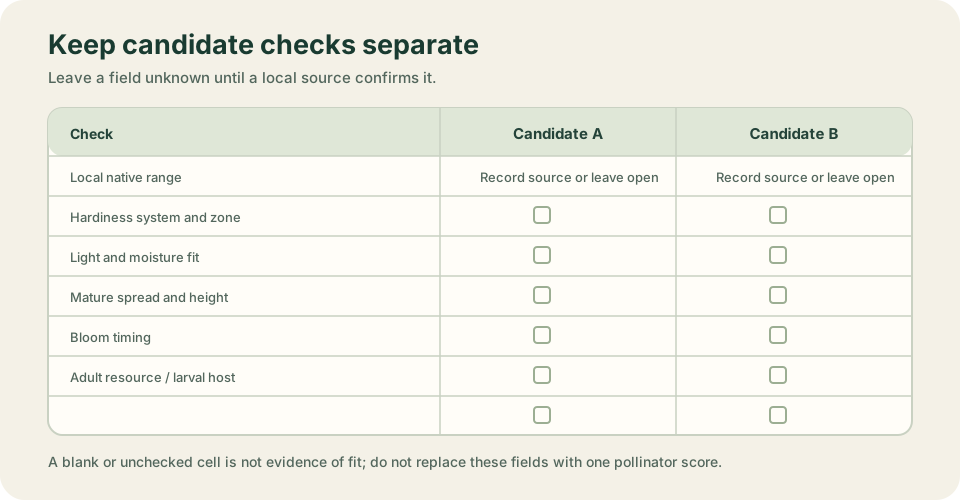
For each candidate, verify local native range, light and moisture fit, mature size, and source date. Then note what role it may serve: nectar or pollen for adults, foliage for a particular larval host, structural cover, or a seasonal flowering period. A Maryland Extension shade guide and Illinois Extension’s design example describe layered structure, grouped plants, and seasonal bloom as planning ideas; their plant examples do not make a regional palette for Michigan, Ontario, or every USDA zone-6 site.
Use a small comparison table rather than a single “pollinator value” score. Keep shade, moisture, bloom, host function, and mature spread visible as separate fields. If local evidence does not establish a candidate’s role or fit, leave that field unknown and choose another verified option.
Draw the layout at mature size
Place groups by the site’s actual moisture and light zones, leave access for care, and avoid disturbing major tree roots. A modest bed with verified candidates is more useful than filling every shaded corner with plants that only tolerate shade. If local species choices do not support a particular bloom goal in deep shade, narrow the goal rather than promise continuous flowers or a guaranteed wildlife response.
Use the site-plan guide to map the area. For root competition and tree protection, see the established-tree planting guide.
Sources and further reading
- USDA Plant Hardiness Zone Mapprimary
- Native Plants for Shadeauthoritative-secondary
- Pollinator Gardensauthoritative-secondary
- Native Garden Design Made Simpleauthoritative-secondary