Cultivar versus straight species for native wildlife gardens
Choose plants for a wildlife goal by checking the exact cultivar, the trait that changed, and evidence for the wildlife group and outcome you care about.
On this page
A cultivar name tells you that a plant was selected or bred for particular traits. It does not, on its own, say whether the plant is native to your site or how it will perform for a specific wildlife goal.
Start with the exact plant and goal
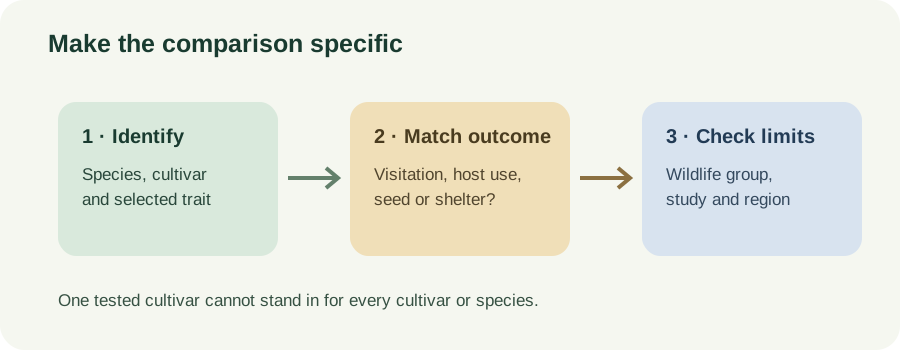
Check the full botanical name and cultivar name. “Straight species” is a useful buying description for a plant sold without a named cultivar, but it does not establish where that particular plant was sourced. A cultivar can be derived from a native species; its range and its source are still separate questions.
Name the wildlife outcome you want to support. Flower visitation, pollen or nectar access, host-plant use by caterpillars, seed production, and nesting cover are different measures. Evidence about one does not automatically answer another. Look for a study of the same plant or close taxon, the selected trait, the wildlife group, and the region.
What studies can and cannot show
A four-year garden study in Corvallis, Oregon compared five Pacific Northwest native plants with cultivars. Nine of the ten tested cultivars had bee communities that differed from their native counterparts, while minimally developed cultivars were more similar in the measures studied. That is a reason to check the exact selection and trait when pollinator function matters—not a verdict on every cultivar or every wildlife group.
If maximizing a particular ecological function is your priority, favor evidence that measures that function and describes the plant’s region and trait. If the evidence is missing, say so and weigh the remaining garden goals openly. For source and range questions, see what a county-native claim means and how to compare seed-source wording.