Buying native plants for a clay garden in Pennsylvania
Use Pennsylvania source lists as leads, then check the exact plant, local range, soil and drainage conditions, propagation, and current availability.
On this page
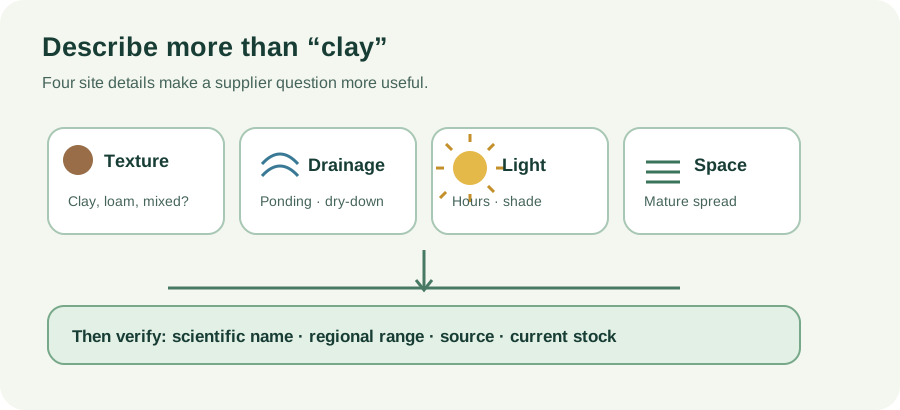
A Pennsylvania source list can help you find a nursery or seasonal sale. It cannot tell you whether an unnamed plant will suit your yard. Before contacting a seller, note the planting location, light, soil texture, drainage, and how long the ground stays wet after rain.
Use a source list as a lead
The state’s native-plant buying page points to nurseries and sales. Check the page date, seller service area, current-year sale terms, and whether the listed item is seed, a plug, or a larger plant. A dated event or directory entry is not a live inventory feed or ecological endorsement.
Ask whether the exact plant fits
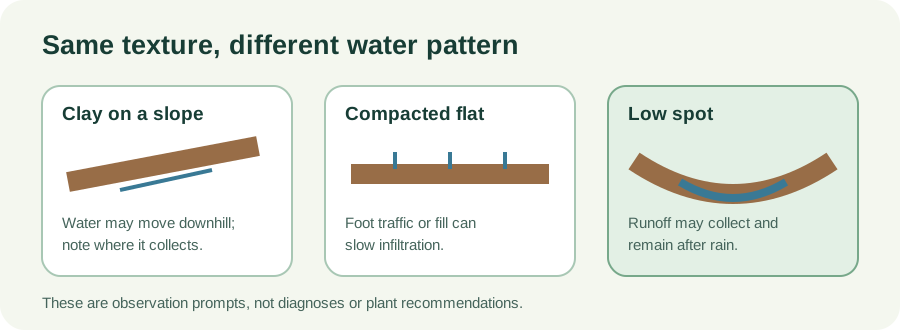
“Clay” describes soil texture, not the whole site. A clay garden may drain quickly on a slope or stay saturated in a low spot; compaction, light, pH, and seasonal moisture can also differ. Ask the seller for the scientific name, mature size, stock form, and the source for any claim that the plant tolerates your conditions. Check the species’ Pennsylvania range at the useful local level using a regional plant reference such as the Pennsylvania Vascular Plant List. State occurrence alone does not prove county-level nativity or suitability for your yard.
Ask whether the plant was nursery-propagated or collected, what origin statement applies to the lot, and whether substitutions may be made. Pennsylvania guidance encourages buyers to use nursery-propagated native plants and match choices to light, soil, and moisture. A license, inspection, or “healthy at pickup” statement answers a different question from native range or clay response.
Recheck the offer
Before paying, confirm the item name, quantity, condition, pickup or shipping, substitutions, and date of the availability check. If a sale has ended or a substitute is offered, repeat the identity, range, and site-fit checks for the new item. Keep those details with your buyer checklist.
Sources and further reading
- Where to Buy Native Plantsprimary
- Pennsylvania Vascular Plant Listprimary
- Native Groundcovers Can Solve Tough Challenges in the Landscapeauthoritative-secondary